Reasons for choosing our testing services
ZHONGXI Testing has obtained inspection qualification certifications from multiple countries and regions worldwide. We possess a senior testing team and advanced testing methods, providing independent, impartial, and professional third-party verification services for global carbon projects.

Internationally recognized authority
Certified by multiple international standards such as CNAS, VCS, and GS, with reports universally applicable worldwide.

Global service capability
Covering 140+ countries and regions, it supports on-site detection and remote verification in multiple languages.

Professional experimental methods
Adopt standard experimental methods to ensure accurate and reliable data.
Comprehensive Characterization and Performance Testing of Sulfonated Wood‑Based Activated Carbon – Advanced Analytical Services for Tailored Adsorbent Materials
Sulfonated wood‑based activated carbon (SWAC) – produced by the sulfonation of lignocellulosic precursors followed by pyrolysis or by post‑synthetic sulfonation of carbonized wood – has emerged as a high‑performance adsorbent for heavy metal removal, catalytic applications, and ion‑exchange processes. The introduction of sulfonic acid (–SO₃H) groups imparts strong cation‑exchange capacity, enhanced hydrophilicity, and improved affinity for polar pollutants. However, the actual performance and reliability of SWAC depend critically on the sulfonic group density, surface sulfur speciation (e.g., –SO₃H, sulfones, sulfoxides), the preservation of the micro‑/mesoporous carbon structure, the thermal stability of the sulfonate functionality, and the purity with respect to leachable inorganic residues. Even minor variations in the sulfonation protocol can lead to significant differences in adsorption capacity, selectivity, and stability. Therefore, a rigorous, multi‑parametric analytical evaluation is essential for material development, quality assurance, process optimization, and regulatory compliance. Our ISO/IEC 17025‑accredited laboratory offers a dedicated, high‑depth testing service specifically tailored for sulfonated wood‑based activated carbon, integrating advanced spectroscopic, thermal, and adsorptive methods to deliver a complete structural, chemical, and functional fingerprint – far beyond routine acid‑base titration or iodine number measurements.
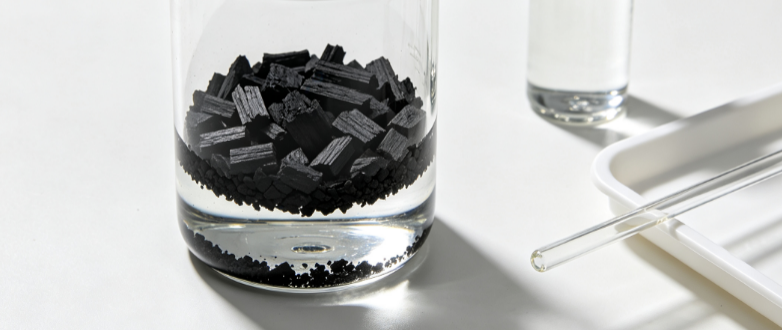
Understanding the Need for Rigorous Testing of Sulfonated Wood‑Based Activated Carbon
Clients seeking our testing services typically aim to: (i) precisely quantify the sulfonic acid group density and distinguish it from other sulfur‑containing species (e.g., sulfone, sulfoxide, elemental sulfur), (ii) evaluate the surface acidity and cation‑exchange capacity (CEC) to predict the metal‑ion uptake, (iii) determine the specific surface area, pore volume, and pore size distribution to assess the accessibility of the active sites and the diffusion kinetics, (iv) measure the equilibrium adsorption capacity and kinetics for target pollutants (e.g., Pb²⁺, Cd²⁺, methylene blue, basic dyes) under realistic pH and ionic‑strength conditions, (v) assess the thermal stability of the sulfonate groups and the carbon matrix for regeneration and thermal processing, (vi) screen for leachable impurities (heavy metals, chloride, sulfate) that may contaminate the treated water, and (vii) generate robust data for product certification, supplier qualification, and environmental compliance. Simple tests such as pH of the aqueous extract or total sulfur by elemental analysis are insufficient because the functionality and safety of SWAC depend on the speciation of sulfur, the integrity of the carbon framework, and the absence of leaching, all of which require a combination of complementary techniques. Our integrated platform combines X‑ray photoelectron spectroscopy (XPS) for sulfur speciation, combustion elemental analysis for total sulfur, conductometric/acid‑base titration for sulfonic acid groups, N₂ physisorption (BET, NLDFT, BJH) and mercury porosimetry for textural analysis, Thermogravimetric Analysis (TGA) coupled with mass spectrometry (MS) for thermal stability, Fourier‑transform infrared spectroscopy (FTIR) with diffuse reflectance (DRIFTS) for functional group identification, inductively coupled plasma mass spectrometry (ICP‑MS) for leachable metals, ion chromatography (IC) for anions, and batch/column adsorption tests with UV‑Vis or ICP‑MS detection – providing a complete and actionable quality and performance profile.
Our Multi‑Technique Analytical Platform for Sulfonated Wood‑Based Activated Carbon
1. Quantification and Speciation of Sulfur Functional Groups
We determine the total sulfur content by combustion elemental analysis (LECO) with a precision of ±0.05 wt%. To differentiate the sulfonic acid groups (–SO₃H) from sulfone (R–SO₂–R), sulfoxide (R–SO–R), or elemental sulfur, we perform X‑ray photoelectron spectroscopy (XPS) with high‑resolution S 2p core‑level spectra. The S 2p peaks are deconvoluted into components corresponding to –SO₃H (binding energy ~168‑169 eV), sulfone (~167‑168 eV), sulfoxide (~166‑167 eV), and elemental or thiophenic sulfur (~164‑165 eV). We report the relative abundance of each species (at%) with an uncertainty of ±0.2 at%. The active sulfonic acid group density is quantified by potentiometric acid‑base titration (using NaOH after repeated washing) and by conductometric titration to distinguish strong acid sites from weak acidic groups. We also use solid‑state ¹³C and ³⁵S MAS NMR (when sample size permits) to confirm the covalent attachment of sulfur to the carbon skeleton. This detailed speciation is essential for correlating the chemical structure with the cation‑exchange performance.
2. Textural Properties and Pore Architecture
We measure the BET‑specific surface area and total pore volume by N₂ physisorption at 77 K over a relative pressure range of 10⁻⁶–0.995, with a reproducibility of ±1.5%. The pore size distribution is derived using NLDFT, QSDFT, and BJH models to cover micropores, mesopores, and macropores. For a complete porosity profile, we perform CO₂ physisorption at 273 K to quantify ultramicropores (<0.7 nm) and mercury intrusion porosimetry (up to 600 MPa) to characterise the macroporosity and the bulk density. The micropore volume and external surface area are obtained from the t‑plot method. These textural parameters are correlated with the sulfonic acid loading to assess whether the sulfonation process has preserved or altered the porous network – a critical factor for maintaining the diffusion‑controlled adsorption kinetics.
3. Surface Acidity and Cation‑Exchange Capacity (CEC)
We determine the total acidity by the Boehm titration method (with NaOH, NaHCO₃, Na₂CO₃, and ethanol/NaOH) to quantify the carboxylic, lactonic, phenolic, and sulfonic groups. The cation‑exchange capacity is measured by the ammonium acetate method and by the potentiometric titration with NaCl to specifically quantify the –SO₃H groups. We also measure the point of zero charge (pHPZC) by the potentiometric mass titration method. The surface charge as a function of pH is obtained by zeta potential measurements, which is essential for predicting the electrostatic interactions with charged metal ions and dyes at different pH values.
4. Adsorption Performance for Heavy Metals, Dyes, and Organics
We conduct batch equilibrium studies for a range of target contaminants – including heavy metals (Pb²⁺, Cd²⁺, Cu²⁺, Ni²⁺), organic dyes (methylene blue, crystal violet, malachite green), and emerging organic pollutants (phenol, bisphenol A) – under controlled pH, temperature, and ionic strength. The equilibrium data are fitted to Langmuir, Freundlich, Sips, and Dubinin–Radushkevich models, and we report the maximum monolayer capacity (Qm), affinity constants, and the mean adsorption free energy. The adsorption kinetics are evaluated using pseudo‑first‑order, pseudo‑second‑order, and intraparticle diffusion models, with sampling times ranging from seconds to hours. For dynamic systems, we perform fixed‑bed column breakthrough tests with online UV‑Vis or ICP‑MS detection, deriving the breakthrough capacity (at 5% and 10% penetration), the mass transfer zone (MTZ) length, and the utilisation efficiency of the bed. We also investigate the competitive adsorption in multi‑component systems (e.g., heavy metals with competing Ca²⁺, Mg²⁺) to predict the performance in real water matrices.
5. Thermal Stability and Regeneration Behaviour
We perform simultaneous Thermogravimetric Analysis (TGA) and differential scanning calorimetry (DSC) from 25 °C to 900 °C under inert and oxidizing atmospheres, with evolved gas analysis by mass spectrometry (MS) monitoring SO₂, CO₂, H₂O, and volatile organics. The TGA curve reveals the moisture content, the decomposition of the sulfonic acid groups (typically at 250‑350 °C with evolution of SO₂), and the combustion of the carbon matrix. The decomposition onset temperature and the residual ash are reported. We also conduct accelerated regeneration tests by thermal treatment (at 150‑200 °C) and by chemical desorption (using dilute acid or salt solutions), and we measure the recovery of the adsorption capacity and the retention of the –SO₃H groups after multiple cycles (typically 5‑10 cycles). This data is crucial for assessing the economic viability and the long‑term stability of the adsorbent.
6. Leachable Impurities and Environmental Safety Assessment
We perform batch leaching tests in deionized water, in acidic (pH 4) and alkaline (pH 10) solutions, and in simulated natural waters (e.g., synthetic groundwater). The leachate is analysed for heavy metals (As, Pb, Cd, Cr, Hg, Ni, Cu) by ICP‑MS with detection limits in the sub‑ppb range, and for anions (chloride, sulfate, phosphate) by ion chromatography (IC). We also screen for dissolved organic carbon (DOC) and for specific organic extractables (e.g., polycyclic aromatic hydrocarbons, phenolic residues) by GC‑MS and LC‑MS. The results are compared against the relevant drinking‑water and environmental quality standards (e.g., EPA, WHO, EU Directive). We provide a risk assessment for the intended application, ensuring that the adsorbent itself does not introduce secondary contamination.
7. Morphology, Particle Size, and Mechanical Strength
We examine the surface morphology and the porous texture by field‑emission scanning electron microscopy (FE‑SEM) with EDS elemental mapping to visualise the distribution of sulfur and any metal residues. The particle size distribution is measured by laser diffraction (wet and dry) from 0.1 to 3500 µm, reporting D10, D50, D90, and the span. For granular or pelletised materials, we evaluate the single‑pellet crush strength and the attrition resistance (ASTM D4058) to predict the dusting and the pressure drop in packed beds. The true and bulk densities are determined by helium pycnometry and mercury displacement, respectively.
8. Functional Group Imaging and Microscopic Analysis (Optional)
For advanced R&D, we offer Raman micro‑spectroscopy with mapping to visualise the distribution of the graphitic carbon (G‑band) and the defect structures (D‑band), and to detect the presence of sulfur‑related bands. Transmission electron microscopy (TEM) with selected‑area electron diffraction (SAED) provides atomic‑scale imaging of the carbon microstructure and the sulfur‑containing moieties.
Our Distinctive Advantages in Sulfonated Wood‑Based Activated Carbon Testing
1. Unmatched Sulfur Speciation and Functional Group Analysis: We uniquely combine XPS, combustion elemental analysis, potentiometric/conductometric titration, and DRIFTS to provide a complete sulfur speciation profile – from total bulk sulfur to the specific –SO₃H density and the oxidation state of sulfur. This integrated approach enables us to distinguish between desirable sulfonic acids and inactive sulfur forms, which is essential for diagnosing performance variations and for guiding the optimisation of the sulfonation process.
2. Integrated Performance and Safety Platform: Our workflow links adsorption isotherms and kinetics with leaching tests and thermal stability, providing a holistic evaluation of both efficacy and environmental compatibility. We provide predictive models for the adsorbent’s lifetime and for the risk of metal release, enabling our clients to confidently design field‑scale applications.
3. Expertise in Carbon and Wood‑Derived Materials: Our team has extensive experience with activated carbons, biochars, and chemically modified carbons. We have developed customised degassing and digestion protocols to handle the challenging nature of sulfonated materials (e.g., hygroscopicity, potential acid evolution). Our inter‑laboratory reproducibility for key parameters (sulfonic acid density, BET, adsorption capacity) is within 2‑3% RSD, validated on over 100 SWAC samples from different production routes.
4. Regulatory‑Grade Quality and Full Traceability: Our facility is accredited under ISO/IEC 17025:2017 for BET, XPS, ICP‑MS, TGA, and adsorption testing. We use NIST‑traceable standards for sulfur, metals, and carbon analysis. All measurement uncertainties are reported with expanded uncertainties (k=2) typically <2% for sulfur content, <3% for surface area, and <5% for adsorption capacities, ensuring the data are defensible in quality audits, regulatory submissions, and product certifications.
5. Consultative Partnership and Rapid Turnaround: Each project is led by a senior carbon materials scientist who provides regular progress updates and a final report with clear conclusions, comparative benchmarking, and actionable recommendations for synthesis optimisation (e.g., adjusting the sulfonation temperature, acid concentration, or post‑washing steps). We also offer co‑authorship support for academic publications and assist in drafting the materials and methods sections for high‑impact journals.
Report Deliverables and How We Empower Your Development
Our final comprehensive report includes: (a) total sulfur content and XPS‑derived speciation of sulfur functional groups (–SO₃H, sulfone, sulfoxide, others); (b) sulfonic acid group density (mmol/g) and cation‑exchange capacity (meq/g) from titration; (c) BET surface area, micropore and mesopore volumes, and pore size distribution (NLDFT, BJH) from N₂ physisorption and mercury intrusion; (d) equilibrium isotherms and kinetic parameters for target pollutants, with fitted model parameters and confidence intervals; (e) breakthrough curves and column performance metrics (breakthrough capacity, MTZ length); (f) thermal stability – TGA‑DSC‑MS profiles with decomposition temperatures and evolved gas data; (g) leaching results for heavy metals and anions with compliance flagging; (h) particle size distribution, SEM/EDS images, crush strength, and attrition indices; (i) optional Raman and TEM characterisation; (j) a benchmarking summary comparing your SWAC with commercial reference materials and competitor products; and (k) a process optimisation guide with recommended sulfonation conditions, washing steps, and application parameters. All raw data (spectra, isotherms, diffractograms, thermograms, chromatograms, and images) are supplied in open, machine‑readable formats (CIF, JCAMP‑DX, .csv, .tiff, .mzML) for independent verification and long‑term data archiving.
We also offer subscription‑based quality surveillance programs for regular batch inspection, with trend analysis and statistical process control (SPC) charts. Our secure client portal provides 24/7 access to project data and direct communication with our technical experts.
Partner with Us for Unmatched Analytical Precision
Sulfonated wood‑based activated carbon represents a sustainable and versatile adsorbent platform, but its successful industrial application demands a comprehensive understanding of its chemical, physical, and functional properties. Our testing service provides that understanding – integrating advanced sulfur speciation, detailed porosity analysis, rigorous adsorption performance testing, environmental safety screening, and thermal stability assessment with expert interpretation. By choosing our laboratory, you gain a trusted partner that ensures your SWAC material meets the most stringent specifications for water treatment, catalysis, and ion‑exchange applications, enabling you to accelerate product development, maintain consistent quality, and comply with global regulations. Contact our expert team today to design a customized testing protocol – we are committed to advancing your sustainable carbon technologies with unparalleled analytical depth and scientific rigor.