Reasons for choosing our testing services
ZHONGXI Testing has obtained inspection qualification certifications from multiple countries and regions worldwide. We possess a senior testing team and advanced testing methods, providing independent, impartial, and professional third-party verification services for global carbon projects.

Internationally recognized authority
Certified by multiple international standards such as CNAS, VCS, and GS, with reports universally applicable worldwide.

Global service capability
Covering 140+ countries and regions, it supports on-site detection and remote verification in multiple languages.

Professional experimental methods
Adopt standard experimental methods to ensure accurate and reliable data.
Comprehensive Analytical Characterization of Activated Oyster Shell Powder – Advanced Testing Services for Sustainable Adsorbents, Soil Conditioners, and Biomineral Materials
Activated oyster shell powder (AOSP) – produced by calcination, hydration, and controlled particle sizing of waste oyster shells – has gained widespread recognition as a sustainable, low‑cost material for heavy metal removal, soil pH adjustment, antimicrobial applications, and catalyst support. Its performance is governed by a unique combination of calcium carbonate polymorph (calcite vs. aragonite), the degree of conversion to calcium oxide or hydroxide during activation, the specific surface area and pore architecture, the presence of trace elements (Mg, Sr, Na, Fe), and the particle size distribution. Unlike synthetic calcium carbonate, AOSP retains the hierarchical porous structure of the original shell biomineral, offering superior adsorption kinetics. However, batch‑to‑batch variability in activation conditions, feedstock provenance, and processing parameters can lead to significant differences in efficacy and safety. Therefore, a rigorous, multi‑parametric analytical evaluation is indispensable for material qualification, quality control, process optimisation, and regulatory compliance. Our ISO/IEC 17025‑accredited laboratory offers a dedicated, high‑depth testing service specifically tailored for activated oyster shell powder, integrating advanced diffraction, spectroscopic, thermal, and morphological methods to deliver a complete chemical, structural, and functional fingerprint – far beyond simple calcium content or pH measurements.
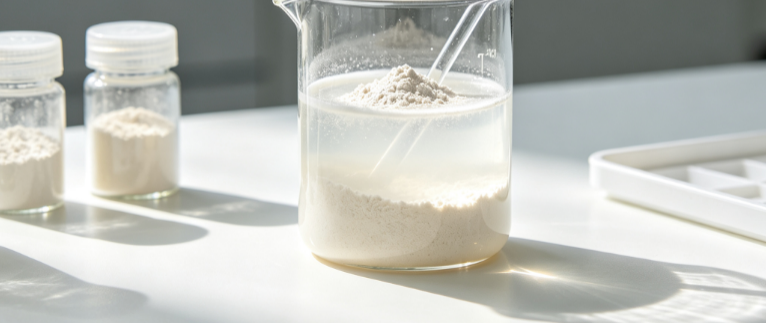
Why Comprehensive Characterisation of Activated Oyster Shell Powder Is Essential for Industrial and Environmental Applications
Clients seeking our testing services typically aim to: (i) quantify the calcium carbonate polymorph (calcite/aragonite) and the degree of thermal conversion to CaO/Ca(OH)₂, which directly influences the neutralisation capacity and heavy metal binding affinity, (ii) determine the specific surface area, pore volume, and pore size distribution to predict adsorption capacity and kinetic performance, (iii) measure the particle size distribution and the morphology to assess the handling, the dispersion, and the reactivity, (iv) identify and quantify trace metallic elements (e.g., Mg, Sr, Fe, Mn, Zn, Pb, Cd, As) to ensure product safety and to comply with environmental regulations, (v) evaluate the acid‑neutralising capacity and the alkalinity release kinetics for soil and water treatment applications, (vi) assess the thermal stability and the phase transitions during calcination, (vii) detect the presence of organic residues from the shell matrix that may affect the colour or the adsorption performance, and (viii) generate robust data for product certification, supplier qualification, and regulatory submissions. Routine tests such as simple acid‑base titration or XRF for calcium are insufficient because the functional performance of AOSP is governed by the interplay of the crystalline phase, the porosity, the impurity matrix, and the particle morphology, all of which require a suite of complementary techniques. Our integrated platform combines powder X‑ray diffraction (XRD) with Rietveld refinement for phase quantification, X‑ray fluorescence (XRF) and inductively coupled plasma mass spectrometry (ICP‑MS) for elemental analysis, N₂ physisorption (BET, BJH, NLDFT) and mercury intrusion porosimetry for textural characterisation, Thermogravimetric Analysis (TGA) coupled with differential scanning calorimetry (DSC) and mass spectrometry (MS) for thermal behaviour and evolved gas analysis, Fourier‑transform infrared spectroscopy (FTIR) with diffuse reflectance (DRIFTS) for functional groups, scanning electron microscopy (SEM) with energy‑dispersive X‑ray spectroscopy (EDS) for morphology and elemental mapping, laser diffraction for particle sizing, and standard acid‑neutralisation tests to quantify the active basicity – providing a complete and actionable quality profile.
Our Advanced Analytical Framework for Activated Oyster Shell Powder
1. Phase Composition, Polymorph Identification, and Degree of Activation
We perform high‑resolution powder X‑ray diffraction (HR‑XRD) with Cu Kα radiation over a 2θ range of 5°–80°, with a step size of 0.005°. Rietveld refinement is applied to quantify the weight fractions of calcite (CaCO₃), aragonite (CaCO₃), lime (CaO), and portlandite (Ca(OH)₂) with an accuracy of ±0.5 wt% for major phases and ±0.2 wt% for minor phases. The degree of calcination (i.e., the conversion of CaCO₃ to CaO) is calculated from the phase fractions and is correlated with the weight loss from TGA. For samples that have been partially re‑carbonated (exposed to air), we quantify the carbonation level by detecting the CaCO₃ phase that re‑forms from Ca(OH)₂. We also report the crystallite size and the microstrain from the Scherrer equation and Williamson‑Hall analysis, which influence the reactivity and the solubility of the powder.
2. Elemental Composition and Trace Metal Profiling
We determine the major element composition (Ca, Mg, Sr, Na, K, Fe, Al, Si, P) by X‑ray fluorescence (XRF) on pressed pellets, with detection limits in the 0.01–0.1 wt% range. For ultra‑trace elements (including heavy metals: Pb, Cd, As, Hg, Cr, Ni, Cu, Zn), we use inductively coupled plasma mass spectrometry (ICP‑MS) after microwave‑assisted acid digestion, achieving detection limits in the sub‑ppb range. We also measure the loss on ignition (LOI) at 950 °C to estimate the total organic and volatile content. The calcium equivalent (CaO basis) is calculated and compared against the theoretical maximum. The impurity profile is assessed against the relevant standards for soil conditioners, feed additives, and water treatment agents (e.g., EU 1069/2009, EPA 503, or organic farming regulations).
3. Textural Properties: Surface Area, Pore Volume, and Pore Architecture
We measure the BET‑specific surface area and the total pore volume by N₂ physisorption at 77 K over a relative pressure range of 10⁻⁶–0.995, with a reproducibility of ±1.5%. The pore size distribution is derived using NLDFT, QSDFT, and BJH models to characterise the meso‑ and macroporosity inherited from the shell biomineral structure. For a complete porosity profile, we perform mercury intrusion porosimetry (up to 600 MPa) to quantify the bulk density, the pore throat distribution, and the skeletal density. The micropore volume and the external surface area are obtained from the t‑plot. These textural parameters are directly correlated with the adsorption capacity and the accessibility of the active sites.
4. Surface Chemistry, Functional Groups, and Basicity
We characterise the surface functional groups – including hydroxyl (OH), carbonate (CO₃²⁻), and any organic residues – using diffuse reflectance infrared Fourier transform spectroscopy (DRIFTS) in the 400–4000 cm⁻¹ range. The surface basicity is quantified by the acid‑neutralisation capacity (ANC) through a potentiometric titration method (e.g., ASTM D4373) and by the lime‑reactivity test to determine the available active calcium (as Ca(OH)₂ or CaO). The pH of the aqueous extract (1:10 suspension) is measured to predict the alkalinity release profile. The point of zero charge (pHPZC) is determined by the potentiometric mass titration method to predict the electrostatic interactions with charged pollutants.
5. Particle Size Distribution and Morphological Characterisation
We measure the particle size distribution by laser diffraction (wet dispersion) from 0.1 to 3500 µm, reporting D10, D50, D90, and the span. The particle morphology – including the shape, the surface texture, and the degree of agglomeration – is examined by field‑emission scanning electron microscopy (FE‑SEM) with EDS elemental mapping to visualise the distribution of calcium and trace elements. The specific surface area from BET is compared with the geometric surface area calculated from SEM to estimate the degree of internal porosity.
6. Thermal Stability and Phase Transformation Behaviour
We perform simultaneous Thermogravimetric Analysis (TGA) and differential scanning calorimetry (DSC) from 25 °C to 1000 °C under inert and oxidizing atmospheres, with evolved gas analysis by mass spectrometry (MS) monitoring CO₂, H₂O, and any organic volatiles. The TGA curve reveals the moisture content (below 150 °C), the decomposition of any organic matter (200–400 °C), the de‑carbonation of CaCO₃ (600–800 °C), and the mass loss corresponding to the activation. The DSC curve identifies the endothermic peaks associated with the de‑carbonation and any phase transitions. We report the onset and peak temperatures for each event, which are essential for optimising the calcination conditions and for assessing the thermal stability during processing.
7. Acid‑Neutralising Capacity and Reactivity Kinetics
We evaluate the active alkalinity by measuring the acid‑neutralisation capacity (ANC) using a back‑titration method (e.g., EPA 9045) and by monitoring the pH change over time when the powder is added to an acidic solution (simulating soil or wastewater conditions). The initial neutralisation rate and the time to equilibrium are reported, providing insights into the dissolution kinetics and the suitability for rapid pH adjustment. The ANC is expressed as mg CaCO₃ equivalent per gram of powder, and we correlate it with the CaO + Ca(OH)₂ content from XRD.
8. Leachability and Environmental Safety Assessment
We conduct batch leaching tests in deionized water, in acidic (pH 4) and alkaline (pH 10) solutions, and in synthetic rainwater (EPA Method 1311). The leachate is analysed for heavy metals (Pb, Cd, As, Cr, Hg, Ni) by ICP‑MS and for anions (chloride, sulfate, fluoride) by ion chromatography (IC). We also measure the total dissolved solids (TDS) and the conductivity to assess the potential for salt release. These data are essential for ensuring the environmental compatibility of the powder for soil amendment, water treatment, or as a feed additive.
Our Distinctive Advantages in Activated Oyster Shell Powder Testing
1. Unmatched Phase Quantification and Speciation Depth: Our combination of HR‑XRD with Rietveld refinement, TGA‑MS, and DRIFTS provides a definitive quantification of the calcination degree, the polymorph ratio (calcite/aragonite), and the carbonation level. This is critical for differentiating between products with high reactive lime (for rapid neutralisation) and those with mostly calcium carbonate (for slow‑release conditioning). We report the free‑lime content (CaO + Ca(OH)₂) with an uncertainty of ±0.5 wt%, enabling precise quality control.
2. Integrated Pore and Surface Characterisation: We link the pore architecture (BET, mercury intrusion) with the surface chemistry (FTIR, pHPZC) and the elemental impurities (XRF, ICP‑MS), enabling a complete understanding of the adsorption mechanism – whether it is ion‑exchange, surface complexation, or precipitation. This integration allows us to diagnose, for example, whether a low adsorption capacity is due to pore blockage from organics, excessive fine particles, or a low surface area from over‑calcination.
3. Regulatory‑Ready Documentation and Certifiable Results: Our laboratory is accredited under ISO/IEC 17025:2017 for all key methods – including XRD, TGA, BET, ICP‑MS, and ANC. We use NIST‑traceable standards for calcium and trace metals. All uncertainties are reported with expanded uncertainties (k=2) typically <2% for CaO content, <3% for surface area, and <5% for neutralisation capacity, ensuring the data are defensible in quality audits, regulatory submissions, and product certifications.
4. Expert Interpretation and Application‑Specific Recommendations: Each project is managed by a senior inorganic materials scientist with specialised experience in biomineral‑based materials. We provide interpretative reports that not only present the analytical results but also offer a comparative benchmark against commercial oyster shell powders and synthetic calcium carbonates. We offer actionable recommendations for optimising the activation temperature, the residence time, and the particle size to achieve the desired reactive lime content, surface area, and heavy metal purity. We also support co‑authorship for research publications and assist in drafting technical dossiers for product approval.
Report Deliverables and Client Empowerment
Our final comprehensive report includes: (a) quantitative phase composition – calcite, aragonite, CaO, Ca(OH)₂, and any other crystalline phases – from Rietveld refinement; (b) crystallite size and microstrain for each phase; (c) elemental composition (XRF) and trace metal profile (ICP‑MS) with compliance flagging; (d) BET surface area, total pore volume, micropore volume, and pore size distribution (NLDFT, BJH) from N₂ physisorption and mercury intrusion; (e) DRIFTS spectra with functional group assignments and pHPZC; (f) particle size distribution (D10, D50, D90), SEM images with EDS maps, and TEM micrographs (optional); (g) TGA‑DSC‑MS thermal profiles – moisture, organic decomposition, decarbonation temperatures, and mass losses; (h) acid‑neutralising capacity (ANC) and neutralisation kinetics; (i) leaching results for heavy metals and anions with environmental risk assessment; (j) a benchmarking summary comparing your AOSP with reference materials and competitor products; and (k) a process optimisation guide with recommendations for calcination, grinding, and storage conditions. All raw data (diffractograms, spectra, isotherms, thermograms, chromatograms, and images) are supplied in open, machine‑readable formats (CIF, JCAMP‑DX, .csv, .tiff, .mzML) for independent verification and long‑term data archiving.
We also offer subscription‑based quality surveillance programs for regular batch inspection, with trend analysis and statistical process control (SPC) charts. Our secure client portal provides 24/7 access to project data and direct communication with our technical experts.
Partner with Us for Unmatched Analytical Precision
Activated oyster shell powder represents a sustainable and high‑performance material for environmental and agricultural applications, but its success hinges on a thorough understanding of its phase composition, porosity, reactivity, and safety. Our testing service provides that understanding – integrating advanced phase quantification, elemental profiling, textural characterisation, thermal stability assessment, and reactivity testing with expert interpretation. By choosing our laboratory, you gain a trusted partner that ensures your AOSP meets the most stringent specifications for water treatment, soil remediation, and biomineral applications, enabling you to accelerate product development, maintain consistent quality, and comply with global regulations. Contact our expert team today to design a customized testing protocol – we are committed to advancing your oyster shell‑based technology with unparalleled analytical depth and scientific rigor.