Reasons for choosing our testing services
ZHONGXI Testing has obtained inspection qualification certifications from multiple countries and regions worldwide. We possess a senior testing team and advanced testing methods, providing independent, impartial, and professional third-party verification services for global carbon projects.

Internationally recognized authority
Certified by multiple international standards such as CNAS, VCS, and GS, with reports universally applicable worldwide.

Global service capability
Covering 140+ countries and regions, it supports on-site detection and remote verification in multiple languages.

Professional experimental methods
Adopt standard experimental methods to ensure accurate and reliable data.
Comprehensive Quality and Performance Assessment of Activated Bleaching Earth: Advanced Analytical Services for Edible Oil, Mineral Oil, and Chemical Refining
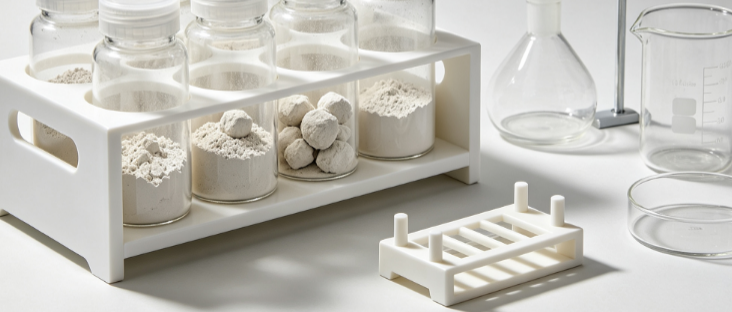
Activated bleaching earth (ABE) – a processed clay mineral, typically derived from bentonite or attapulgite, that has been acid‑activated to enhance its decolorising and adsorbent properties – is a vital component in the refining of edible oils, animal fats, mineral oils, and various industrial chemicals. Its effectiveness in removing colouring compounds, residual gums, soaps, metals, and other impurities is governed by a complex interplay of specific surface area, pore architecture, surface acidity, moisture content, particle size distribution, and the presence of active acidic sites. Even minor variations in the activation process or raw material quality can lead to significant differences in decolourisation efficiency, oil loss, and filterability, ultimately affecting the product quality and the process economics. Therefore, a rigorous, multi‑parametric analytical regime is essential for quality assurance, process optimisation, supplier qualification, and troubleshooting of operational issues. Our ISO/IEC 17025‑accredited laboratory offers a dedicated, high‑depth testing service specifically tailored for activated bleaching earth, integrating advanced physical, chemical, and performance‑oriented methods to deliver a complete functional and safety fingerprint – far beyond routine free acidity or moisture content determinations.
Why Comprehensive Characterisation of Activated Bleaching Earth Is Indispensable for the Refining Industry
Clients seeking our testing services typically aim to: (i) quantify the decolourising activity (e.g., bleaching power, oil absorption) to ensure the earth meets the required performance specifications, (ii) measure the specific surface area and pore volume to predict the adsorption capacity and the kinetic performance, (iii) determine the free acidity and the cation‑exchange capacity to assess the potential for catalyst deactivation or oil quality degradation, (iv) evaluate the moisture and volatile content to prevent lump formation and to ensure reproducible activation, (v) analyse the particle size distribution and the filterability to optimise the filtration step and to minimise oil loss, (vi) identify and quantify trace metallic impurities (e.g., Fe, Ca, Mg, Na, K, and heavy metals) that may affect the oil stability or the safety, (vii) assess the thermal stability and the regenerability of the spent earth, and (viii) generate robust data for product certification, supplier compliance, and regulatory submissions. Routine single‑parameter tests such as a simple free acidity titration or a spot colour test are insufficient because the bleaching performance is determined by the synergistic interplay of surface area, pore structure, acidity, and moisture, all of which require a suite of complementary techniques. Our integrated platform combines specific decolourisation efficiency tests (using standard oil or carotenoid solutions), N₂ physisorption (BET, BJH, NLDFT) for surface area and porosity, mercury intrusion porosimetry, cation‑exchange capacity (CEC) measurement, free and total acidity titration, moisture and loss on ignition (LOI) analysis, laser diffraction particle sizing, X‑ray fluorescence (XRF) and inductively coupled plasma optical emission spectrometry (ICP‑OES) for elemental analysis, Fourier‑transform infrared spectroscopy (FTIR) for surface functional groups, X‑ray diffraction (XRD) for phase identification, and filterability tests (Büchner funnel or pressure filtration) – providing a complete and actionable quality profile.
Our Advanced Analytical Framework for Activated Bleaching Earth
1. Decolourisation Performance and Bleaching Activity
We measure the bleaching efficiency using a standardised test with a reference oil (e.g., a specific neutralised, bleached oil or a solution of β‑carotene in an oil matrix) and by a modified Lovibond or spectrophotometric method. The decolourisation process is conducted under controlled conditions (temperature, contact time, agitation speed, and earth dosage) that simulate industrial practice. We report the relative bleaching power (compared to a standard reference earth), the oil absorption capacity, and the residual colour reduction (expressed as a percentage of the colour removal). We also evaluate the selectivity of the earth by measuring the simultaneous loss of desirable components (e.g., tocopherols, sterols) via HPLC. This performance‑based data directly correlates with the structural and chemical properties.
2. Textural Properties: Surface Area, Pore Volume, and Pore Size Distribution
We determine the BET‑specific surface area and the total pore volume by N₂ physisorption at 77 K over a wide relative pressure range (10⁻⁶–0.995), with a reproducibility of ±1.5%. The pore size distribution is derived using NLDFT, QSDFT, and BJH models to characterise the mesopores (2–50 nm) and macropores (>50 nm), which are critical for the accessibility of large pigment molecules and for the diffusion kinetics. For macroporosity and interparticle voids, we perform mercury intrusion porosimetry (up to 600 MPa) to obtain the bulk density, the pore throat distribution, and the skeletal density. We also calculate the micropore volume and the external surface area from the t‑plot. These textural parameters are directly correlated with the bleaching efficiency and the oil retention.
3. Acidity, Cation‑Exchange Capacity, and Surface Chemistry
We measure the free acidity (water‑soluble acid) by titration with NaOH (ASTM D974 or equivalent) and the total acidity (including ion‑exchangeable H⁺) by a modified acid‑base method. The cation‑exchange capacity (CEC) is determined by the ammonium acetate method (or by the BaCl₂ compulsive exchange method) to quantify the surface charge and the availability of active sites. The surface acid sites are further characterised by temperature‑programmed desorption of ammonia (NH₃‑TPD) to resolve the weak, medium, and strong acid sites. We also use diffuse reflectance infrared Fourier transform spectroscopy (DRIFTS) to identify the surface silanol groups (Si–OH) and other functional groups that contribute to the adsorption of polar impurities. The pH of the aqueous extract is measured to predict the acid‑base behaviour in the oil matrix.
4. Elemental Composition and Trace Impurity Profile
We quantify the major and trace elements (Si, Al, Fe, Ca, Mg, Na, K, Ti, P, S, Mn, Zn, and heavy metals such as Pb, Cd, As, Hg) using X‑ray fluorescence (XRF) on pressed pellets and by inductively coupled plasma optical emission spectrometry (ICP‑OES) after microwave‑assisted acid digestion. For ultra‑trace elements, we use ICP‑mass spectrometry (ICP‑MS) with detection limits in the sub‑ppb range. The loss on ignition (LOI) at 1000 °C is determined to estimate the organic matter, carbonate, and water content. The impurity profile is compared against the relevant specifications for food‑grade and industrial‑grade bleaching earths (e.g., EC Directive 2009/32/EC, FDA regulations).
5. Moisture, Volatile Matter, and Thermal Stability
We measure the moisture content by Karl Fischer coulometric titration (with a detection limit of 0.01%) and by the loss on drying at 105 °C (ASTM D2216). The total volatile matter is obtained by Thermogravimetric Analysis (TGA) from 25 °C to 900 °C under nitrogen, with evolved gas analysis by mass spectrometry (MS) to identify the released species (H₂O, CO₂, organic volatiles). The TGA profile also reveals the thermal stability and the structural collapse temperature of the clay. The moisture and volatile content are critical for preventing the caking and for ensuring the reproducibility of the activation process.
6. Particle Size, Morphology, and Filterability
We measure the particle size distribution by laser diffraction (wet and dry) from 0.1 to 3500 µm, reporting D10, D50, D90, and the span. The particle morphology – including the shape, the surface texture, and the degree of agglomeration – is examined by field‑emission scanning electron microscopy (FE‑SEM) with EDS elemental mapping. The filterability is evaluated by a Büchner funnel filtration test (measuring the flow rate and the filtration time) and by the pressure filtration method, to assess the resistance to filtration and the tendency to form a compact cake. These properties directly influence the oil recovery and the process throughput in industrial filtration equipment.
7. Oil Absorption and Rheological Behaviour
We determine the oil absorption capacity (ASTM D281) – a measure of the amount of oil that the earth can hold while maintaining a paste‑like consistency – which is correlated with the porosity and the surface area. The angle of repose is measured to assess the powder flowability, which is important for storage and handling. These parameters are essential for predicting the filter cake formation and the oil yield.
8. Mineralogical Phase Identification
We use powder X‑ray diffraction (XRD) to identify the clay mineral phases (e.g., montmorillonite, attapulgite, kaolinite) and to detect any crystalline impurities (e.g., quartz, cristobalite, calcite). The d001 basal spacing is measured to assess the degree of interlayer expansion and the exchangeable cation composition. This phase information is correlated with the acid activation level and the bleaching performance.
Our Distinctive Advantages in Activated Bleaching Earth Testing
1. Integrated Performance and Physicochemical Platform: We uniquely combine decolourisation efficiency tests with detailed textural (BET, mercury porosimetry), chemical (acidity, CEC, elemental composition), and thermal (TGA‑MS) analyses in a single workflow. This integration enables us to correlate the structural and chemical parameters (e.g., surface area, acidity, iron content) with the actual bleaching performance, providing a predictive model for process optimisation. This is a distinct advantage over isolated single‑parameter tests.
2. Expertise in Clay Chemistry and Acid Activation: Our team has extensive experience with bentonite‑based, attapulgite‑based, and synthetic bleaching earths. We have developed customised sample preparation protocols – including careful homogenisation and controlled drying – to avoid altering the delicate acid‑site distribution and the pore structure. Our inter‑laboratory reproducibility for key parameters (bleaching efficiency, BET, CEC) is within 2‑3% RSD, validated on over 200 commercial bleaching earth products.
3. Regulatory‑Ready Documentation and Certifiable Results: Our facility is accredited under ISO/IEC 17025:2017 for all key methods – including decolourisation testing, BET, mercury porosimetry, CEC, and elemental analysis. We use NIST‑traceable standards for acidity, metals, and reference oils. All measurement uncertainties are reported with expanded uncertainties (k=2) typically <2% for surface area, <3% for bleaching power, and <5% for trace metals, ensuring the data are defensible in quality audits, regulatory submissions, and customer certifications.
4. Consultative Partnership and Process Support: Each project is led by a senior clay scientist with specialised knowledge of oil refining processes. We provide interpretative reports that not only present the analytical results but also offer a comparative benchmark against competitive bleaching earths and a performance‑driven recommendation for the optimal dosage, contact time, and filtration conditions. We also assist in troubleshooting – for example, diagnosing excessive oil loss, poor colour removal, or premature filter clogging. We support co‑authorship for technical publications and assist in drafting the technical dossiers for product approval.
Report Deliverables and Client Empowerment
Our final comprehensive report includes: (a) decolourisation efficiency (%), relative bleaching power, and oil absorption capacity; (b) BET surface area, micropore and mesopore volumes, pore size distribution (NLDFT, BJH), and mercury porosimetry data; (c) free acidity, total acidity, CEC (meq/100g), NH₃‑TPD acid‑site distribution, and pH of the aqueous extract; (d) major and trace elemental composition (XRF, ICP‑OES) with heavy metal screening (ICP‑MS) and compliance flagging; (e) moisture content, loss on drying, and TGA‑MS thermal profiles with decomposition temperatures; (f) particle size distribution (D10, D50, D90), SEM images with EDS maps, and filterability indices; (g) oil absorption and angle of repose; (h) XRD phase identification and basal spacing; (i) a benchmarking summary comparing your ABE with reference materials and competitor products; and (j) a process optimisation guide with recommended dosage, contact time, and filtration parameters based on the measured properties. All raw data (chromatograms, diffractograms, spectra, isotherms, thermograms, and images) are supplied in open, machine‑readable formats (CIF, JCAMP‑DX, .csv, .tiff, .mzML) for independent verification and long‑term data archiving.
We also offer subscription‑based quality surveillance programs for regular batch inspection, with trend analysis and statistical process control (SPC) charts. Our secure client portal provides 24/7 access to project data and direct communication with our technical experts.
Partner with Us for Unmatched Analytical Precision
Activated bleaching earth is a critical consumable in the edible oil and chemical refining industries, and its quality directly affects the product quality, the process efficiency, and the operating costs. Our testing service provides the analytical depth required to ensure that your bleaching earth meets the most stringent performance and safety specifications. By integrating advanced performance testing, detailed physicochemical characterisation, and expert interpretation, we empower you to optimise your refining process, reduce oil losses, and maintain consistent product quality. Contact our expert team today to design a customized testing protocol – we are committed to advancing your refining technology with unparalleled analytical depth and scientific rigor.