Reasons for choosing our testing services
ZHONGXI Testing has obtained inspection qualification certifications from multiple countries and regions worldwide. We possess a senior testing team and advanced testing methods, providing independent, impartial, and professional third-party verification services for global carbon projects.

Internationally recognized authority
Certified by multiple international standards such as CNAS, VCS, and GS, with reports universally applicable worldwide.

Global service capability
Covering 140+ countries and regions, it supports on-site detection and remote verification in multiple languages.

Professional experimental methods
Adopt standard experimental methods to ensure accurate and reliable data.
Comprehensive Optoelectronic and Reliability Testing for Light-Emitting Diodes (LEDs) – Advanced Characterization Services
The global proliferation of light-emitting diode (LED) technology across general lighting, automotive displays, horticultural illumination, and high-speed optical communication has imposed unprecedented demands on device performance, longevity, and spectral consistency. For manufacturers, integrators, and research institutions, the rigorous testing of LED parameters – ranging from electrical and photometric characteristics to thermal management and long-term reliability – is not a mere quality checkpoint; it is an essential enabler of product competitiveness, regulatory compliance, and application-specific fitness. Clients seeking LED testing services typically aim to: (i) validate design specifications against industry standards (e.g., IES LM-80, AEC-Q102, JEDEC), (ii) screen for early failures through stress testing, (iii) characterize color rendering and output stability for human-centric lighting, (iv) optimize junction temperature management for extended lifetime, and (v) generate documented performance data for technical datasheets, tender submissions, or warranty claims. Recognizing these strategic needs, our laboratory offers a comprehensive, fully accredited LED testing service that integrates electrical, optical, thermal, and reliability assessments under one roof, delivering far more than a simple pass/fail verdict – we provide a diagnostic fingerprint of your LED device, correlated with predictive models for real-world operational behavior.
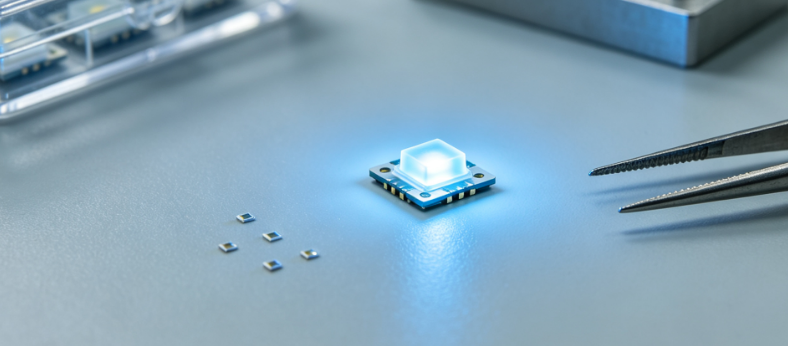
The complexity of modern LED devices – which often incorporate multiple quantum wells, phosphor conversion layers, and advanced packaging architectures – demands an analytical approach that transcends basic forward voltage and luminous flux measurements. Our platform is engineered to capture static and dynamic electro-optical characteristics, temperature-dependent performance shifts, and degradation kinetics under accelerated aging, all within a controlled environmental framework that mimics actual deployment scenarios. This holistic perspective enables us to not only certify compliance but also to identify root causes of performance deviations, empowering clients to iterate designs with confidence and speed.
Comprehensive Electro-Optical Parameter Suite – Static, Dynamic, and Spectral Analysis
At the core of our LED testing service lies a fully automated characterization system integrating a high-precision source-measure unit (Keithley 2400 series), an integrating sphere (1.5 m diameter) coupled with a calibrated spectroradiometer (Ocean Insight HR-4000), and a fast photodiode amplifier for transient measurements. This configuration enables the simultaneous determination of over 30 electrical and optical parameters, including but not limited to: forward voltage (VF) at multiple current levels (from 1 μA to 5 A), threshold voltage, series resistance, luminous flux (lm), radiant power (W), peak wavelength (λp), dominant wavelength (λd), spectral power distribution (SPD) from 350 nm to 1100 nm, color coordinates (CIE 1931 x,y and CIE 1976 u’,v’), correlated color temperature (CCT), color rendering index (CRI – Ra and R1–R15), and chromaticity deviation (Duv). All measurements are performed at four distinct junction temperatures (25 °C, 55 °C, 85 °C, and 105 °C) using a Peltier-controlled thermoelectric chuck, enabling the extraction of temperature coefficients for VF (mV/°C) and wavelength (nm/°C) – critical parameters for thermal management system design.
For high-speed applications such as visible light communication (VLC) or pulse-width modulation (PWM) dimming, we offer dynamic response characterization using a 1 GHz bandwidth oscilloscope and a synchronized current pulse generator. This captures rise/fall times (tr, tf), modulation bandwidth (3 dB cut-off frequency), and latency variations across different duty cycles. Our system can also perform electroluminescence (EL) mapping on wafer-level or singulated LEDs using a high-resolution CCD camera with microscope objective, providing spatially resolved intensity and wavelength distributions that reveal current crowding, local defects, or non-uniform phosphor coating – insights that are invaluable for process optimization and failure analysis.
Thermal Characterization and Thermal Impedance Spectroscopy
Junction temperature (Tj) is arguably the single most influential factor in LED performance and reliability. Our laboratory employs two complementary thermal measurement techniques to provide a complete thermal picture. The first is the forward voltage temperature coefficient (K-factor) method, calibrated against a temperature-controlled oven, which allows non-invasive determination of Tj during normal operation with an accuracy of ±0.5 °C. The second is thermal impedance spectroscopy using a T3Ster® thermal transient tester, which applies a step current and records the cooling curve of the diode voltage. This data is processed via structure function analysis, yielding a thermal resistance network that decomposes the total junction-to-ambient resistance (RθJA) into its constituent components – junction-to-case (RθJC), case-to-solder (RθCS), and solder-to-board (RθSB) – thereby pinpointing the bottleneck in the heat dissipation path. This level of detail enables clients to refine their packaging, thermal interface materials, and heatsink design to achieve lower operating temperatures, which directly translates to extended lifetime and stable lumen maintenance.
All thermal measurements are performed under still-air and forced-convection conditions, using a custom-built wind tunnel with variable airflow (0.5–5 m/s) to simulate different application environments. We also measure thermal droop – the decrease in luminous efficacy with increasing current – by performing pulsed (0.1% duty cycle) versus DC measurements at identical Tj, separating the effects of self-heating from intrinsic efficiency roll-off. This comprehensive thermal profiling is essential for high-power LED modules used in automotive headlamps, projection systems, and industrial lighting.
Reliability and Lifetime Testing – Accelerated Stress and Predictive Modeling
Long-term reliability is the cornerstone of LED adoption, particularly in applications where maintenance is costly or impractical. Our reliability testing suite is aligned with IES LM-80-22, TM-21-19, and AEC-Q102 Rev. E standards, and goes beyond them by incorporating multi-stress combinatorial testing. We operate a dedicated reliability chamber farm comprising 96 independent test slots, each capable of independent current and temperature control, allowing simultaneous execution of:
(i) Constant current aging at three junction temperatures (55 °C, 85 °C, and 105 °C) for a minimum of 6,000 hours (per LM-80 requirement), with intermediate flux and color measurements at 500-hour intervals. Our system automatically monitors forward voltage and optical output in-situ, with a sampling rate of 1 reading per minute, capturing transient events such as early failure or abrupt degradation.
(ii) Thermal cycling stress (−40 °C to +125 °C, 1,000 cycles, dwell time 15 min) to evaluate solder joint integrity, wire bond fatigue, and encapsulant cracking. Post-cycling characterization includes optical microscopy, scanning acoustic microscopy (SAM) for delamination detection, and cross-sectioning for metallurgical analysis.
(iii) Humidity-temperature-bias (HTB) testing at 85 °C/85% RH with reverse bias, as per AEC-Q102, to assess susceptibility to electrochemical migration and corrosion.
(iv) Power cycling with a 1-minute on/off sequence to evaluate thermal-mechanical stress under pulsed operation, which often reveals different failure modes than steady-state aging.
All reliability data are fed into our proprietary degradation modeling platform that applies both the Arrhenius temperature acceleration model and the Eyring-based combined-stress model, yielding not only an extrapolated L70 (time to 70% lumen maintenance) or L50 lifetime, but also activation energy (Ea) values for each individual failure mechanism. This level of kinetic analysis enables clients to predict field lifetimes under their specific usage profiles with much higher confidence than the standard TM-21 approach, which relies solely on empirical curve-fitting. Our models are validated against real-time aging data from external third-party reference LEDs, ensuring that our extrapolations are both conservative and scientifically defensible.
Spectral and Color Stability Under Thermal and Electrical Stress
Beyond luminous efficacy, the spectral integrity and color consistency of LEDs are paramount for applications in museum lighting, horticulture (where specific photon flux ratios are critical), and medical devices. Our testing protocol includes high-resolution spectroradiometric monitoring throughout the aging process, capturing shifts in peak wavelength, spectral width (FWHM), and the ratio of blue-to-phosphor emission. We quantify color shift (Δu’v’) as per CIE standards and color maintenance (ΔCCT, ΔCRI) at each measurement interval. For white LEDs, we perform phosphor conversion efficiency (PCE) analysis by separating the blue pump and converted yellow components via spectral deconvolution, tracking any degradation in the phosphor layer that may lead to pinkish or bluish drift. This is complemented by spatial color uniformity measurements across the emitting surface using a goniometric setup, revealing any angular color deviation that could affect beam quality in luminaires.
For RGB and multi-chip LED modules, we provide individual color channel testing and mixed-color stability under simultaneous operation, ensuring that the combined spectrum remains invariant with current and temperature changes – a critical requirement for dynamic lighting and display backlighting. Our proprietary color-mixing optimization algorithm uses the measured thermal coefficients of each color to recommend compensation currents, enabling active color stabilization in real-time control systems.
Advanced Failure Analysis and Root-Cause Diagnostics
When LEDs fail or exhibit performance degradation beyond acceptable limits, our laboratory offers a comprehensive failure analysis (FA) service that integrates non-destructive and destructive techniques. This includes:
(i) Scanning electron microscopy (SEM) with energy-dispersive X-ray spectroscopy (EDS) to examine wire-bond fractures, die attach voids, and metallic migration.
(ii) Confocal laser scanning microscopy (CLSM) for 3D surface profiling of the phosphor layer and encapsulant surface to detect cracking or delamination.
(iii) Micro-infrared (IR) thermography with a spatial resolution of 5 μm to map hot spots on the die and identify localized current crowding or defective QWs.
(iv) Electroluminescence (EL) and photoluminescence (PL) imaging to differentiate between electrically active defects (EL dark spots) and phosphor degradation (PL loss).
We combine these data with the pre-failure electrical and thermal logs to reconstruct the failure timeline, determining whether the failure was due to overcurrent, thermal runaway, ESD damage, or material fatigue. This diagnostic capability is invaluable for clients involved in product liability disputes, warranty returns, or continuous improvement programs.
Regulatory Compliance and Standardization
Our testing services are fully compliant with the major international standards governing LED performance and safety. We are accredited to ISO/IEC 17025 for the following test methods: IES LM-80 (lumen maintenance), IES LM-79 (electrical and photometric measurements), CIE S 025 (spectral measurement), JEDEC JESD51 (thermal resistance), and AEC-Q102 (automotive reliability). We maintain traceability to NIST and PTB for all optical and thermal calibrations, and our integrating sphere is recalibrated biannually using a standard halogen lamp traceable to the primary standards. Our reports are structured to meet the requirements of Energy Star, DLC, CE, RoHS, and REACH, and we provide full documentation packages for product certification and market access. Our quality system includes regular participation in interlaboratory comparisons (e.g., NIST’s LED characterization program) to ensure that our measurements align with global reference laboratories.
Our Distinctive Advantages – Technical Depth, Integration, and Client Partnership
Choosing our laboratory for LED testing offers several unmatched benefits that go beyond standard test house capabilities. First, our team comprises PhD-level optoelectronics physicists and reliability engineers with over 15 years of direct experience in LED device physics, including the design and fabrication of III-nitride materials. This scientific foundation allows us to interpret data not merely as numbers but as signatures of underlying physical processes – enabling us to provide actionable recommendations for epitaxy, chip processing, or packaging improvements that generic test labs cannot offer.
Second, we integrate all test modalities within a single facility – electrical, optical, thermal, reliability, and failure analysis – eliminating the logistical challenges and data inconsistency that arise when subcontracting to multiple vendors. This integration also enables correlative analysis, where we overlay thermal impedance data with spectral shift curves to establish quantitative relationships between thermal resistance and color stability, or between aging current and VF drift, providing a unified physical picture of device behavior.
Third, we invest heavily in custom test fixture and probe card design for unique package types, including CSP (chip-scale package), COB (chip-on-board), automotive headlamp dies, and UV-C LEDs (with quartz windows). Our in-house mechanical workshop produces bespoke sockets, pressure contacts, and temperature-sensing probes that ensure reproducible contact resistance and minimal parasitic capacitance – crucial for accurate dynamic measurements. We also offer remote testing protocols where clients can log into our system to observe real-time data acquisition and control test parameters via a secure VPN, providing full transparency and immediate feedback during critical experiments.
Fourth, our predictive modeling service is a differentiator that turns raw reliability data into a competitive strategic tool. We develop customized physics-of-failure (PoF) models calibrated to your specific LED architecture, allowing you to simulate the impact of different operating currents, ambient temperatures, or heatsink choices on projected lifetime, all before building a single prototype. This capability has been instrumental in helping clients shorten their development cycles by 30–40% while achieving higher reliability margins.
Finally, we offer flexible engagement models to accommodate varying project scopes – from single-device quick-turn characterization to multi-year, multi-batch production monitoring programs with statistical process control (SPC) reporting. Our pricing is transparent, with itemized modules, and we provide volume discounts for sustained testing contracts. Our commitment to data confidentiality and intellectual property protection is contractual, with non-disclosure agreements and secure data handling policies that meet the requirements of the most sensitive R&D projects.
Comprehensive Service Modules – Customizable to Your Application
We structure our LED testing service into modular packages that can be combined to meet specific objectives:
Module 1 – Fundamental Electrical and Optical Characterization (IES LM-79 compliant): VF, luminous flux, radiant power, dominant wavelength, CCT, CRI, and color coordinates at three current levels – ideal for product datasheet generation.
Module 2 – Thermal Characterization: K-factor measurement, thermal impedance spectroscopy (structure functions), RθJC, RθJA, and thermal droop analysis – essential for heatsink design and thermal management validation.
Module 3 – Spectral and Color Stability Under Stress: Continuous monitoring of SPD, Δu’v’, and CRI during thermal cycling and over 6,000-hour aging – critical for high-color-critical applications.
Module 4 – Reliability and Lifetime Testing (LM-80 + TM-21): Full 6,000-hour aging at three temperatures, with interim measurements, and extrapolated L70/L50 lifetimes with activation energy calculation – the gold standard for warranty and certification.
Module 5 – Accelerated Stress Screening (AEC-Q102 or customized): Thermal cycling, HTB, power cycling, and electrostatic discharge (HBM and CDM) testing – suited for automotive, aerospace, and industrial applications.
Module 6 – Dynamic and High-Speed Characterization: Rise/fall times, modulation bandwidth, latency, and pulse response – for VLC, Li-Fi, and PWM dimming systems.
Module 7 – Failure Analysis and Root-Cause Investigation: Comprehensive SEM/EDS, CLSM, IR thermography, and EL/PL imaging with expert interpretation – for resolving performance anomalies or returns.
Module 8 – Custom Research and Development Packages: Designed for new material systems (e.g., micro-LEDs, perovskite LEDs), with dedicated parameter sweep, variable temperature (4 K to 400 K), and high-pressure (up to 10 bar) testing capability.
All modules include full documentation, traceable calibration certificates, and a review session to discuss results and their implications. We accept individual packaged LEDs, LED arrays, COB modules, and even unencapsulated die (with appropriate probe stations). Typical sample volume ranges from 5 to 50 units per test, though we can scale to hundreds for production monitoring.
Quality Assurance and Measurement Traceability
Our quality management system adheres to the highest international standards. Every measurement is performed under controlled ambient conditions (25.0 ± 0.5 °C, 50 ± 5% RH) unless otherwise specified. All optical references are traceable to the National Institute of Standards and Technology (NIST) via calibrated standard lamps and spectral irradiance standards. Our electrical calibration is verified annually using a precision multimeter and shunt resistors traceable to SI units. We maintain detailed uncertainty budgets for all reported parameters, with expanded uncertainties (k=2) typically below 2% for flux and 0.3 nm for wavelength, which are documented in our test reports. Our data management system ensures full audit trail, with all raw data, calibration records, and operator logs archived for at least 10 years. We are also compliant with GDPR and ITAR requirements for data handling where applicable.
Seamless Client Journey – From Enquiry to Actionable Intelligence
Engaging our LED testing service begins with a consultative scoping call, where we align on your specific goals, sample type, required standards, and timeline. We then issue a detailed quotation and a sampling handling guide (including ESD precautions and packaging recommendations). Upon sample arrival, they are logged, inspected, and preconditioned as required. Testing proceeds with regular updates through our client portal, including real-time progress dashboards and preliminary data releases upon request. The final deliverable is a comprehensive report with clear summaries, detailed data tables, graphical analysis, and interpretive commentary that connects the numbers to their physical and practical meaning. We also provide a complementary post-report consultation to discuss the findings and their integration into your development or quality framework.
Conclusion – Advancing Your LED Technology with Unrivaled Testing Expertise
The performance and reliability of LEDs are defined by a delicate interplay of electrical, optical, thermal, and environmental factors, each of which must be systematically characterized and optimized. Our integrated testing service delivers exactly that – a complete, scientifically rigorous assessment that goes beyond standard compliance to provide deep, diagnostic insights. With our state-of-the-art instrumentation, ISO-accredited quality, and world-class technical team, we empower clients to accelerate innovation, reduce field failures, and differentiate their products in a fiercely competitive market. Whether you are developing next-generation automotive headlamps, high-efficacy horticultural lighting, or precision display backlights, our testing solutions are tailored to meet your most demanding requirements.
We invite you to contact our LED testing specialists to discuss your specific characterization and reliability needs. Let us partner with you to illuminate the true potential of your LED products – from the first prototype through to mass production and lifecycle management. Your journey to LED excellence starts with our rigorous, insightful, and actionable testing services.