Reasons for choosing our testing services
ZHONGXI Testing has obtained inspection qualification certifications from multiple countries and regions worldwide. We possess a senior testing team and advanced testing methods, providing independent, impartial, and professional third-party verification services for global carbon projects.

Internationally recognized authority
Certified by multiple international standards such as CNAS, VCS, and GS, with reports universally applicable worldwide.

Global service capability
Covering 140+ countries and regions, it supports on-site detection and remote verification in multiple languages.

Professional experimental methods
Adopt standard experimental methods to ensure accurate and reliable data.
Comprehensive Scaffolding Inspection and Testing Services – Ensuring Safety, Compliance, and Structural Integrity
Scaffolding systems are temporary but critical structures that support workers, materials, and equipment at height. Their failure can lead to catastrophic accidents, project delays, and legal liability. Clients seeking scaffolding testing services typically aim to: (i) comply with mandatory safety regulations such as OSHA 1926 Subpart L, EN 12811, ASTM E488, and local building codes, (ii) verify the load‑bearing capacity of components and assembled structures, (iii) detect hidden defects in welds, tubes, and couplers that could cause sudden collapse, (iv) validate design calculations for complex or non‑standard configurations, and (v) obtain documented evidence of fitness‑for‑service for insurance, audits, or project handover. Our laboratory offers a fully integrated, ISO/IEC 17025‑accredited scaffolding testing service that combines material analysis, mechanical testing, non‑destructive examination, load testing, corrosion assessment, and structural modeling into a unified platform. We do not merely report pass/fail results; we deliver a holistic integrity fingerprint that correlates material properties, manufacturing quality, and service conditions with actual performance, empowering our clients to prevent accidents, extend asset life, and achieve regulatory compliance with confidence.
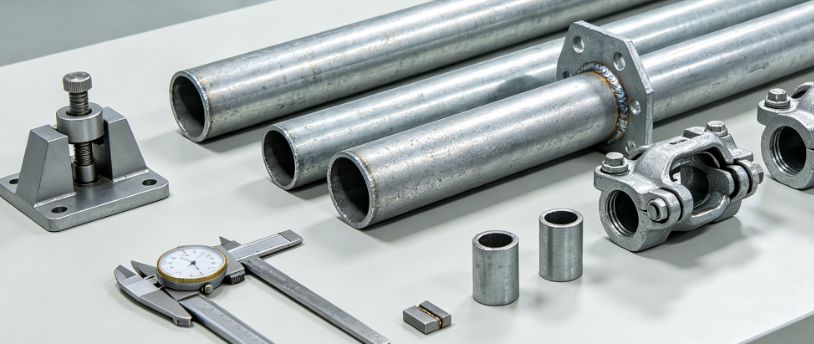
Why Professional Scaffolding Testing Is Essential for Construction and Industrial Projects
Scaffolding failures are rarely caused by a single factor; they often result from a combination of material degradation, weld defects, inadequate design, improper assembly, or overloading. According to OSHA, falls from scaffolding account for a significant proportion of construction fatalities, and many of these incidents could have been prevented by rigorous testing and inspection. Our service addresses the root causes of failure by evaluating every critical element: tube straightness and wall thickness, coupler slip resistance, weld integrity, base plate bearing capacity, and overall structural stability. We help clients meet the requirements of OSHA, ANSI/ASSP A10.8, EN 12811‑1, and ASTM E488, and we provide the documentation needed for safety audits, insurance claims, and legal defensibility. Whether you are a scaffolding rental company, a general contractor, or an industrial plant operator, our testing program ensures that your equipment is safe, reliable, and compliant.
Our Comprehensive Scaffolding Testing Capabilities – From Material to Structure
We evaluate scaffolding components and systems across the entire lifecycle, from incoming material verification to in‑service fitness‑for‑service assessment. Our capabilities include:
Material Chemical Composition Analysis: Using optical emission spectrometry (OES) and X‑ray fluorescence (XRF), we verify that steel and aluminum tubes, couplers, and frames meet the specified grades (e.g., ASTM A500, A513, EN 10219). We quantify carbon, manganese, silicon, phosphorus, sulfur, and alloying elements, detecting any substitutions or impurities that could reduce strength or weldability.
Mechanical Property Testing: We perform tensile tests (ASTM E8, ISO 6892‑1) to determine yield strength, ultimate tensile strength, and elongation; bend tests (ASTM E190) to assess ductility; and Charpy V‑notch impact tests (ASTM E23) to evaluate toughness at low temperatures. For couplers, we measure slip resistance (ASTM E488) and proof load capacity. For base plates, we conduct compression tests to verify bearing strength.
Non‑Destructive Examination (NDT) of Welds and Critical Joints: We employ ultrasonic testing (UT), magnetic particle testing (MT), penetrant testing (PT), and radiographic testing (RT) to detect cracks, lack of fusion, porosity, and undercut in welds. Our phased array UT (PAUT) provides precise sizing of planar defects, and our digital radiography (DR) offers high‑resolution imaging for archival records. All NDT is performed in accordance with ASME Section V, ASTM E164, E709, and E165.
Dimensional and Geometric Inspection: We measure tube diameter, wall thickness, straightness, ovality, and length using calibrated micrometers, ultrasonic thickness gauges, and laser scanning systems. We verify coupler thread dimensions, wedge engagement, and rivet integrity. For frames and systems, we check squareness, plumbness, and levelness according to EN 12811‑1 tolerances.
Load Testing and Structural Performance Verification: We conduct full‑scale load tests on individual components and assembled scaffold bays. Using hydraulic actuators and load cells, we apply vertical, horizontal, and eccentric loads to simulate real‑world conditions. We measure deflection, strain (via strain gauges), and permanent deformation, and we compare results with design calculations. Our finite element analysis (FEA) capability allows us to model complex configurations, predict failure modes, and optimize designs before physical testing.
Corrosion Resistance and Coating Evaluation: We assess the protective performance of galvanized, painted, or powder‑coated surfaces through coating thickness measurement (ASTM E376), adhesion testing (ASTM D3359), and salt spray testing (ASTM B117). We also evaluate the corrosion resistance of the base metal using electrochemical techniques and metallographic cross‑sections, providing a remaining life estimate for aging equipment.
Fatigue and Fracture Mechanics Assessment: For critical applications, we perform fatigue testing (ASTM E466) to determine the endurance limit of tubes and welded joints, and we apply fracture mechanics (ASTM E399, E1820) to assess the risk of brittle fracture in the presence of flaws. These advanced analyses are particularly valuable for high‑cycle operations or extreme temperature environments.
Advanced Non‑Destructive Testing (NDT) for Scaffolding Welds and Components
Welded joints are the most vulnerable points in any scaffolding system. Our NDT laboratory is equipped with state‑of‑the‑art instrumentation and certified personnel (ASNT Level II and III) to detect both surface and subsurface defects. We use ultrasonic testing (UT) with conventional and phased array probes to inspect full‑penetration welds in tubes and couplers, detecting lack of fusion, cracks, and inclusions. Magnetic particle testing (MT) is applied to ferromagnetic components to reveal surface and near‑surface discontinuities, while penetrant testing (PT) is used for non‑magnetic materials such as aluminum. Radiographic testing (RT) with X‑ray or gamma sources provides volumetric inspection of critical welds, and our digital detector arrays enable real‑time imaging and 3D reconstruction. We also offer eddy current testing (ECT) for rapid screening of tube walls for thinning and cracks. All NDT procedures are qualified per ASME Section V and ISO 17635, and we provide detailed reports with defect location, size, and severity rating.
Load Testing and Structural Performance Verification
The ultimate proof of scaffolding safety is its ability to carry the intended loads without excessive deflection or failure. Our load test rigs can accommodate single components (e.g., a 3‑meter tube, a coupler, a base plate) up to full‑scale scaffold towers and bays (up to 10 meters high). We apply loads using calibrated hydraulic jacks and measure response with load cells, displacement transducers, and strain gauges. Tests are conducted in accordance with ASTM E488, EN 12811‑1, and OSHA requirements, and we simulate various load cases: symmetrical and asymmetrical vertical loads, wind loads, and impact loads. For assembled systems, we also evaluate stability against overturning and resistance to sliding. Our reports include load‑deflection curves, strain maps, and a clear conclusion on the safe working load (SWL) and allowable stress. When combined with FEA, these tests validate the design and identify any weak links, enabling clients to optimize material usage and reduce costs.
Corrosion Resistance and Coating Evaluation
Scaffolding is often exposed to harsh environments, leading to corrosion that reduces load capacity and creates safety hazards. We evaluate corrosion resistance through a combination of coating thickness measurement (magnetic and eddy current methods), adhesion testing (cross‑cut, pull‑off), and accelerated corrosion testing (salt spray per ASTM B117, cyclic corrosion per ASTM G85). We also perform metallographic examination of cross‑sections to measure coating uniformity, porosity, and intermetallic layer formation. For uncoated or damaged areas, we use electrochemical polarization to determine corrosion rates and X‑ray diffraction (XRD) to identify corrosion products. Our corrosion assessment provides a remaining life estimate and recommendations for repair, re‑coating, or replacement, helping clients extend the service life of their scaffolding assets.
Our Distinctive Advantages – Accreditation, Expertise, and Rapid Turnaround
What sets our scaffolding testing service apart is the seamless integration of chemical, mechanical, NDT, and structural testing within a single laboratory, enabling correlative interpretation that is impossible when samples are shipped between multiple vendors. Our team comprises PhD‑level metallurgists, structural engineers, and certified NDT inspectors with extensive experience in construction equipment, welding, and failure analysis. We do not simply report numbers; we interpret them in terms of manufacturing quality, service history, and application requirements – for example, distinguishing between a weld defect that is benign and one that is critical under fatigue loading.
Our laboratory is ISO/IEC 17025 accredited for a wide range of scaffolding test methods, and we are recognized by major certification bodies and safety authorities. We maintain NIST‑traceable calibrations for all equipment and participate in international proficiency testing programs (e.g., ASTM, ISO, ASNT) to ensure global comparability. We offer rapid turnaround – typically 3–5 business days for standard testing packages, with expedited options available – and we accept samples in various forms: individual tubes, couplers, frames, and full scaffold assemblies. Our data analytics platform employs statistical process control and machine learning to identify trends and anomalies across batches, helping clients monitor supplier quality and optimize their maintenance schedules.
We also provide custom test plans for novel scaffolding systems (e.g., modular, aluminum, composite) and for special environments (e.g., offshore, nuclear, high‑temperature). Our consulting services include design review, failure analysis with root‑cause determination, and expert witness support for litigation. We offer on‑site inspections and mobile testing units for large projects, ensuring that critical equipment can be evaluated without transport delays.
Seamless Workflow – From Sample Submission to Certification
Our engagement begins with a complimentary consultation to understand your scaffolding type, service history, loading conditions, and regulatory requirements. We then propose a tailored test plan with a fixed price and timeline. Upon sample receipt, we log and inspect the samples, then commence testing. Clients receive progressive updates through a secure portal, with preliminary data shared on request. The final report is delivered in PDF format and includes a clear summary of findings, raw data, photographs, and a certificate of conformity where applicable. We also offer a post‑delivery review meeting to discuss the results and their implications for your operations, maintenance, or procurement strategy. For clients seeking third‑party certification, we liaise directly with notified bodies and provide all necessary documentation to expedite the approval process.
Conclusion – Partner with Us for Uncompromising Scaffolding Safety
Scaffolding safety is not negotiable. The cost of a failure – in human lives, project delays, and legal liability – far outweighs the investment in rigorous testing. Our comprehensive, ISO‑accredited scaffolding testing service provides exactly that – a one‑stop solution that combines material verification, mechanical testing, NDT, load testing, and corrosion assessment into a unified, interpretable picture. With our advanced instrumentation, deep engineering expertise, and client‑centric approach, we empower our clients to prevent accidents, ensure compliance, and extend the life of their scaffolding assets. Whether you are a rental company, a contractor, or an industrial operator, our service delivers the clarity and confidence you need to build safely.
We invite you to contact our scaffolding testing specialists to discuss your specific requirements. Let us partner with you to ensure that your scaffolding systems meet the highest standards of safety, reliability, and regulatory compliance – from the first component to the final assembled structure. Your journey to scaffolding excellence begins with our rigorous, integrative, and actionable testing.