Reasons for choosing our testing services
ZHONGXI Testing has obtained inspection qualification certifications from multiple countries and regions worldwide. We possess a senior testing team and advanced testing methods, providing independent, impartial, and professional third-party verification services for global carbon projects.

Internationally recognized authority
Certified by multiple international standards such as CNAS, VCS, and GS, with reports universally applicable worldwide.

Global service capability
Covering 140+ countries and regions, it supports on-site detection and remote verification in multiple languages.

Professional experimental methods
Adopt standard experimental methods to ensure accurate and reliable data.
Comprehensive Automotive Windshield Testing Services – Advanced Analytical Solutions for Safety, Optics, and Durability
Automotive windshields are no longer simple pieces of glass; they are sophisticated safety systems that integrate optical clarity, structural integrity, environmental resistance, and increasingly, electronic functionality. A windshield must withstand high-speed impacts, extreme temperatures, UV radiation, chemical exposure, and the demands of advanced driver-assistance systems (ADAS) without compromising the driver’s field of view. Clients seeking automotive windshield testing services typically aim to: (i) verify compliance with international safety glazing standards such as ECE R43, ANSI/SAE Z26.1, GB 9656, and ISO 3537, (ii) quantify optical properties including light transmittance, haze, distortion, and color, (iii) evaluate impact resistance and fracture behavior under simulated accident conditions, (iv) assess durability against weathering, thermal shock, and chemical attack, (v) validate electrical functions such as defrosters and embedded antennas, and (vi) generate certification data for vehicle homologation, OEM qualification, and product liability defense. Our laboratory offers a fully integrated, ISO/IEC 17025‑accredited automotive windshield testing service that combines optical, mechanical, environmental, electrical, and chemical testing with advanced instrumental analysis and numerical simulation into a unified assessment platform. We do not merely report pass/fail results; we deliver a holistic windshield performance fingerprint that correlates glass composition, interlayer chemistry, coating architecture, and manufacturing parameters with real‑world behavior, empowering our clients to accelerate development, reduce warranty claims, and achieve global market access with confidence.
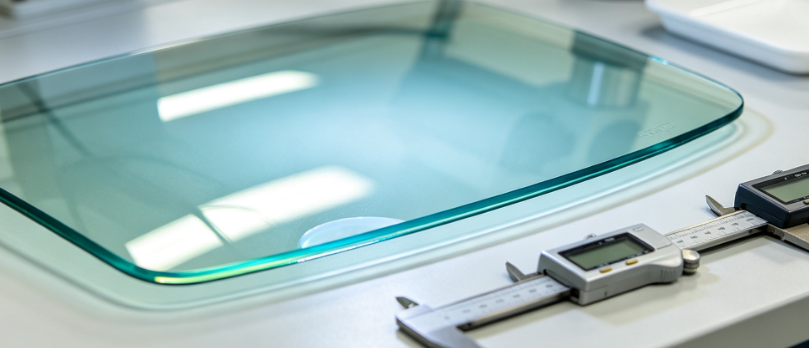
Why Professional Windshield Testing Is Indispensable for Vehicle Safety and Regulatory Compliance
Windshield failures – such as optical distortion, delamination, stress cracking, or inadequate impact resistance – can impair driver vision, compromise occupant safety, and lead to recalls and regulatory penalties. Global regulations are stringent and constantly evolving: ECE R43 mandates specific requirements for light transmittance, impact resistance, and fragmentation; ANSI/SAE Z26.1 sets similar criteria for the North American market; GB 9656 governs the Chinese market; and ISO 3537 provides internationally recognized test methods. In addition, the rise of ADAS – cameras, LiDAR, and radar – imposes new demands on windshield optical quality, radar transparency, and mounting accuracy. Our testing services provide the objective evidence needed to demonstrate conformity, support OEM specifications, and win certification. We help clients navigate the complex landscape of standards, ensuring that every windshield meets the requirements of its intended application and regulatory jurisdiction.
Optical Performance Testing – Transmittance, Haze, Distortion, and Color
Optical clarity is the most fundamental requirement for a windshield, directly affecting driver visibility and safety. Our laboratory performs a comprehensive suite of optical tests using calibrated spectrophotometers, hazemeters, and laser‑based distortion systems. We measure luminous transmittance (ISO 3538, ECE R43) across the visible spectrum (380–780 nm) with an accuracy of ±0.5%, ensuring compliance with the minimum 70% requirement for the driver’s primary vision area. Haze is quantified using an integrating sphere (ASTM D1003, ISO 3537) with a detection limit of 0.1%, critical for detecting surface scattering from coatings or interlayer imperfections. Optical distortion is evaluated using a collimated laser beam scanned across the windshield, mapping angular deviation and refractive power variation (ECE R43, ISO 3537). We also assess color using CIE L*a*b* coordinates and chromaticity difference (ΔE*) to ensure batch‑to‑batch consistency. For windshields with infrared‑reflective coatings or heated layers, we measure spectral transmittance from 300 nm to 2500 nm, providing data for thermal comfort and ADAS sensor compatibility. Our optical bench is housed in a temperature‑controlled room (23 ± 1 °C) to eliminate measurement drift.
Mechanical and impact resistance Testing – Penetration, Fracture, and Head Impact
Windshields must protect occupants from flying debris and, in the event of a crash, prevent ejection while maintaining structural integrity. Our mechanical testing suite includes:
impact resistance: The 227‑g steel ball drop test (ECE R43, ANSI/SAE Z26.1) from specified heights to evaluate resistance to penetration and fragmentation. We use high‑speed cameras (up to 10,000 fps) to record crack initiation and propagation, and we analyze fracture patterns according to standards.
Head Impact Simulation: The head‑form impact test (FMVSS 201, ECE R21) using a calibrated headform at specified velocities to assess energy absorption and deceleration, ensuring occupant protection in the event of a head strike.
Bending Strength: Four‑point bending tests (ISO 1288‑3, ASTM C158) on laminated and tempered glass specimens to determine flexural strength and failure modes.
Ball Drop on Laminated Glass: The 5‑kg ball drop test (ISO 3537) to evaluate the interlayer’s ability to hold glass fragments together after breakage.
Penetration Resistance: The shot‑bag test (SAE J984) for security glazing, and the axe‑cut test for emergency egress, ensuring that windshields can be broken when necessary.
All tests are conducted under controlled conditions (23 ± 2 °C, 50 ± 5% RH) with calibrated instrumentation, and results include force‑displacement curves, fracture maps, and photographic documentation.
Environmental Durability and Weathering – Temperature, Humidity, UV, and Thermal Shock
Windshields are exposed to extreme environmental conditions throughout their service life. Our environmental testing suite simulates these conditions to evaluate long‑term durability:
Thermal Shock: Rapid cycling between −40 °C and +90 °C (ECE R43, ISO 3537) to assess resistance to cracking and delamination.
Humidity and Water Immersion: Exposure to 85 °C/85% RH and immersion in water at elevated temperatures (ISO 12543‑4) to evaluate interlayer adhesion and edge sealing.
UV Radiation: Xenon‑arc and QUV accelerated weathering (ASTM G155, ISO 4892‑2) for up to 2,000 hours to assess yellowing, haze development, and coating degradation.
Salt Spray and Chemical Resistance: ASTM B117 for corrosion resistance of embedded wires and connectors, and ISO 2812 for resistance to fuels, oils, and cleaning agents.
Aging of Interlayer: Accelerated aging tests (ASTM D573, ISO 188) on PVB or other interlayers to measure changes in adhesion, haze, and mechanical properties.
These tests enable us to predict service life, identify weak points in design or materials, and support warranty decisions. Our environmental chambers are calibrated and monitored continuously, with data logging for full traceability.
Electrical and Functional Testing – Defrosters, Antennas, and ADAS Sensor Compatibility
Modern windshields integrate electrical functions that are essential for comfort, communication, and safety. Our electrical testing services include:
Defroster Performance: Measurement of heating element resistance, power density, and defrosting time (SAE J953, ISO 3468) under controlled cold‑chamber conditions. We use infrared thermography to map temperature uniformity and identify hot spots or dead zones.
Antenna Performance: Evaluation of embedded antenna gain, radiation pattern, and impedance (SAE J1113, ISO 11452) in an anechoic chamber or reverberation chamber, ensuring reliable AM/FM, DAB, GPS, and cellular reception.
ADAS Sensor Compatibility: Measurement of radar transmittance (24 GHz, 77 GHz) and LiDAR transmittance (905 nm, 1550 nm) through the windshield, as well as optical clarity in the camera’s field of view (ISO 15007, SAE J3016). We also assess the impact of coatings, heating wires, and tint on sensor performance.
Electromagnetic Shielding: Evaluation of shielding effectiveness (ASTM D4935) for windshields with metallic coatings, ensuring compliance with EMC requirements.
All electrical tests are performed with calibrated equipment and under controlled environmental conditions, and results are reported with uncertainty budgets.
Chemical and Material Analysis – Glass Composition, Interlayer, and Coatings
Understanding the chemical composition of windshields is essential for quality control, failure analysis, and reverse engineering. Our analytical suite includes:
Glass Composition: X‑ray fluorescence (XRF) and inductively coupled plasma optical emission spectrometry (ICP‑OES) to quantify major oxides (SiO₂, Na₂O, CaO, MgO, Al₂O₃) and trace impurities (Fe, Ni, Cr), ensuring compliance with specifications.
Interlayer Identification: Fourier‑transform infrared spectroscopy (FTIR) and differential scanning calorimetry (DSC) to identify PVB, EVA, or other interlayers, and to measure plasticizer content and glass transition temperature.
Coating Analysis: Scanning electron microscopy with energy‑dispersive X‑ray spectroscopy (SEM‑EDS) and X‑ray photoelectron spectroscopy (XPS) to characterize infrared‑reflective, hydrophobic, or anti‑reflective coatings, including thickness, composition, and adhesion.
Surface Contamination: Time‑of‑flight secondary ion mass spectrometry (ToF‑SIMS) and Auger electron spectroscopy (AES) to detect organic residues, fingerprints, or release agents that could affect bonding or optical clarity.
These techniques allow us to identify the root cause of failures such as delamination, haze, or coating degradation, and to recommend corrective actions at the formulation or process level.
Non‑Destructive Inspection and Failure Analysis – Seeing Inside the Windshield
Hidden defects in the interlayer, at the glass‑interlayer interface, or within the glass itself can lead to premature failure. Our non‑destructive testing (NDT) capabilities include:
Optical Microscopy and Confocal Microscopy: High‑resolution imaging of cracks, bubbles, and delamination at the microscale.
Ultrasonic Testing: Phased array ultrasonic inspection (ASTM E2580) to detect internal delamination, voids, and adhesion loss in laminated glass.
Shearography and Digital Holography: ASTM E2582 for full‑field detection of subsurface defects under thermal or vacuum loading.
X‑ray Radiography and CT Scanning: Digital X‑ray imaging (ASTM E94) and computed tomography for 3D visualization of embedded wires, antennas, and internal defects.
Infrared Thermography: ASTM E1934 to identify hot spots in heated windshields and to detect delamination through thermal contrast.
All NDT procedures are performed by certified inspectors (ASNT Level II/III) and are qualified per ISO 9712 and ASME Section V. When destructive analysis is required, we perform cross‑sectional SEM/EDS, TEM, and mechanical testing to determine the root cause of failure.
Our Distinctive Competencies – Accreditation, Expertise, and Global Compliance
What sets our automotive windshield testing service apart is the seamless integration of optical, mechanical, environmental, electrical, and chemical testing within a single laboratory, enabling correlative interpretation that is impossible when samples are shipped between multiple vendors. Our team comprises PhD‑level materials scientists, optical engineers, and mechanical engineers with extensive experience in safety glazing, interlayer chemistry, and automotive qualification. We do not simply report numbers; we interpret them in terms of glass composition, manufacturing parameters, and end‑use conditions – for example, distinguishing between optical distortion caused by forming versus interlayer thickness variation, or identifying the root cause of delamination as inadequate edge sealing versus interlayer moisture uptake.
Our laboratory is ISO/IEC 17025 accredited for a wide range of windshield test methods, and we are recognized by major certification bodies and OEMs as an approved testing partner. We maintain NIST‑traceable calibrations for all equipment and participate in international proficiency testing programs (e.g., ASTM, ISO, ECE) to ensure global comparability. We offer rapid turnaround – typically 5–7 business days for standard testing packages, with expedited options available – and we accept samples in various forms: full windshields, cut sections, and flat laminated specimens. Our data analytics platform employs statistical process control and machine learning to identify trends and anomalies across batches, helping clients monitor supplier quality and optimize their own production.
We also provide custom test plans for novel windshield technologies (e.g., hydrophobic coatings, heated wipers, integrated displays, and ADAS sensor windows) and for special environments (e.g., extreme cold, high altitude, and high‑speed). Our consulting services include material selection, certification strategy, and failure analysis with root‑cause determination. We offer pre‑submission reviews of technical dossiers to ensure that all required data are complete and compliant with the target market regulations.
Comprehensive Service Modules – Tailored to Your Windshield Application
We organize our testing into modular packages to meet diverse client objectives:
Module 1 – Optical Performance: Transmittance, haze, distortion, and color – essential for driver visibility and ADAS compatibility.
Module 2 – Mechanical and impact resistance: Ball drop, head impact, bending, and penetration – for occupant safety and regulatory compliance.
Module 3 – Environmental Durability: Thermal shock, humidity, UV, salt spray, and chemical resistance – for long‑term reliability and warranty support.
Module 4 – Electrical and Functional Testing: Defroster, antenna, ADAS sensor compatibility, and EMC – for integrated functionality.
Module 5 – Chemical and Material Analysis: Glass composition, interlayer identification, coating analysis, and contamination – for quality control and failure analysis.
Module 6 – Non‑Destructive Inspection and Failure Analysis: Microscopy, ultrasonic, shearography, CT, and thermography – for defect detection and root‑cause investigation.
Module 7 – Comprehensive Windshield Qualification Package: All modules combined into a single project, with integrated analysis, statistical summary, and a detailed interpretive report – suitable for vehicle homologation, OEM qualification, or regulatory submission.
We also offer on‑site sampling and custom test design for unique windshield constructions or applications.
Data Integrity, Security, and Reporting
All measurements are performed under strict SOPs, with fully traceable calibration records and environmental logging. Our Laboratory Information Management System (LIMS) records every operation, operator, and timestamp, ensuring full auditability. We use encrypted data transfer and role‑based access to protect client proprietary information. Our reports include comprehensive tables, graphs, uncertainty statements, and an executive summary that translates technical findings into actionable insights. Raw data files are available upon request. A post‑delivery review meeting is included to discuss results and recommend next steps.
Client Engagement and Workflow
Our engagement begins with a complimentary consultation to understand your windshield type, intended vehicle application, target market, and specific concerns (e.g., optical distortion, delamination, or ADAS compatibility). We then propose a tailored test plan with a fixed price and timeline. Upon sample receipt, we log and inspect the samples, then commence testing. Clients receive progressive updates through a secure portal, with preliminary data shared on request. The final report is delivered in PDF format, and we offer a follow‑up call to discuss the findings and their implications for your product development or certification.
Conclusion – Ensuring Windshield Excellence from Glass to Vehicle Integration
Automotive windshields are critical safety components that must perform flawlessly under a wide range of conditions while meeting stringent regulatory requirements. Our comprehensive, ISO‑accredited testing service provides exactly that – a one‑stop solution that combines optical, mechanical, environmental, electrical, and chemical analyses into a unified, interpretable picture. With our advanced instrumentation, deep materials expertise, and global regulatory knowledge, we empower our clients to verify compliance, prevent costly failures, and confidently bring high‑performance windshields to market. Whether you are developing a new laminated glass, qualifying a new supplier, or investigating a field return, our service delivers the clarity and confidence you need to succeed.
We invite you to contact our automotive windshield testing specialists to discuss your specific requirements. Let us partner with you to ensure that your windshields meet the highest standards of quality, safety, and durability – from the glass factory to the vehicle assembly line. Your journey to windshield excellence begins with our rigorous, integrative, and actionable testing.