Reasons for choosing our testing services
ZHONGXI Testing has obtained inspection qualification certifications from multiple countries and regions worldwide. We possess a senior testing team and advanced testing methods, providing independent, impartial, and professional third-party verification services for global carbon projects.

Internationally recognized authority
Certified by multiple international standards such as CNAS, VCS, and GS, with reports universally applicable worldwide.

Global service capability
Covering 140+ countries and regions, it supports on-site detection and remote verification in multiple languages.

Professional experimental methods
Adopt standard experimental methods to ensure accurate and reliable data.
Composite Reflective Layer Inspection Services for Optical Performance, Interfacial Quality, and Reliability Qualification
Customers searching for composite reflective layer inspection typically need to qualify incoming reflective films or coatings, benchmark suppliers, control coating and lamination processes, predict optical performance in final devices, and prevent reflective layer defects from causing brightness loss, color shift, or reliability failures. Our service is designed for this purpose. We provide quantitative, traceable, and application-relevant inspection of composite reflective layers so that customers can make confident engineering, sourcing, and production decisions.
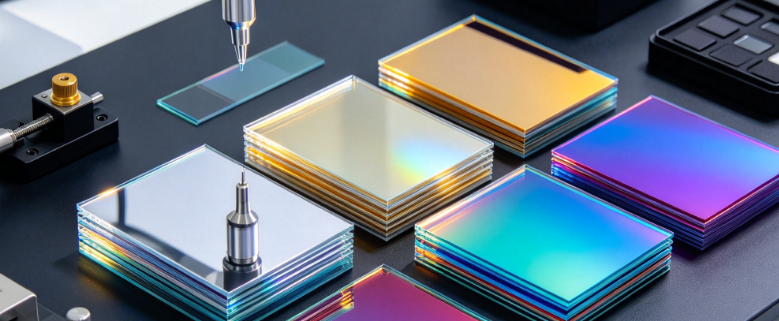
Why Composite Reflective Layer Inspection Is Requested
Composite reflective layers are used to recycle light, enhance brightness, improve uniformity, and control angular emission in displays, backlights, LED packages, lighting systems, and photovoltaic modules. These layers often consist of multiple materials such as polymer films, metallic coatings, dielectric stacks, adhesives, and protective overlayers. Small variations in thickness, refractive index, interfacial adhesion, surface roughness, or contamination can significantly alter reflectance, haze, color, and durability. Our composite reflective layer inspection service helps customers detect these issues before they propagate into module assembly or end-user products. Typical objectives include incoming quality control, supplier qualification, process development, failure analysis, reliability validation, and yield improvement.
Composite Reflective Layer Types and Form Factors We Inspect
We inspect a wide range of composite reflective layers, including metallic reflective films, multilayer dielectric coatings, distributed Bragg reflectors, white reflective sheets, diffuse reflective films, specular reflective films, and hybrid organic-inorganic reflective stacks. Sample types include free-standing films, coated substrates, laminated modules, flexible reflective layers, and patterned reflective structures. We support rigid, flexible, curved, and free-form geometries and can evaluate small coupons, full panels, and production lots. Inspection programs are available for R&D samples, pilot lines, and high-volume manufacturing.
Optical Reflectance, Transmittance, and Haze Metrology
Optical performance is the primary functional requirement for composite reflective layers. We use UV-Vis-NIR spectrophotometry, integrating sphere systems, spectroscopic ellipsometry, and angle-resolved scatterometry to measure total reflectance, diffuse reflectance, specular reflectance, transmittance, absorptance, and haze. Our capabilities include absolute reflectance measurement with high accuracy, wavelength-resolved analysis from deep ultraviolet to near infrared, and angular reflectance mapping across polar and azimuthal angles. We evaluate reflectance uniformity, color neutrality, and spectral stability under different illumination and viewing conditions. These measurements are essential for backlight units, LED packaging, and display modules where even small reflectance losses can degrade brightness and efficiency.
Thickness, Uniformity, and Interface Analysis
Composite reflective layers often rely on precise thickness control and well-defined interfaces to achieve target optical performance. We employ spectroscopic ellipsometry, X-ray reflectometry, white-light interferometry, confocal microscopy, and cross-sectional scanning electron microscopy to measure individual layer thickness, total stack thickness, thickness uniformity, and interfacial roughness. We can resolve sub-nanometer thickness variations, quantify interdiffusion, and detect interfacial defects that affect adhesion and optical quality. For multilayer stacks, we also perform refractive index and extinction coefficient extraction to verify material composition and process stability.
Surface Morphology, Defect, and Adhesion Inspection
Surface and interfacial defects can cause light scattering, haze, delamination, and premature failure. We use atomic force microscopy, scanning electron microscopy with energy-dispersive X-ray spectroscopy, optical microscopy, laser scattering, and adhesion testing to characterize surface roughness, particle contamination, pinholes, scratches, cracks, voids, blistering, and delamination. Our inspection supports sub-nanometer roughness resolution, micro-scale defect mapping, and quantitative adhesion strength measurement. For flexible and laminated reflective layers, we also evaluate bending durability, crease formation, and interfacial stability under mechanical stress.
Thermal, Mechanical, and Environmental Reliability Testing
Composite reflective layers must maintain optical and mechanical integrity under thermal cycling, humidity, UV exposure, and mechanical stress. We provide thermal cycling, thermal shock, high-temperature storage, damp heat testing, UV aging, vibration testing, and mechanical bending or folding tests. We monitor reflectance degradation, color shift, haze evolution, delamination, and cracking during reliability testing and correlate degradation with material, interface, or process failure mechanisms. These tests are critical for automotive, outdoor, and high-reliability applications.
Failure Analysis and Root-Cause Investigation
When composite reflective layers fail, identifying the root cause requires more than optical inspection. We combine focused ion beam preparation, cross-sectional transmission electron microscopy, X-ray photoelectron spectroscopy, secondary ion mass spectrometry, and thermal analysis to investigate interfacial failure, contamination, oxidation, diffusion, and stress-induced defects. We integrate non-destructive screening with targeted destructive analysis to provide high-confidence root-cause conclusions and corrective-action recommendations. This combined approach is especially valuable for qualifying new coating materials, lamination processes, and supplier lots.
Data Reporting, Statistical Analysis, and Standards Alignment
Our reports are designed for engineering, quality, and management teams. Deliverables can include reflectance spectra, angular reflectance maps, thickness maps, defect maps, adhesion test results, reliability degradation curves, and supplier comparison summaries. We provide actionable data with traceable calibration protocols and pass or fail criteria aligned with relevant industry standards such as ASTM, ISO, IEC, and customer-specific specifications. Measurement uncertainty, calibration traceability, and repeatability are documented for defensible decision-making.
Our Advantages in Composite Reflective Layer Inspection
Our core advantage is the integration of multiple high-end optical, material, and reliability characterization platforms within one coordinated workflow. We combine spectrophotometry, integrating sphere systems, spectroscopic ellipsometry, angle-resolved scatterometry, AFM, SEM/EDS, TEM, XPS, SIMS, and environmental testing. We do not merely detect reflective layer defects; we quantify them, map them, classify them, and relate them to optical performance and process conditions. Our team supports custom inspection protocols, fast turnaround, confidential sample handling, and scalable programs for R&D, pilot lines, and mass production. With calibrated instruments, traceable standards, and experienced engineers, we help customers reduce uncertainty, accelerate qualification, and improve product yield.
Applications and Industries We Support
Our composite reflective layer inspection services support display backlights, LED packaging, automotive lighting, general illumination, photovoltaic modules, optical sensors, and specialty optical systems. We serve material suppliers, coating manufacturers, film converters, module makers, and research institutions. Whether the goal is incoming quality control, supplier benchmarking, new product introduction, reliability validation, or failure analysis, we provide the depth of inspection needed to make technically sound decisions.
Request Composite Reflective Layer Inspection Services
To begin, customers can provide reflective layer type, stack structure, substrate material, intended application, suspected defect modes, and relevant acceptance criteria. Based on these inputs, we design a targeted inspection plan that balances non-destructive optical metrology, high-resolution material analysis, reliability testing, and statistical reporting. We can build a customized composite reflective layer inspection program that meets demanding technical specifications and production timelines. Contact us to discuss sample submission, measurement resolution, reporting format, and turnaround requirements.