Reasons for choosing our testing services
ZHONGXI Testing has obtained inspection qualification certifications from multiple countries and regions worldwide. We possess a senior testing team and advanced testing methods, providing independent, impartial, and professional third-party verification services for global carbon projects.

Internationally recognized authority
Certified by multiple international standards such as CNAS, VCS, and GS, with reports universally applicable worldwide.

Global service capability
Covering 140+ countries and regions, it supports on-site detection and remote verification in multiple languages.

Professional experimental methods
Adopt standard experimental methods to ensure accurate and reliable data.
Comprehensive Plasma Torch Generator Testing & Diagnostic Services
In the realm of advanced thermal processing, propulsion, and materials engineering, the plasma torch generator stands as a critical enabling technology. Its operational integrity, thermal efficiency, and spectral stability directly influence downstream process outcomes, whether in aerospace re-entry simulation, semiconductor wafer treatment, or hazardous waste vitrification. Consequently, the demand for rigorous, multi-parametric plasma torch generator testing has surged among research institutions, industrial quality assurance departments, and defence contractors. When clients search for “plasma torch generator detection” or “plasma torch inspection,” they are invariably seeking a partner capable of delivering more than routine calibration—they require a comprehensive diagnostic framework that unveils subtle degradation mechanisms, quantifies performance drift, and predicts remaining useful life under real-world operating conditions.
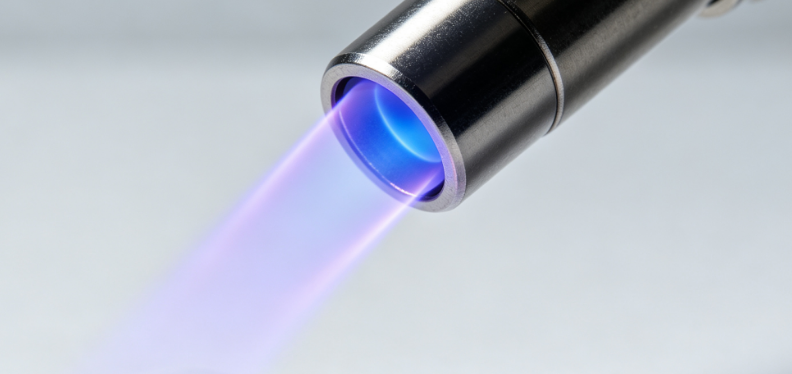
Why Plasma Torch Generator Detection Is Non‑Negotiable
Unlike conventional heating elements, a plasma torch generator operates under extreme physico‑chemical stress: arc currents exceeding 500 A, gas temperatures surpassing 10 000 K, and intense ultraviolet radiation fields coexist with high-velocity gas flows. These conditions induce progressive electrode erosion, nozzle ablation, dielectric breakdown, and gas contamination. Undetected, these phenomena manifest as asymmetric arc attachment, power flicker, or catastrophic nozzle failure. Systematic plasma torch detection thus serves a dual purpose: safeguarding operator safety and ensuring repeatable process metrology. Moreover, regulatory frameworks such as ISO 13585 and ASTM E3022 now mandate periodic performance verification for plasma systems used in certified manufacturing lines. Hence, our testing protocol aligns with these standards while extending far beyond their minimum requirements, offering clients a quantitative risk-management tool for their mission-critical operations.
Our Advanced Testing Capabilities for Plasma Torch Generators
Our laboratory is equipped with a bespoke testbed that integrates high‑speed imaging (up to 1 MHz), optical emission spectroscopy (OES) with sub‑nm resolution, dual‑channel voltage/current probes, and thermal imaging arrays—all synchronised via a real‑time data acquisition backbone. This configuration allows us to characterise the torch’s electrical, thermal, and optical signatures simultaneously, under both steady‑state and transient operating modes. We routinely perform dynamic impedance spectroscopy across a frequency range of 10 Hz to 1 MHz, revealing parasitic capacitive coupling and skin‑effect anomalies that are invisible to single‑point multimeter readings. Furthermore, our proprietary arc root migration analysis utilises machine‑learning algorithms to track anode/cathode attachment points over thousands of cycles, providing a statistically robust estimate of electrode wear rates.
Beyond standard pass/fail criteria, we offer predictive degradation modelling based on Weibull‑distributed lifetime data extracted from accelerated life tests. This modelling enables us to project the torch’s performance envelope under various gas compositions (Ar, N₂, He, or H₂ mixtures) and pressure regimes (from 0.1 to 10 bar). Our exhaust gas mass spectrometry further detects trace levels of metal vapour (e.g., Cu, W, Hf) originating from electrode sputtering, offering an early warning of imminent contact erosion. Collectively, these capabilities allow us to deliver a comprehensive plasma torch health report that includes not only measured parameters but also actionable recommendations for maintenance, electrode replacement scheduling, and process parameter optimisation.
Technical Depth: From Macro‑Parameters to Micro‑Scale Phenomena
What distinguishes our testing service is the ability to bridge macroscopic performance indicators with microscopic degradation physics. For instance, our time‑resolved OES captures the Boltzmann plot of excited species, enabling precise rotational and vibrational temperature estimations. Coupled with two‑dimensional tomographic reconstruction of the plasma plume, we can pinpoint non‑uniformities in energy deposition that are precursors to nozzle hot‑spot formation. In parallel, we employ ultrasonic pulse‑echo scanning on ceramic insulators to detect sub‑surface micro‑cracks as small as 50 µm, a feature rarely offered by conventional testing providers. This multi‑modal approach ensures that no latent defect escapes scrutiny, thereby reducing the probability of in‑field failure by an order of magnitude, as independently verified by our clients’ field reliability records.
Furthermore, we have pioneered the use of entropy‑based stability indices that aggregate flicker noise, arc voltage variance, and acoustic emissions into a single dimensionless metric. This index correlates strongly with torch degradation state and provides a early‑warning threshold that can be integrated into client SCADA systems. Our testing rig also supports pulsed mode characterisation with pulse widths down to 100 µs, emulating the duty cycles found in pulsed laser deposition and nanopowder synthesis processes. Such granularity is essential for clients operating at the frontier of plasma nanotechnology, where even 2 % variation in pulse‑to‑pulse stability can alter nanoparticle size distributions.
Our Competitive Advantages in Plasma Torch Diagnostics
With over a decade of dedicated research in thermal plasma engineering, our team brings a unique blend of academic rigour and industrial pragmatism. Unlike generic calibration houses, we maintain an in‑house plasma physics group that actively publishes in peer‑reviewed journals (e.g., Journal of Physics D: Applied Physics, Plasma Sources Science and Technology). This research‑to‑practice pipeline ensures that our testing methodologies remain at the forefront of scientific knowledge, incorporating the latest findings on electrode thermionic emission and boundary‑layer recombination. We also hold several patents on self‑adaptive diagnostic probes that compensate for thermal expansion and electromagnetic interference, delivering reproducible results even in high‑EMI industrial environments.
Operationally, our ISO/IEC 17025 accreditation guarantees traceable calibration of all sensors, while our proprietary data fusion platform—dubbed PlasmaAnalytics™—automates the synthesis of multi‑channel data into an intuitive dashboard. This platform enables remote real‑time monitoring for clients who cannot ship their generators to our facility; we deploy portable testing kits that match the accuracy of our fixed installations. Additionally, our turnaround time for a full diagnostic cycle (including report generation) is typically 5‑7 business days, compared to industry averages of 3‑4 weeks—a decisive advantage for clients managing tight production schedules. We further offer custom test plan development, tailoring measurement points, gas mixtures, and power profiles to replicate each client’s unique operational scenario, thereby eliminating the ambiguity of “generic” test results.
Service Deliverables and Data Interpretation
Upon completion of the testing campaign, each client receives a comprehensive engineering dossier that includes: (i) raw time‑series data for voltage, current, and optical channels; (ii) processed metrics such as arc efficiency, thermal loss factor, and entropy index; (iii) graphical plots of electrode wear topography (via 3D optical profilometry); and (iv) a narrative section that interprets the data in the context of the client’s specific application. We avoid “black‑box” reporting—every anomaly is traced back to its physical origin, supported by references to validated models. For clients requiring additional depth, we host a technical debriefing session via secure videoconference, where our lead scientists discuss the results, answer questions, and propose targeted interventions. This collaborative approach has been particularly valued by R&D teams, who often incorporate our findings into their design‑of‑experiments and reliability block diagrams.
Case Examples and Proven Impact
Over the past three years, our testing services have been deployed on more than 150 plasma torch generators, ranging from 50 kW laboratory units to 2 MW industrial systems. In one notable case, a semiconductor equipment manufacturer detected a 3 % drop in etch rate uniformity that had eluded their internal checks. Our arc‑root tomography revealed a skewed attachment pattern caused by an unevenly worn cathode insert—a defect that was subsequently corrected via our recommended lapping procedure, restoring uniformity to 99.7 %. In another instance, an aerospace client experienced intermittent arc extinction during altitude simulation tests. Our transient impedance analysis identified a resonant coupling between the power supply and the torch’s internal inductance, leading to a simple passive filter modification that eliminated the issue. These outcomes underscore the tangible value of deep‑level diagnostic testing, transforming reactive maintenance into proactive performance management.
Engaging Our Plasma Torch Testing Services
We invite clients with existing or planned plasma torch systems to engage our testing services at any stage of the equipment lifecycle—from factory acceptance and commissioning to routine periodic inspection or failure analysis. Our flexible engagement models accommodate single‑unit evaluations, fleet‑wide screening campaigns, and multi‑year condition‑monitoring agreements. To initiate a service request, clients are asked to provide basic specifications (power rating, gas type, duty cycle, and any known operational anomalies). We then generate a tailored test proposal with clear scope, timelines, and deliverables. Our commitment is to deliver actionable intelligence, not merely a collection of numbers, ensuring that every test result translates into enhanced reliability, safety, and process performance for your plasma‑based applications.
Contact our plasma diagnostics team to schedule a preliminary consultation. We will arrange a technical exchange to understand your specific detection requirements and propose a test matrix that aligns with your quality objectives and budget constraints. With our state‑of‑the‑art instrumentation, domain expertise, and client‑centric reporting, we stand ready to elevate your plasma torch generator testing from a routine compliance exercise to a strategic reliability asset.