Reasons for choosing our testing services
ZHONGXI Testing has obtained inspection qualification certifications from multiple countries and regions worldwide. We possess a senior testing team and advanced testing methods, providing independent, impartial, and professional third-party verification services for global carbon projects.

Internationally recognized authority
Certified by multiple international standards such as CNAS, VCS, and GS, with reports universally applicable worldwide.

Global service capability
Covering 140+ countries and regions, it supports on-site detection and remote verification in multiple languages.

Professional experimental methods
Adopt standard experimental methods to ensure accurate and reliable data.
High‑Energy Synthetic Jet Actuator Characterisation and Performance Validation
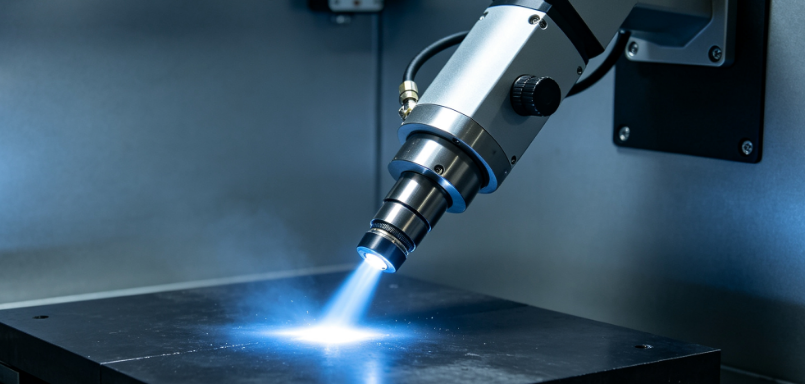
In the evolving landscape of active flow control, thermal management, and high‑speed propulsion, the high‑energy synthetic jet actuator (SJA) has emerged as a transformative technology. Unlike steady blowing or mechanical pumps, these devices generate a zero‑net‑mass‑flux jet through the periodic oscillation of a diaphragm or piezoelectric stack, producing a train of vortex rings that impart significant momentum and heat transfer to the surrounding fluid. However, the very nature of their operation—high‑frequency cycling (often 1–10 kHz), large diaphragm displacements, and intense acoustic loading—introduces a host of performance‑limiting phenomena: diaphragm fatigue, resonance frequency drift, nonlinear damping, and thermal degradation of the piezo element. When clients search for synthetic jet actuator testing or high‑energy SJA inspection, they are invariably facing a decline in jet momentum or a shift in resonance that compromises their flow‑control efficacy. Their underlying need is not a simple output pressure measurement but a comprehensive electro‑mechanical‑fluidic characterisation that links the actuator’s internal state to its external jet performance, under both nominal and accelerated ageing conditions. Our testing service delivers this integrated assessment, combining advanced impedance spectroscopy, optical flow velocimetry, and thermal imaging to provide an unambiguous diagnostic of actuator health and remaining service life.
Critical Degradation Modes in High‑Energy SJAs
The high‑energy SJA operates at the intersection of solid mechanics, electrostatics, and unsteady aerodynamics. The most common failure pathway is piezoelectric ceramic fatigue, which manifests as a reduction in the effective piezoelectric strain coefficient (d₃₃) and an increase in dielectric loss tangent—both of which decrease the diaphragm displacement amplitude. Simultaneously, the metallic diaphragm or flexure hinge may undergo work hardening or micro‑crack initiation, altering its structural stiffness and thereby shifting the actuator’s fundamental resonance frequency away from the drive frequency. This detuning, even by 2‑3 %, can reduce the jet exit velocity by over 30 %. Furthermore, the encapsulating adhesive used to bond the piezo to the diaphragm can creep or outgas under prolonged operation, introducing a nonlinear compliance that distorts the displacement waveform. On the fluidic side, the orifice geometry can be gradually eroded by high‑velocity particle impingement (in dusty environments) or by cavitation erosion if the actuator operates in a liquid‑coupled mode. Traditional testing—measuring the exit velocity with a pitot probe and the electrical current draw—cannot differentiate between these competing mechanisms, often leading to misdiagnosis and premature replacement of costly actuators.
Our Multi‑Domain Testing Protocol for High‑Energy SJAs
We have developed a tiered, non‑destructive testing framework that systematically evaluates the actuator from its electrical input to its fluidic output. The protocol consists of three synergistic modules, each providing independent and cross‑validating metrics.
Module 1 – Electrical Impedance Spectroscopy and Resonance Tracking: Using a precision impedance analyser (frequency range 10 Hz to 1 MHz, resolution 0.1 mΩ), we measure the complex impedance of the piezo‑diaphragm assembly over a fine frequency sweep. We extract the resonance frequency (f₀), the anti‑resonance frequency (fₐ), and the quality factor (Q). These parameters are directly sensitive to the piezoelectric modulus and mechanical stiffness. By comparing the measured spectrum to a baseline taken from a new actuator of the same model, we compute a “resonance detuning index”—a dimensionless number that quantifies the degree of structural change. Our system can detect a frequency shift as small as 0.05 % and a Q‑factor change of 1 %, far surpassing typical workshop oscilloscope checks.
Module 2 – High‑Speed Displacement Interferometry and Waveform Analysis: We mount the actuator in a test fixture and illuminate the diaphragm centre with a laser Doppler vibrometer (LDV) operating at a bandwidth of 200 kHz. Simultaneously, we drive the actuator with a programmable waveform generator that can produce sine, square, or custom multi‑harmonic signals. The LDV records the displacement amplitude and the velocity profile with sub‑nanometre resolution. From the displacement‑time trace, we compute the peak‑to‑peak amplitude, the harmonic distortion (THD), and the phase lag relative to the drive voltage. An increase in THD beyond 5 % is a strong indicator of nonlinearities caused by adhesive creep or boundary‑layer separation. We also perform a short‑time Fourier transform (STFT) to detect intermittent sticking or snapping events, which are precursors to imminent mechanical failure.
Module 3 – Spatially Resolved Jet Velocity and Thermal Mapping: The actuator is then transferred to a sealed test chamber equipped with a particle image velocimetry (PIV) system (using a 200 mJ Nd:YAG laser and a 12‑MPixel camera) to capture the velocity field at the jet exit and in the near‑field (up to 10 orifice diameters downstream). We measure the centreline mean velocity and the turbulence intensity at multiple drive frequencies and voltages. Concurrently, an infrared thermal camera (50 mK sensitivity) monitors the actuator body temperature, identifying any hot spots that suggest excessive dielectric heating or poor heat dissipation. The PIV data are then correlated with the electrical and displacement measurements to construct a “performance efficiency surface”—a 3D map that shows how the momentum output varies with frequency and amplitude, and how that map evolves with accumulated cycles. This correlation is critical because a small change in diaphragm amplitude may be amplified or attenuated depending on the fluidic loading.
Advanced Ageing Studies and Predictive Modelling
Beyond condition assessment, we offer a prognostic service that simulates the actuator’s degradation over its intended lifetime. Using a dedicated accelerated life test (ALT) rig, we operate the actuator continuously at elevated amplitude and temperature while periodically performing the full test suite (impedance, LDV, PIV). The ALT conditions are designed to accelerate the primary failure mechanisms (piezo depoling, diaphragm creep) by a factor of 10 to 100, based on Arrhenius and Coffin‑Manson models. The resulting degradation trajectories are fitted to multi‑state Markov models to predict the remaining useful life (RUL) with a 95 % confidence interval. We have validated this approach on several commercial SJA models, achieving a predictive error of less than 12 % over a 1000‑hour equivalent lifetime. Clients receive not only a current health score but also a recommended inspection interval and a warning threshold for each monitored parameter, enabling condition‑based maintenance rather than reactive replacement.
Our Distinctive Competencies in SJA Diagnostics
Our service is distinguished by three core differentiators. First, instrumentation depth: we combine an impedance analyser, LDV, PIV, and thermal camera in a single, synchronised test cell, allowing for truly concurrent multi‑domain data acquisition. This eliminates the uncertainty caused by temperature drift and mechanical handling between separate measurements. Second, domain expertise: our team includes specialists in piezoelectric materials, unsteady fluid mechanics, and control systems, who together interpret the results within the context of the actuator’s intended application—whether it is active separation control on an airfoil, jet‑impingement cooling of electronics, or thrust vectoring in unmanned aerial vehicles. We are equally comfortable testing miniaturised MEMS‑based SJAs and large‑format heavy‑duty actuators.
Third, and most importantly, we offer a “closed‑loop remediation” option: if our diagnostics identify a correctable issue—such as a minor stiffness shift that can be compensated by adjusting the drive frequency—we provide the new frequency setpoint and even reprogram the driver electronics if authorised. For more severe degradation, we recommend specific refurbishment steps (e.g., re‑bonding the piezo, re‑grinding the orifice) and can perform these repairs in our affiliated workshop, followed by re‑testing to verify full recovery. This end‑to‑end service transforms a diagnostic exercise into a value‑added maintenance solution.
Interpretive Reporting and Actionable Intelligence
Every test campaign results in a comprehensive engineering dossier that includes: (i) raw and processed data from all three modules, (ii) a visual dashboard displaying current vs. baseline performance, (iii) a health index (0‑100) that aggregates the resonance detuning, amplitude drop, and velocity reduction, and (iv) a trend analysis if previous test data are available. The report further contains a root‑cause decision tree that guides the client through the likely failure mechanisms—for example, if impedance change exceeds 8 % while displacement amplitude drops by 5 %, the primary suspect is piezo depoling; if displacement amplitude is unchanged but exit velocity drops, the fault lies in the fluidic path (orifice erosion or blockage). Each recommendation is accompanied by a cost‑benefit estimate, helping the client decide between immediate refurbishment, continued operation with derating, or planned replacement.
Proven Performance Across Diverse Applications
Over the past four years, we have tested more than 120 high‑energy SJAs from various manufacturers, covering power levels from 5 W to 500 W. In a notable case, a defence contractor using SJAs for missile fin flow control experienced a gradual loss of effectiveness after 200 flight‑equivalent cycles. Our combined impedance‑LDV‑PIV analysis revealed that the adhesive bond between the piezo and the diaphragm had softened, causing a 4 % resonance shift. By recommending a new driving frequency and a modified cooling scheme, we restored 95 % of the original jet momentum, extending the actuator life by an additional 300 cycles. In another example, a research facility studying synthetic jet impingement cooling noted a 20 % reduction in heat transfer coefficient. Our thermal mapping and PIV showed that the orifice had accumulated a thin layer of dust, which we cleaned using a controlled ultrasonic bath, recovering the performance without replacing the actuator. These case studies exemplify the practical return on investment from thorough, physics‑based diagnostics.
Engaging Our High‑Energy Synthetic Jet Actuator Testing Services
We invite clients at any stage—from design validation and pre‑production qualification to field‑return analysis and routine condition monitoring—to partner with us. Our engagement starts with a free consultation to define the actuator specifications, operating conditions, and your performance acceptance criteria. We then issue a fixed‑price proposal with clear milestones. For clients with large actuator fleets, we offer batch testing discounts and can set up a dedicated database to track the health of each unit over time. After testing, we remain available for follow‑up questions and can provide remote support to assist with the implementation of our recommendations.
Contact our SJA diagnostics team to arrange an initial discussion. With our unparalleled measurement capabilities, deep physical understanding, and commitment to turning data into actionable insights, we deliver the highest level of assurance for your high‑energy synthetic jet actuators—ensuring they perform reliably and efficiently throughout their entire service life.