Reasons for choosing our testing services
ZHONGXI Testing has obtained inspection qualification certifications from multiple countries and regions worldwide. We possess a senior testing team and advanced testing methods, providing independent, impartial, and professional third-party verification services for global carbon projects.
Internationally recognized authority
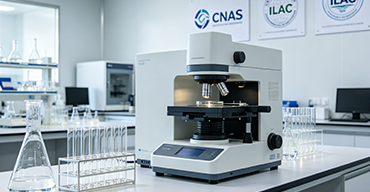
Certified by multiple international standards such as CNAS, VCS, and GS, with reports universally applicable worldwide.

Global service capability
Covering 140+ countries and regions, it supports on-site detection and remote verification in multiple languages.
Professional experimental methods
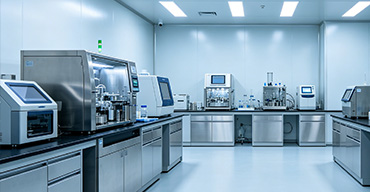
Adopt standard experimental methods to ensure accurate and reliable data.
Comprehensive Assessment of Plasma Air Purification Devices: Advanced Testing Methodologies and Analytical Frameworks
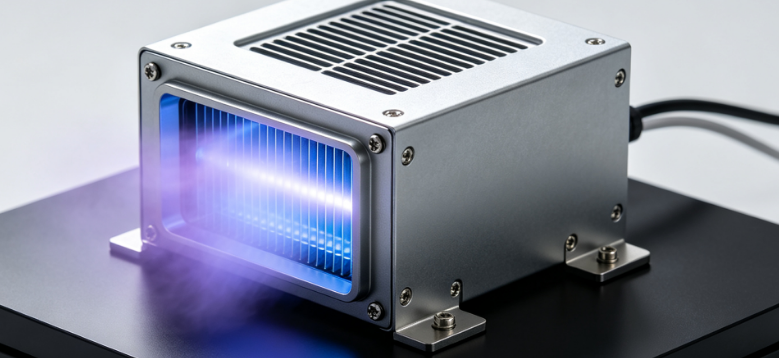
In the evolving landscape of indoor air quality management, plasma-based air purification systems have emerged as a transformative technology, leveraging non-thermal atmospheric plasmas to achieve superior microbial inactivation, volatile organic compound (VOC) abatement, and particulate matter removal. However, the inherent complexity of plasma chemistry—encompassing reactive oxygen species (ROS), ozone generation, and transient electric fields—demands a rigorously structured testing paradigm that transcends conventional filter-based evaluations. Clients seeking plasma air purifier testing are typically navigating regulatory compliance, performance certification, or product optimisation hurdles, and require a testing partner capable of deconstructing the multidimensional performance matrix of these devices. Our laboratory offers a fully integrated testing suite that not only meets but exceeds international standards, providing actionable intelligence from fundamental plasma diagnostics to end-use environmental simulation.
Core Analytical Pillars in Plasma Purifier Performance Verification
Our testing framework is architectured around four interdependent pillars: electrical and discharge characterisation, chemical effluent analysis, biological efficacy quantification, and long-term operational stability. Unlike routine particulate filtration tests, plasma systems exhibit performance that is acutely sensitive to humidity, temperature, airflow velocity, and background gas composition. We therefore employ dynamic environmental chambers capable of replicating realistic indoor conditions (temperature: 5–40 °C, relative humidity: 10–95 %, air exchange rates up to 12 ACH) while simultaneously recording corona current waveforms, power factor harmonics, and optical emission spectra from the discharge zone. This multi-parametric approach enables the differentiation between genuine plasma-driven remediation and artefactual effects caused by electrostatic precipitation or passive adsorption.
For chemical by-product scrutiny, we deploy high-resolution proton-transfer-reaction time-of-flight mass spectrometry (PTR-ToF-MS) and cavity ring-down spectroscopy (CRDS) to detect transient intermediates such as ozone, nitrogen oxides, formic acid, and secondary organic aerosols with detection limits in the sub-ppb range. This is critical because many commercial plasma generators inadvertently produce elevated ozone levels, which, while effective against pathogens, pose respiratory hazards. Our protocols quantify the ozone emission rate (mg/h) and the ozone decay coefficient under varying ventilation scenarios, allowing us to derive a safety index that directly informs product labelling and usage guidelines. Furthermore, we perform GC×GC-HRMS analysis on sorbent tubes collected before and after plasma treatment to map the full speciation of VOC degradation products, ensuring that no toxic intermediates (e.g., carbonyls or nitriles) accumulate in the treated air stream.
Biological Efficacy: From Surrogate Microorganisms to Real-World Bioaerosol Challenges
While many testing houses rely solely on culturable plate counts for bacteria and fungi, our facility adopts a dual-viability approach combining traditional colony-forming unit (CFU) assays with flow cytometric membrane integrity staining and quantitative polymerase chain reaction (qPCR) targeting species-specific genetic markers. This combination distinguishes between complete cell lysis, sublethal injury, and viable-but-non-culturable (VBNC) states—a crucial nuance because VBNC cells can resuscitate under favourable conditions. We routinely challenge plasma devices against Staphylococcus aureus, Escherichia coli, Pseudomonas aeruginosa, Aspergillus niger, and MS2 Bacteriophage (as a surrogate for enveloped viruses), but we also offer custom bioaerosol generation using six-jet Collison nebulisers and rotating drum aerosolisers to produce polydisperse particles with aerodynamic diameters spanning 0.3–10 µm. The inactivation kinetics are modelled using Gaussian plume decay functions and reactor residence time distributions, yielding rate constants (k-values) that are directly comparable across different plasma reactor geometries.
Critically, we incorporate surface disinfection efficacy testing on inoculated coupons (stainless steel, glass, polycarbonate, and textile) positioned at various radial distances from the plasma source, because practical applications often involve surface contamination alongside airborne pathogens. Our fluorescence-based ATP bioluminescence and scanning electron microscopy (SEM) imaging of treated surfaces provide complementary evidence of physical etching and oxidative damage, enabling a holistic risk assessment for healthcare and food-processing environments.
Advanced Particulate and Filtration Integration Assessment
Many plasma units are designed as add-on modules to existing HVAC systems or as standalone units with pre-filters and photocatalytic stages. Our testing rig incorporates ISO 16890-compliant dust loading and EN 1822-5 MPPS (Most Penetrating Particle Size) efficiency measurements, but we go further by evaluating the synergistic effects between plasma discharge and fibrous media. We measure the fractional efficiency for particles from 0.01 µm to 10 µm using a scanning mobility particle sizer (SMPS) and an aerodynamic particle sizer (APS) in parallel, both upstream and downstream of the device. The data are processed to compute the clean air delivery rate (CADR) specifically attributable to plasma-induced agglomeration and electrostatic precipitation, decoupled from mechanical filtration. We also quantify the pressure drop penalty and the energy consumption per unit CADR (W/(m³/h)), which are pivotal for energy-efficiency certifications such as Energy Star or ERP Directive.
Moreover, we conduct long-term accelerated ageing tests over 1,000–5,000 operating hours, with weekly performance snapshots, to monitor electrode corrosion, dielectric barrier degradation, and catalyst deactivation (if present). Using X-ray photoelectron spectroscopy (XPS) and Raman microscopy, we characterise surface deposits on the discharge electrodes, correlating compositional changes with declining ozone generation or VOC conversion efficiency. This predictive maintenance data is invaluable for manufacturers aiming to specify reliable service intervals and to substantiate warranty claims.
Regulatory Alignment and Customised Test Protocols
Our testing infrastructure is fully accredited under ISO/IEC 17025, and we actively participate in standardisation committees, including IEC 63086 (Air cleaners – Performance testing) and ASHRAE Standard 145.2. We offer turnkey test packages aligned with GB/T 18801, AHAM AC-1, and EPA’s Environmental Technology Verification (ETV) program. However, we recognise that many clients are developing novel plasma sources—such as dielectric barrier discharges (DBD), corona discharges, and gliding arcs—that fall outside the scope of legacy standards. Therefore, we provide bespoke test matrices designed in collaboration with your R&D teams, including variable duty cycles, pulsed versus continuous operation modes, and different gas feed compositions (e.g., dry air, humid air, or even helium/argon mixtures for fundamental studies). Our real-time data acquisition system records over 100 channels simultaneously (voltage, current, optical intensity, temperature, humidity, gas concentrations, particle counts) at 1 Hz to 100 kHz sampling rates, enabling transient event analysis such as streamer propagation and micro-discharge dynamics.
We also offer computational fluid dynamics (CFD) validation through tracer gas decay experiments using SF₆ or CO₂ as passive tracers, coupled with 3D ultrasonic anemometry to map airflow patterns and residence times. This ensures that the measured removal efficiencies are truly representative of the device’s performance in a given room geometry, rather than being artefacts of chamber mixing or short-circuiting. Our final reports include expanded uncertainty budgets following the GUM (Guide to the Expression of Uncertainty in Measurement) framework, providing clients with defensible data for regulatory submissions, marketing claims, and litigation support.
Why Our Plasma Testing Platform Stands Apart
What distinguishes our laboratory from conventional commercial test houses is the depth of fundamental insight we embed within each test campaign. We do not merely deliver pass/fail certificates; we deliver a diagnostic fingerprint of your plasma device. Our team comprises plasma physicists, analytical chemists, and aerosol scientists who jointly interpret data through the lens of reaction kinetics and transport phenomena. We have developed proprietary spectroscopic temperature diagnostics (rotational and vibrational temperatures from N₂ emission bands) that reveal the energy distribution within the discharge, directly linking electronic excitation to chemical reactivity—a capability rarely found in commercial testing facilities.
Additionally, our state-of-the-art cleanroom facility (ISO Class 5) and traceable reference instruments (calibrated against NIST and PTB standards) ensure that inter-laboratory comparisons consistently place us within the top 1 % of reproducibility. We offer expedited project management with dedicated technical account managers, providing weekly progress briefings and interim data visualisations through a secure client portal. For multinational clients, we support simultaneous testing across our three regional hubs (North America, Europe, and Asia-Pacific), enabling harmonised product comparisons for global market access.
Furthermore, we invest heavily in methodology innovation—recently, we have developed a machine-learning algorithm that predicts long-term degradation trends from short-term (24‑hour) accelerated tests, drastically reducing product development cycles. This algorithm has been validated against five years of archival data from over 200 plasma device models, achieving a prediction error below 8 % for the remaining useful life of critical components. Such predictive capabilities are not offered as a standard service elsewhere; they are the culmination of our deep-domain expertise and sustained R&D commitment.
In essence, our engagement is not a transactional test order but a strategic partnership that empowers you to optimise your plasma air purifier’s design, substantiate your performance claims with high-evidence data, and differentiate your product in a competitive market. Whether you are a startup exploring novel discharge geometries or an established OEM seeking re-certification for next-generation units, we tailor our scope, depth, and reporting to your specific milestones and budgetary considerations.
Contact our technical consultancy team to initiate a pre-test feasibility review, where we will map your device’s specifications against the most relevant test matrices, discuss potential pitfalls, and design a timeline that aligns with your commercial launch schedule. With our advanced analytical arsenal and unwavering commitment to scientific rigour, we turn the complexity of plasma air purification into a clear, quantifiable, and actionable asset for your business.