Reasons for choosing our testing services
ZHONGXI Testing has obtained inspection qualification certifications from multiple countries and regions worldwide. We possess a senior testing team and advanced testing methods, providing independent, impartial, and professional third-party verification services for global carbon projects.

Internationally recognized authority
Certified by multiple international standards such as CNAS, VCS, and GS, with reports universally applicable worldwide.

Global service capability
Covering 140+ countries and regions, it supports on-site detection and remote verification in multiple languages.

Professional experimental methods
Adopt standard experimental methods to ensure accurate and reliable data.
Diagnostic Evaluation of Plasma Excitation Devices: From Discharge Physics to Industrial Reliability
Plasma excitation devices—encompassing dielectric barrier discharges (DBD), corona arrays, gliding arcs, and microwave-induced plasmas—serve as the core actuators in a wide spectrum of applications, ranging from surface modification and thin-film deposition to pollution control and biomedical decontamination. However, the operational fidelity of these excitation systems is governed by a delicate interplay between electrical parameters, gas-phase chemistry, electrode material ageing, and thermal management. Clients seeking plasma excitation device testing are typically confronted with challenges such as non-reproducible plasma ignition, drift in power coupling efficiency, unexpected harmonic generation, or premature electrode degradation. Our testing laboratory provides a comprehensive, multi-modal characterisation platform that dissects the excitation unit’s behaviour under both idealised and stress-laden conditions, delivering quantitative metrics that enable predictive maintenance, design validation, and process optimisation.
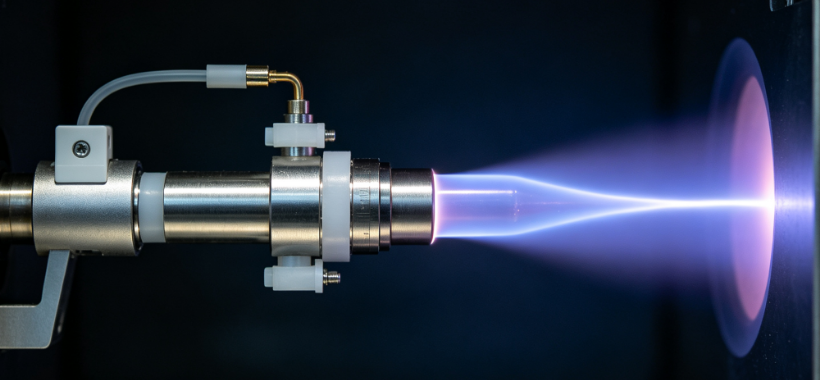
Electrical and Electromagnetic Signature Analysis
At the heart of any plasma excitation device lies its power supply and matching network, which determine the voltage-current waveforms, phase angle, and power factor under variable load conditions. We employ ultra-wideband differential voltage probes (up to 100 kV, 200 MHz bandwidth) and Rogowski coils with <1 % accuracy to capture transient discharge events, including streamer formation, micro-discharge pulses, and arc transition. These signals are processed via real-time oscilloscopes with advanced FFT-based harmonic analysis, identifying spurious resonances that may cause electromagnetic interference (EMI) or reduce the effective power delivered to the plasma. Our Lissajous figure analysis (Q‑V diagrams) provides a direct measure of the discharge energy per cycle (in mJ/cm²) and the equivalent capacitance of the dielectric barrier, which are essential for scaling up from laboratory to industrial reactors.
We go further by implementing network analyser measurements (S-parameters) to evaluate the impedance matching performance over a frequency sweep (10 kHz – 100 MHz), simulating both cold and hot (ignited) states. This reveals the detuning sensitivity caused by temperature-induced capacitance drift or electrode erosion, enabling us to recommend corrective matching strategies. For pulsed excitation systems, we assess rise-time fidelity, overshoot, and pulse-to-pulse stability using jitter analysis (sub-nanosecond resolution), ensuring that the device can sustain high-repetition-rate operation without detrimental ringing.
Optical Emission Spectroscopy as a Non-Invasive Process Probe
Optical diagnostics are indispensable for understanding the energy distribution within the plasma and its correlation with reactive species production. Our facility integrates high-resolution spectrometers (0.02 nm resolution, 200–1100 nm range) coupled with intensified CCD cameras for time-resolved emission acquisition. We perform Boltzmann plot analysis to determine the excitation temperature (Texc) and rotational temperature (Trot) from N₂ (C³Πu → B³Πg) and OH (A²Σ⁺ → X²Π) bands, providing a quantitative fingerprint of the non-equilibrium nature of the discharge. Simultaneously, we use actinometry (with Ar or Xe as trace actinometers) to estimate the absolute densities of atomic oxygen and atomic hydrogen—key precursors for surface functionalisation or sterilisation applications.
For devices operating at microwave or RF frequencies (13.56 MHz, 2.45 GHz), we deploy microwave interferometry and hairpin resonator probes to measure electron number density (ne) and collision frequency, with sensitivities down to 10⁹ cm⁻³. These data are synthesised into a comprehensive energy budget that allocates the input power among ionisation, dissociation, excitation, and heating channels, enabling clients to pinpoint inefficiencies in their excitation design.
Chemical Effluent and By-Product Quantification
Plasma excitation inevitably generates reactive species that, while beneficial for many applications, can also produce unwanted by-products such as ozone, nitrogen oxides, or volatile organic fragments when the background gas is not inert. We utilise cavity-enhanced absorption spectroscopy (CEAS) for real-time monitoring of O₃, NO₂, NO, and N₂O at sub-ppm levels, alongside Fourier-transform infrared (FTIR) spectroscopy with a 10 m path-length gas cell for identification of stable molecular products. For trace organic species, we couple a proton-transfer-reaction mass spectrometer (PTR‑MS) with a fast capillary inlet, achieving millisecond response times and detection limits in the low ppt range. This allows us to map the chemical footprint of the excitation device as a function of input power, gas flow rate, and humidity, providing essential data for environmental compliance (e.g., EPA, EU REACH) and safety certification.
Moreover, we perform ozone ageing tests on elastomeric seals and insulating materials that are exposed to the discharge effluents, using micro-indentation and Thermogravimetric Analysis (TGA) to quantify material degradation. This bridges the gap between plasma chemistry and mechanical reliability—a dimension often overlooked by conventional test houses.
Thermal Management and Durability Under Prolonged Operation
Excitation devices are subject to significant ohmic and dielectric losses, leading to temperature rises that can shift resonance conditions and accelerate electrode sputtering. Our thermal imaging platform (mid-IR and LWIR cameras, calibrated to ±2 °C) captures temperature maps of the electrode surface, dielectric layer, and matching network components during continuous operation over 8‑ to 72‑hour cycles. Concurrently, we record the forward and reflected power via bidirectional couplers to compute the power transfer efficiency in real time. We then apply accelerated life testing with thermal shocks (e.g., 20 °C → 150 °C ramps) while monitoring the Breakdown Voltage and Leakage Current, enabling us to extrapolate the mean time between failures (MTBF) using Arrhenius-based models with confidence intervals.
Importantly, we integrate acoustic emission sensors (piezoelectric transducers) to detect incipient cracking in ceramic dielectrics or loosening of electrode connections, offering early warnings of mechanical fatigue. This multi-sensor fusion approach provides a holistic health index for the excitation system, which is particularly valuable for aerospace, automotive, and power‑generation clients where unscheduled downtime is unacceptable.
Customised Test Benches for Diverse Plasma Geometries
Recognising that plasma excitation devices come in disparate configurations—parallel-plate DBD, coaxial cylindrical reactors, surface‐wave sustained plasmas, and inductively coupled torches—we have developed modular test chambers with interchangeable feedthroughs and gas distribution systems. Our pressure-controlled facility ranges from 10⁻³ mbar (for low‑pressure plasma sources) up to 5 bar absolute, with flow rates from 1 sccm to 500 slm regulated by mass flow controllers (accuracy ±0.8 %). We also offer liquid injection capability for generating aerosol-assisted plasmas, with droplet size characterisation using a phase Doppler interferometer. This versatility ensures that we can replicate the exact operational environment of your device, eliminating scale-up uncertainties.
For clients developing novel excitation concepts, we offer pre‑competitive feasibility studies that include parametric sweeps over frequency, voltage amplitude, duty cycle, and gas mixture, using design of experiments (DoE) methodologies. The resulting datasets are processed with principal component analysis (PCA) and response surface modelling to identify optimal operating windows, reducing your development time by months. All raw data and metadata are delivered in structured formats (HDF5, MATLAB, or CSV) for your internal modelling teams, alongside a comprehensive narrative report that interprets the physical significance of each observed trend.
Accreditation, Traceability, and Scientific Rigour
Our laboratory operates under ISO/IEC 17025 accreditation for electrical, optical, and chemical measurements, with all reference standards traceable to national metrology institutes (NIST, PTB, NPL). We participate in international round-robin comparisons on plasma diagnostics, ensuring our results are globally recognised. Moreover, our team has published over 80 peer‑reviewed articles on plasma characterisation, and we regularly contribute to standardisation working groups (e.g., IEC TC 52 for printed electronics, ASTM E61 for surface cleaning). This academic-industrial nexus allows us to translate cutting-edge research protocols into robust industrial test methods, giving our clients a competitive edge in substantiating their performance claims with the highest level of evidence.
We also offer remote monitoring and tele‑diagnostic support for clients who wish to integrate our test equipment directly into their production lines. Through our secure data‑acquisition interface, we can provide periodic calibration verification and troubleshooting advice without requiring physical shipment of your device, reducing turnaround time and logistical costs.
Why Choose Our Plasma Excitation Testing Services
What truly differentiates our service is the depth of interpretative analysis we provide. We do not simply report numbers; we deliver a physics‑based causality model that links each measured parameter to underlying phenomena—be it secondary electron emission, dielectric charging, or gas heating. This enables clients to make informed decisions about material selection, power supply redesign, or process parameter adjustment. Our proprietary automated uncertainty estimation routine complies with the GUM framework and provides expanded uncertainties (k=2) for all key performance indicators, ensuring that your internal or regulatory submissions are defensible under scrutiny.
Furthermore, our rapid prototyping capability allows us to fabricate on‑the‑fly electrode modifications (using CNC machining and 3D‑printed ceramics) to isolate the effect of geometric variables, offering a level of flexibility that larger, rigid testing facilities cannot match. We have successfully assisted clients in reducing their electrode failure rate by over 60 % through our diagnostic feedback loops, and in improving power coupling efficiency by 15–25 % in pulsed DBD systems.
We invite you to engage our pre‑test consultation where we will review your device specifications, application requirements, and regulatory targets, and then propose a tailored test plan that balances depth, cost, and timeline. With our advanced arsenal of electrical, optical, chemical, and thermal diagnostics, combined with a profound understanding of plasma excitation physics, we transform the complexity of your device into a clear roadmap for performance enhancement and reliability assurance. Let us be your trusted partner in mastering the plasma state.