Reasons for choosing our testing services
ZHONGXI Testing has obtained inspection qualification certifications from multiple countries and regions worldwide. We possess a senior testing team and advanced testing methods, providing independent, impartial, and professional third-party verification services for global carbon projects.

Internationally recognized authority
Certified by multiple international standards such as CNAS, VCS, and GS, with reports universally applicable worldwide.

Global service capability
Covering 140+ countries and regions, it supports on-site detection and remote verification in multiple languages.

Professional experimental methods
Adopt standard experimental methods to ensure accurate and reliable data.
Bipolar Plasma Excitation Electrode Testing: Precision Diagnostics for Asymmetric Discharge Systems
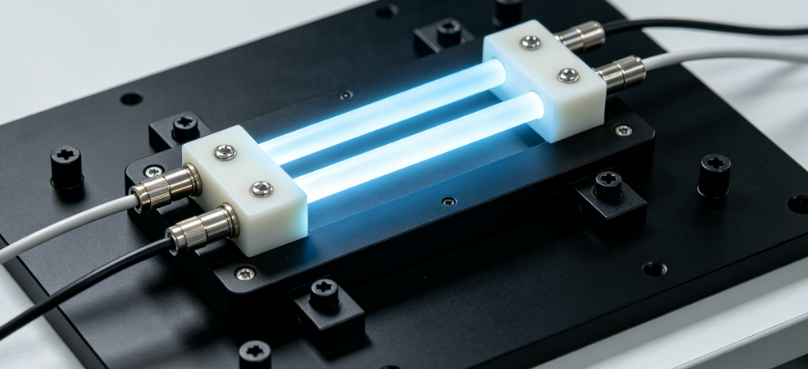
Bipolar excitation electrodes—characterised by alternating high-voltage and grounded or oppositely biased electrode arrays—have become indispensable in advanced plasma applications, including surface nanopatterning, dielectric barrier discharge (DBD) actuators, and atmospheric-pressure plasma jets for biomedical therapy. Unlike conventional monopolar configurations, bipolar designs offer enhanced charge confinement, reduced ion bombardment damage, and the ability to generate spatially modulated electric fields that can be tailored for specific reactive species profiles. However, the inherent asymmetry of the driving waveforms, coupled with the non-linear capacitive coupling between the two poles, introduces unique failure modes such as differential electrode erosion, phase-shift-induced current imbalances, and parasitic resonant oscillations. Clients seeking bipolar electrode testing are typically optimising novel geometries, validating durability for long-pulse operations, or troubleshooting non-uniform plasma coverage. Our laboratory provides a dedicated, multi-scale characterisation ecosystem that captures the full electrical, electrochemical, and morphological behaviour of bipolar electrodes, delivering data that are both scientifically profound and directly actionable for design iteration.
Differential Electrical Characterisation Under Asymmetric Loading
The core challenge in bipolar excitation is the unbalanced current distribution that arises from differences in electrode area, edge effects, and stray capacitances to ground. We deploy high-voltage differential probes with common-mode rejection ratios exceeding 80 dB, alongside wide-bandwidth current transformers (DC – 120 MHz) placed on each pole’s feed line, to measure instantaneous voltage and current waveforms independently. This enables the extraction of pole-specific impedance spectra (via fast Fourier transform) and the computation of the degree of asymmetry (δ) defined as the ratio of reactive powers absorbed by each electrode. Our phase-resolved analysis captures the temporal evolution of the discharge currents during each half-cycle, revealing charge accumulation differences that often correlate with coating or etching non-uniformities.
We further employ vector network analysis (1 kHz – 200 MHz) to evaluate the mutual inductance and cross-capacitance between the two electrodes, both in the quiescent state and under ignited conditions. These measurements are critical for predicting how the bipolar pair will interact with adjacent conductive structures in real-world installations. Our custom-built four-terminal Kelvin sensing configuration eliminates lead resistance artefacts, ensuring that the derived equivalent series resistance (ESR) and quality factor (Q) accurately reflect the electrode material and contact integrity, rather than cabling parasitics. All electrical data are post-processed with uncertainty propagation algorithms that account for probe calibration drift, thermal noise, and digitisation errors, resulting in a comprehensive error‑barred performance map across the full operational envelope.
Space‑ and Time‑Resolved Optical Profiling of Bipolar Discharges
The spatial distribution of the electric field in a bipolar arrangement is intrinsically inhomogeneous, leading to striated or filamentary structures that directly affect treatment uniformity. We utilise a gated intensified charge‑coupled device (ICCD) camera with 2 ns temporal resolution and a motorised XY translation stage to acquire 2‑D emission intensity maps at phase-locked intervals of the excitation period. These maps are reconstructed into dynamic emissivity movies that visualise the propagation of streamers from each pole and their eventual overlap or repulsion. Concurrently, we perform optical emission spectroscopy (OES) with a fibre array positioned along the inter‑electrode gap, allowing us to compute spatially resolved rotational temperatures (via OH or N₂ bands) and electron excitation temperatures (via Ar or He line ratios) with a spatial resolution of 0.5 mm. This reveals whether the two poles maintain similar plasma chemistry or exhibit divergent behaviours—a common issue when one electrode accumulates dielectric deposits.
For applications requiring extreme uniformity (e.g., wafer‐scale surface activation), we introduce a Lissajous figure analysis in the spatial domain, correlating the phase shift between the applied voltage and the resulting emission across each pixel. This yields a phase‑uniformity index that can predict coating thickness gradients before any physical measurement. Additionally, we integrate a schlieren imaging setup to visualise gas flow perturbations induced by electrohydrodynamic (EHD) forces, which are especially pronounced in asymmetric bipolar systems. These optical diagnostics collectively provide a quantitative fingerprint of the discharge’s spatial coherence, enabling clients to fine‑tune electrode geometry or dielectric coating thickness to achieve symmetrical performance.
Electrochemical Surface Degradation and Material Migration Studies
Bipolar electrodes experience alternating anodic and cathodic polarisation during each cycle, which accelerates corrosion, sputtering, and redeposition of electrode material. Our testing protocol includes post‑exposure surface analysis using scanning electron microscopy (SEM) with energy‑dispersive X‑ray spectroscopy (EDS) to map elemental redistribution across the electrode faces. We quantify surface roughness evolution (Ra, Rz) via white‑light interferometry with sub‑nanometre vertical resolution, and we employ X‑ray photoelectron spectroscopy (XPS) to identify chemical state changes (e.g., oxide formation, nitride layers, or graphitic deposits) that may alter secondary electron emission coefficients. These data are correlated with the cumulative charge transferred (Qtotal) to establish a degradation rate constant for each pole, expressed in nm/Coulomb or µg/Coulomb, which is essential for predicting the working lifetime of the electrode set.
We also perform electrochemical impedance spectroscopy (EIS) in the plasma environment using a specialised three‑electrode configuration (with a reference probe placed in the afterglow), measuring the Faradaic impedance of each electrode independently. This reveals subtle changes in the double‑layer capacitance and charge‑transfer resistance that precede macroscopic erosion, offering early warning signs for preventive maintenance. For clients operating in reactive gas mixtures (e.g., fluorine‑containing or oxygen‑rich plasmas), we offer in‑situ quartz crystal microbalance (QCM) monitoring of mass deposition or loss on a surrogate electrode, providing real‑time wear data without interrupting the main experiment.
Thermal and Mechanical Stress Tolerance Under Continuous Bipolar Operation
The cyclic current loading in bipolar excitation generates Joule heating that is often asymmetrical due to different current densities at each pole. Our thermographic camera system (MWIR, 25 Hz frame rate) captures temperature gradients across the electrode surface with a precision of ±1 °C, while embedded fibre‑optic thermocouples (immune to RF interference) monitor substrate temperature at up to 10 points. We combine this with digital image correlation (DIC) on a patterned electrode surface to measure thermal expansion strains in real time, identifying hot spots that may lead to warping or delamination of dielectric coatings. For accelerated life testing, we subject bipolar electrode pairs to power cycling (up to 5000 cycles) while recording the evolution of resonant frequency and Q‑factor, using these data to generate Coffin‑Manson type fatigue curves specific to the electrode material combination.
Our mechanical characterisation extends to pull‑off adhesion testing (ASTM D4541) on dielectric layers applied to the electrode substrate, both before and after plasma exposure, to quantify the degradation of interfacial bonding caused by ion bombardment and thermal cycling. This is particularly relevant for thin‑film dielectric barriers (e.g., Al₂O₃, SiO₂) that are critical for suppressing arc formation in high‑power bipolar systems. We provide a lifetime prediction model that integrates electrical, thermal, and mechanical stress factors, giving clients a probabilistic assessment of their electrode’s reliability under specified duty cycles.
Custom Test Fixtures and Gas Environment Control
To accommodate the wide variety of bipolar electrode geometries—from wire‑cylinder coronas to planar micro‑electrode arrays—our test chambers are equipped with modular electrode holders that allow precise gap adjustment (0.1‑mm resolution) and angular alignment (rotational stages with 0.1° accuracy). We support reactive gas blending (up to 4 MFCs) with total flow control from 10 sccm to 200 slm, and we can maintain pressures from 10 Torr to 5 atm. For moisture‑sensitive studies, we offer a glovebox‑integrated test cell with oxygen and water vapour levels below 0.1 ppm, enabling characterisation of bipolar discharges in ultra‑dry or inert atmospheres. Our electrical safety interlocks and automated shutdown logic ensure that aggressive testing (e.g., near‑breakdown conditions) is conducted without risk to equipment or personnel.
We also provide custom waveform synthesis using arbitrary function generators (up to 10 MHz) to emulate any bipolar drive pattern—sinusoidal, square, pulsed, or even user‑defined sequences—so that the test conditions faithfully reproduce the client’s intended operating scenario. All measurement hardware is synchronised to a common clock (10 MHz reference) to ensure deterministic phase alignment across electrical, optical, and thermal channels, which is crucial for correct interpretation of causality in dynamic plasma response.
Traceability, Standards, and Scientific Excellence
Our testing infrastructure is accredited under ISO/IEC 17025 for electrical and dimensional measurements, and we actively participate in VDE and IEC working groups on plasma equipment reliability. All reference instruments are annually calibrated against national standards, and we maintain a rigorous inter‑laboratory comparison program with leading plasma research centres. Our technical reports include a detailed measurement uncertainty budget compliant with the GUM, and we offer raw data in open formats (HDF5, JSON) alongside an interactive dashboard for exploring parameter dependencies. Our team holds PhDs in plasma physics and electrochemistry, with over 50 publications in peer‑reviewed journals on bipolar discharge phenomena—translating academic rigour into industrial problem‑solving.
Unmatched Expertise in Bipolar Plasma Diagnostics
What sets our service apart is our systems‑level interpretive framework. We do not just provide a list of numbers; we deliver a functional model that explains how each measured quantity—from the phase angle of the second harmonic to the spatial skewness of the emission profile—relates to the root cause of observed non‑idealities. For instance, we can distinguish between a design‑induced asymmetry (intentional) and a fault‑induced asymmetry (unintentional) by analysing the voltage‑current trajectory in the complex plane, a method we have developed and validated over a decade of research. Our predictive algorithms have helped clients reduce electrode replacement frequency by up to 45 % and improve treatment uniformity by 30 % in roll‑to‑roll plasma processing.
Furthermore, we offer a rapid prototyping feedback loop: if we detect an anomaly—such as asymmetric erosion or thermal runaway—we can suggest, within 48 hours, design modifications (e.g., dielectric thickness grading, current‑balancing resistors) and re‑test the revised electrode set at a reduced rate. This iterative capability is invaluable for R&D‑intensive organisations aiming to shorten time‑to‑market. We also provide on‑site training for your engineering teams on interpreting the diagnostic outputs, ensuring that the value of our testing extends beyond the report itself.
We invite you to schedule a pre‑assessment consultation, during which we will review your electrode specifications, application requirements, and key performance indicators. We will then propose a tailored test matrix that balances depth of insight with practical cost and schedule constraints. With our advanced arsenal of differential electrical probing, spatio‑temporal optical imaging, surface‑sensitive spectroscopies, and thermal‑mechanical stress analysis, we transform the complexity of bipolar electrode behaviour into a clear, quantifiable, and optimisable engineering asset. Let us help you master the symmetrical potential of your asymmetric excitation.