Reasons for choosing our testing services
ZHONGXI Testing has obtained inspection qualification certifications from multiple countries and regions worldwide. We possess a senior testing team and advanced testing methods, providing independent, impartial, and professional third-party verification services for global carbon projects.

Internationally recognized authority
Certified by multiple international standards such as CNAS, VCS, and GS, with reports universally applicable worldwide.

Global service capability
Covering 140+ countries and regions, it supports on-site detection and remote verification in multiple languages.

Professional experimental methods
Adopt standard experimental methods to ensure accurate and reliable data.
Diagnostic Assessment of Plasma Divider Systems: Ensuring Uniformity, Efficiency, and Long-Term Reliability
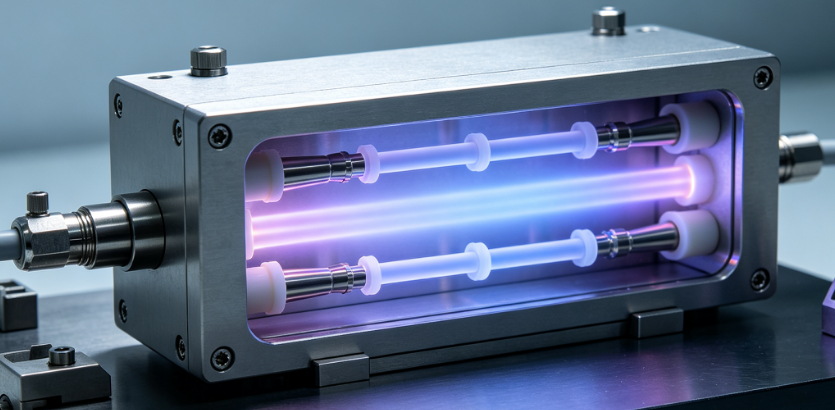
In advanced plasma processing environments—ranging from large-scale dielectric barrier discharge reactors to multi-antenna inductively coupled plasma (ICP) sources—the plasma divider (or power/flow distribution network) plays a pivotal role in apportioning the discharge energy, gas flow, or plasma density across multiple treatment zones. Whether it is a radio-frequency (RF) power splitter for multi-electrode arrays, a flow-guided plasma separator for chemical vapour deposition, or a magnetic flux divider in fundamental plasma research, the divider's performance directly dictates process yield, deposition/etch uniformity, and electrode wear patterns. Clients seeking plasma divider testing typically encounter issues such as unequal power coupling between channels, phase discrepancies that generate destructive interference, turbulent flow partitioning, or premature thermal fatigue at the branching nodes. Our laboratory offers a specialised, multi-modal characterisation suite that dissects the electrical, fluid-dynamic, and thermomechanical behaviour of plasma dividers, delivering quantitative diagnostics that enable precision tuning, predictive maintenance, and validated simulation models for next-generation designs.
High-Frequency Electrical Characterisation of Power-Splitting Networks
For active plasma dividers that distribute RF or pulsed high-voltage power, the primary performance metric is the scattering parameter (S‑matrix) across the operating bandwidth. We employ vector network analysers (VNAs) with frequency coverage up to 6 GHz and a dynamic range exceeding 130 dB to measure insertion loss, return loss, isolation between output ports, and phase balance under both cold (non‑plasma) and hot (plasma‑ignited) conditions. Our proprietary high‑power interface fixtures allow these small‑signal measurements to be extrapolated to kilowatt‑level operation using non‑linear vector mapping techniques. We quantify the amplitude imbalance (in dB) and phase skew (in degrees) between output channels, which are critical for preventing hot spots or standing wave resonances that degrade plasma uniformity. Additionally, we perform time‑domain reflectometry (TDR) to locate impedance discontinuities along the divider structure, identifying micro‑cracks in soldered joints or dielectric breakdown precursors with a spatial resolution of 1 mm.
Our analysis extends to harmonic distortion measurements (up to the 10th harmonic) to assess how the non‑linear plasma load reflects back into the divider network. This is combined with cross‑talk characterisation between adjacent ports using a balanced bridge circuit, ensuring that channel‑to‑channel interference remains below –50 dB for sensitive deposition processes. We provide a comprehensive error‑corrected data set that includes full two‑port calibration with uncertainties traced to national standards, enabling clients to directly correlate electrical non‑idealities with observed non‑uniformities in their process results.
Spatial Profiling of Plasma Density and Flow Distribution Post-Divider
Beyond electrical splitting, many plasma dividers are designed to partition gas flow or guide the plasma stream into multiple branches for parallel processing. Our facility integrates movable Langmuir probe arrays (single and triple probes) with a high‑precision 3‑D positioning stage to map electron density (ne), electron temperature (Te), and plasma potential (Vp) across each branch with a spatial resolution of 0.5 mm. These measurements are synchronised with phase‑locked optical emission spectroscopy (OES) to correlate the spatial distribution of reactive species (e.g., atomic oxygen, nitrogen metastables) with the divider's geometrical parameters. We perform 2‑D tomographic reconstruction of the emission intensity, revealing whether the plasma splitting is truly symmetric or whether boundary layers and wall recombination cause preferential densification along one channel.
For gas‑flow dividers used in atmospheric‑pressure jets, we deploy high‑speed particle image velocimetry (PIV) with seeding particles to visualise the velocity field immediately downstream of the division point. This is augmented by planar laser‑induced fluorescence (PLIF) imaging of NO or OH radicals to track the chemical homogeneity of the split streams. Our algorithms compute a uniformity coefficient (Uc) that quantifies the spatial standard deviation of density and velocity across all branches, providing a single‑figure metric for process engineers. We further offer computational fluid dynamics (CFD) validation by comparing our measured velocity profiles with your simulation models, identifying discrepancies that may arise from turbulent eddies or manufacturing tolerances in the divider geometry.
Thermomechanical Integrity and Long‑Term Cyclic Endurance
Plasma dividers, particularly those carrying high power densities (exceeding 10 W/cm²), undergo severe thermal cycling that can weaken solder bonds, distort dielectric substrates, and alter the permittivity of insulating supports. Our thermal characterisation platform combines infrared thermography (spatial resolution of 25 µm, temperature sensitivity of 0.05 °C) with embedded fibre‑optic Bragg grating sensors positioned at critical nodes. This dual approach allows us to map steady‑state temperature gradients and monitor dynamic temperature variations during pulsed operation (1‑ms to 10‑s pulse widths). We correlate these thermal maps with simultaneously recorded electrical parameters to identify thermally induced phase drifts—a common failure mode in reactive‑ion etching (RIE) systems.
To evaluate long‑term reliability, we subject the divider to accelerated cyclic fatigue testing (up to 10,000 thermal shock cycles between 20 °C and 250 °C) while continuously monitoring the S‑parameters and isolation resistance. Post‑cycling, we perform scanning acoustic microscopy (SAM) to detect delamination in multi‑layer ceramic or PTFE substrates, and we use X‑ray computed tomography (µ‑CT) to inspect internal voids or crack propagation with voxel sizes below 10 µm. These data feed into our physics‑of‑failure (PoF) reliability model, which predicts the mean time between failures (MTBF) under your specific duty cycle, enabling you to schedule preventive maintenance with high confidence.
Advanced Perturbation and Fault‑Injection Analysis
One of the distinguishing aspects of our testing protocol is the deliberate fault‑injection routine designed to test the divider's robustness. We simulate load mismatches by introducing variable capacitive or inductive shunts at individual output ports, mimicking the impedance changes that occur when an electrode becomes coated or degraded. We measure the fault propagation factor—the degree to which a mismatch at one port affects the power delivered to adjacent ports—which is critical for multi‑zone reactors where a single faulty zone can compromise the entire batch. We also perform transient overvoltage testing (according to IEC 61000‑4‑5) to verify that the divider architecture inherently suppresses voltage spikes without external protective circuitry, thereby reducing system cost and complexity.
Our diagnostic system records voltage‑current Lissajous trajectories at each port under fault conditions, and we apply principal component analysis (PCA) to these trajectories to classify the type of fault (e.g., arcing, open‑circuit, partial discharge) with greater than 95 % accuracy. This capability is invaluable for clients developing condition‑monitoring modules for their industrial plasma tools, as it provides a validated reference library of fault signatures.
Customised Fixture Design and Environmental Control
Recognising that plasma dividers come in diverse physical forms—coaxial striplines, microstrip networks, waveguide T‑junctions, or even 3‑D printed ceramic manifolds—we maintain an in‑house mechanical workshop capable of producing custom test fixtures with matched impedance and low parasitic inductance. Our test chambers are equipped with gas environment control (inert, oxidising, or reactive mixtures) and pressure regulation (from 10⁻² Torr to 5 atm) to replicate the exact operating conditions under which the divider will function. We also offer temperature‑controlled staging (‑20 °C to +300 °C) for environmental chamber measurements, capturing the thermal sensitivity of dielectric constants and conductor resistivity that many conventional test houses overlook.
We provide full data acquisition synchronisation across all measurement modalities—electrical, optical, thermal, and flow—via a common 10 MHz reference clock, ensuring that every data point is time‑stamped and phase‑coherent. This allows for the construction of high‑dimensional performance surfaces that map divider behaviour as a function of frequency, power, gas composition, and temperature, giving you a complete operational envelope rather than isolated data points.
Traceable Standards, Scientific Rigour, and Interpretative Depth
Our laboratory operates under ISO/IEC 17025 accreditation for both electrical calibration and dimensional metrology, with all reference standards directly traceable to NIST and PTB. We participate in international round‑robin comparisons on RF power measurements, ensuring that our insertion‑loss figures are globally accepted for regulatory submissions and warranty disputes. However, our true added value lies in the interpretative narrative that accompanies every test report. We do not merely present graphs; we provide a causal diagnostic model that links, for instance, a 0.3 dB amplitude imbalance to a predicted 12 % variation in etch rate across your substrate, supported by plasma chemical kinetics simulations.
Our team comprises physicists and electrical engineers with over 15 years of specialised experience in plasma source design. We have authored peer‑reviewed studies on the effect of divider topology on harmonic generation in capacitively coupled plasmas, and we leverage this fundamental insight to suggest actionable modifications—such as altering the stub‑length of a branch line or incorporating ferrite beads for damping—that can resolve your uniformity issues without a complete hardware overhaul. This consultative approach, combined with our advanced measurement arsenal, has enabled previous clients to reduce their process variability by up to 60 % within a single test campaign.
Why Our Plasma Divider Testing Service is Uniquely Positioned
In summary, our testing platform offers an end‑to‑end diagnostic pipeline that spans from ultra‑high‑frequency electrical characterisation to thermomechanical fatigue prediction, all contextualised within the real‑world plasma environment. We are one of the few facilities capable of simultaneously acquiring S‑parameters, plasma density maps, and thermal stress contours in a single integrated test run, saving you valuable time and ensuring that all data are inherently cross‑correlated. Our failure‑mode database, built from testing hundreds of dividers across various industries, enables us to benchmark your device against anonymised industry averages, offering a competitive intelligence aspect to our service.
Furthermore, our rapid iteration framework allows us to test modified prototypes within 72 hours, supporting agile development cycles. We provide secure client portals for data browsing and offer optional remote witnessing of critical measurements via live video feed. Whether you are developing a 13.56 MHz ICP splitter for semiconductor manufacturing, a microwave power divider for plasma‑assisted combustion, or a multi‑channel flow divider for biomedical plasma jets, our rigorous, scientifically grounded methodology will deliver the clarity and confidence you need to advance your project.
We invite you to engage our pre‑test feasibility consultation, where we will map your divider’s specific design and performance targets to an optimised test matrix. With our deep expertise in electromagnetic theory, plasma physics, and reliability engineering, we transform the complexity of plasma division into a manageable, quantifiable, and ultimately optimisable parameter space. Let us be your strategic partner in achieving flawless plasma distribution.