Reasons for choosing our testing services
ZHONGXI Testing has obtained inspection qualification certifications from multiple countries and regions worldwide. We possess a senior testing team and advanced testing methods, providing independent, impartial, and professional third-party verification services for global carbon projects.
Internationally recognized authority
Certified by multiple international standards such as CNAS, VCS, and GS, with reports universally applicable worldwide.

Global service capability
Covering 140+ countries and regions, it supports on-site detection and remote verification in multiple languages.
Professional experimental methods
Adopt standard experimental methods to ensure accurate and reliable data.
Diagnostic Evaluation of Arc Channel Cooling Structures: Thermal–Fluid Integrity, Heat Dissipation Efficiency, and Long‑Term Reliability
Arc channels—whether in high‑voltage circuit breakers, plasma torches, arc furnaces, or propulsion systems—operate under extreme thermal loads, with core temperatures exceeding 10,000 K and heat fluxes that can surpass tens of MW/m². The cooling structure surrounding or integrated within the arc channel is therefore a critical sub‑system, responsible for maintaining the temperature of the surrounding dielectric materials, conducting heat to a coolant medium, and preserving the geometrical stability of the arc path. Clients seeking arc channel cooling structure testing typically face challenges such as unexplained thermal runaway, premature degradation of nozzle materials, uneven cooling leading to arc root wandering, or the need to validate new cooling designs (micro‑channel, transpiration, or impingement‑jet configurations) for next‑generation equipment. Our laboratory provides a multi‑physics, multi‑scale characterisation platform that integrates high‑speed thermography, transient pressure sensing, flow visualisation, and material thermo‑mechanical analysis to deliver a complete performance map of your cooling structure under realistic and accelerated conditions. We go beyond pass/fail criteria to provide quantitative diagnostic insights that enable predictive maintenance, design optimisation, and safety certification.
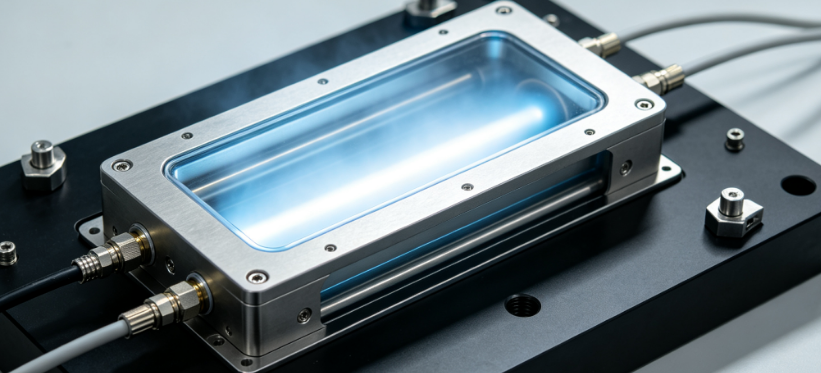
Thermal Performance Mapping Under Transient Arc Loads
The primary function of the cooling structure is to extract heat from the arc region efficiently and uniformly. We employ a synchronised array of infrared cameras (MWIR and LWIR, up to 25‑kHz frame rates) with microscopic lenses to capture 2‑D temperature fields on the inner and outer surfaces of the cooling structure, achieving spatial resolution down to 50 µm and temperature sensitivity of ±1 °C. To access internal surfaces, we use endoscopic IR probes and fibre‑optic pyrometers that can be inserted into coolant channels without disturbing the flow. We also embed fast‑response thermocouples (time constant < 5 ms) and thin‑film resistance temperature detectors (RTDs) at multiple depths within the structure, allowing us to reconstruct transient temperature gradients during simulated arc pulses (duration 10 ms to 10 s, current up to 100 kA). From these data, we compute the effective thermal diffusivity and thermal contact resistance at material interfaces, which are crucial for predicting the time‑to‑onset of critical hot spots.
We further perform cyclic thermal shock testing by applying repetitive arc‑on/off cycles (up to 10,000 cycles) while monitoring the evolution of temperature distribution and peak temperatures. This enables us to detect any degradation in cooling performance due to material fatigue, oxidation, or clogging of coolant passages. Our real‑time data fusion integrates thermal data with electrical arc parameters (voltage, current, power) to compute the instantaneous heat removal efficiency (ηcool = (Pinput – Pstored)/Pinput) and to identify any phase lag in the cooling response. All measurements are referenced to calibrated blackbody sources and traceable to national standards.
Fluid Dynamic Characterisation of Coolant Flow
In forced‑convection cooling structures (e.g., liquid‑cooled copper channels, gas‑flow nozzles), the coolant flow pattern directly governs the local heat transfer coefficient. We utilise high‑speed particle image velocimetry (PIV) with seeding particles (diameter 1–5 µm) and a transparent model of the cooling structure to visualise the velocity field, vorticity, and turbulence intensity in the coolant passages, with a temporal resolution of 1 kHz and spatial resolution of 0.2 mm. For opaque metallic structures, we employ magnetic resonance velocimetry (MRV) (for water/glycol coolants) or ultrasonic Doppler velocimetry (UDV) to measure velocity profiles non‑intrusively. We also measure pressure drop across the cooling channels using high‑bandwidth pressure transducers (up to 10 kHz), deriving the Darcy friction factor and loss coefficients for each segment of the structure.
For gas‑cooled systems (air, SF₆, or nitrogen), we deploy constant‑temperature anemometry (CTA) with miniaturised hot‑wire probes to map velocity fluctuations and turbulent heat transfer. We quantify the coolant mass flow rate via Coriolis flow meters (accuracy ±0.2 %) and the inlet/outlet temperature difference using matched thermopiles to compute the total heat removal rate (Q̇ = ṁ · cp · ΔT). By combining thermal and flow data, we calculate the local Nusselt number (Nu) distribution and the overall effectiveness (ε) of the cooling structure, expressed as the ratio of actual heat transfer to the theoretical maximum for the given coolant and geometry. These parameters are essential for validating computational fluid dynamics (CFD) models and for identifying regions of stagnant flow or recirculation that may lead to local overheating.
Thermo‑Mechanical Integrity and Material Stability
Arc channels induce not only thermal but also mechanical stresses due to thermal expansion, pressure surges, and electromagnetic forces. We integrate high‑speed digital image correlation (DIC) with synchronised thermal imaging to measure full‑field strain on the cooling structure during arc events, capturing both elastic and plastic deformation with a strain resolution of 0.01 %. For inaccessible surfaces, we use fibre‑optic strain sensors (Fiber Bragg Gratings) embedded in the structure, providing point‑wise strain at up to 1000 Hz. We also perform thermo‑mechanical fatigue (TMF) tests in a customised environmental chamber that simultaneously applies thermal cycles (up to 800 °C) and mechanical loading (tensile/compressive) to material coupons machined from the cooling structure, measuring the cyclic stress‑strain response and the number of cycles to failure (Wöhler curves).
We evaluate the creep behaviour of materials (copper, tungsten, ceramics, composite) under constant high‑temperature exposure, using extensometers and laser triangulation to monitor strain over extended periods (up to 1000 hours). Our post‑test examination includes metallographic analysis (optical and SEM) to detect grain growth, phase transformation, or intergranular cracking. Additionally, we measure thermal expansion coefficients (CTE) via dilatometry and thermal conductivity via laser flash analysis (LFA) on samples taken before and after arc exposure, quantifying any irreversible material degradation. This comprehensive mechanical characterisation ensures that the cooling structure will maintain its geometric integrity and thermal contact under repeated extreme conditions.
Coolant Quality and Contamination Assessment
Over time, coolants can degrade or become contaminated, leading to fouling of channels, reduced heat transfer, and corrosion. For liquid coolants (deionised water, dielectric oils, ethylene‑glycol mixtures), we perform ion chromatography (IC) to detect corrosive ions (Cl⁻, SO₄²⁻, Cu²⁺, Fe³⁺), pH and conductivity measurements, and particle counting (by light obscuration) to assess cleanliness. For gas coolants, we use gas chromatography‑mass spectrometry (GC‑MS) to identify decomposition products, and dew‑point hygrometers to measure moisture content. We also assess the corrosion resistance of the cooling channel walls by exposing representative samples to the coolant at elevated temperatures (up to 150 °C) under static and flowing conditions, followed by SEM/EDS analysis to detect pitting or general corrosion. Our coolant quality reports include guidelines for filtration, replacement intervals, and material compatibility to prolong the life of the cooling system.
Non‑Destructive Inspection of Internal Geometry and Defects
Cooling channels often have complex internal geometries (spiral, pin‑fin, porous) that are difficult to inspect visually. We employ X‑ray computed tomography (µ‑CT) with a high‑energy source (up to 450 kV) to reconstruct 3‑D models of the cooling structure with a voxel size down to 5 µm, enabling the detection of blockages, corrosion deposits, void formation, or cracking within the bulk material. We also use ultrasonic phased‑array testing to detect delamination or debonding in multi‑layer structures (e.g., brazed joints, ceramic‑metal composites) with a sensitivity of 0.5 mm. Our dye penetrant inspection and eddy current testing are available for surface‑breaking defects. All NDT results are quantitatively analysed and overlaid on the thermal/flow performance maps to identify causal relationships between structural anomalies and performance deficits.
Accelerated Ageing and Lifetime Prediction
To predict the service life of the cooling structure under realistic duty cycles, we design accelerated stress tests that combine elevated temperature, cyclic thermal shock, coolant flow at maximum velocity, and intermittent arc simulation. We monitor key performance indicators (thermal efficiency, pressure drop, material hardness, and channel integrity) at regular intervals and fit the degradation trends to Coffin‑Manson, Arrhenius, or Paris law models, depending on the dominant failure mechanism. Our probabilistic lifetime estimation provides the probability of survival as a function of operating hours, allowing you to plan maintenance and replacement schedules with quantified risk levels. We validate our models with long‑term (up to 3000 hours) endurance tests on representative prototypes, ensuring that our predictions are grounded in empirical reality.
Customised Test Fixtures and Realistic Simulation
We recognise that every arc channel cooling structure has a unique geometry, coolant type, and mounting arrangement. Our workshop can fabricate custom test fixtures that replicate the actual installation, including inlet/outlet manifolds, electrical feedthroughs, and insulation supports. We provide fully instrumented test cells with flexible connections for different coolants and pressures (up to 100 bar). We also offer electrical arc generation using a high‑power DC or AC source (up to 200 kA peak, 20 kV), with adjustable arc duration and gap distance, to simulate realistic arcing events. Our data acquisition system can record up to 512 channels simultaneously at sampling rates up to 10 MS/s, ensuring that no transient phenomena are missed.
We also support coolant‑in‑loop testing with a chiller/heater unit that maintains the inlet coolant at a specified temperature and flow rate, and we can add controlled contamination (particulates or dissolved salts) to study fouling effects. For gas‑cooled systems, we provide high‑pressure gas supplies (up to 200 bar) with mass flow controllers and gas analysers to monitor composition changes. All tests are conducted with full safety interlocking, arc‑containment enclosures, and remote operation to protect personnel and equipment.
Data Interpretation and Engineering Recommendations
Our final report is not a mere collection of graphs; it includes a root‑cause analysis that interprets the observed thermal, fluid, and mechanical data in the context of your design and operating conditions. We identify the most limiting factor—whether it is a localised hot spot, insufficient flow turbulence, or material embrittlement—and provide specific recommendations for improvement, such as modifying channel geometry, altering coolant chemistry, adjusting flow rate, or applying thermal barrier coatings. Our team of PhD‑level engineers works with you to prioritise these recommendations based on cost, feasibility, and performance gain.
We also offer validation of CFD and FEA models by comparing our experimental data with your simulation results, highlighting discrepancies and refining model parameters (e.g., heat transfer coefficients, contact resistances) to improve predictive accuracy. This iterative approach is invaluable for R&D projects where design changes are being evaluated virtually.
Our Distinctive Advantages in Arc Cooling Testing
Our laboratory is uniquely equipped to handle the extreme multi‑physics coupling inherent in arc channel cooling. We combine high‑speed thermography, advanced flow diagnostics, and materials testing under one roof, ensuring that all measurements are synchronised and traceable. Our proprietary data‑analysis software performs time‑frequency decomposition and cross‑correlation between thermal, flow, and electrical signals, revealing cause‑and‑effect relationships that are invisible in separate analyses. We have successfully tested cooling structures for leading switchgear manufacturers, plasma torch developers, and aerospace propulsion groups, accumulating a rich database of failure signatures and performance benchmarks.
We pride ourselves on scientific rigour and transparency: all test conditions, calibration procedures, and uncertainty estimates are documented in full. We welcome client witness testing and provide on‑site training for your technical staff. Our expedited service can deliver preliminary results within 48 hours and a comprehensive report within two weeks, depending on test complexity. We also offer follow‑up support to help you implement corrective actions and to re‑test modified designs.
We invite you to contact us for a technical consultation to define your specific cooling structure and operational challenges. We will propose a tailored test matrix that aligns with your timeline, budget, and performance targets. With our deep expertise in arc physics and thermal management, we transform the complexity of cooling structure design into a clear roadmap for enhanced reliability, safety, and efficiency.