Reasons for choosing our testing services
ZHONGXI Testing has obtained inspection qualification certifications from multiple countries and regions worldwide. We possess a senior testing team and advanced testing methods, providing independent, impartial, and professional third-party verification services for global carbon projects.
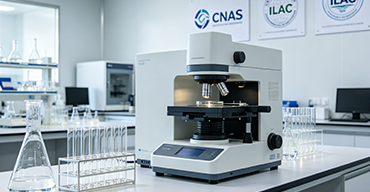
Internationally recognized authority
Certified by multiple international standards such as CNAS, VCS, and GS, with reports universally applicable worldwide.

Global service capability
Covering 140+ countries and regions, it supports on-site detection and remote verification in multiple languages.
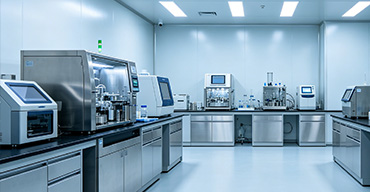
Professional experimental methods
Adopt standard experimental methods to ensure accurate and reliable data.
Comprehensive Performance and Safety Assessment of Plasma Generators: From Discharge Physics to Industrial Integration
Plasma generators—encompassing dielectric barrier discharge (DBD) exciters, inductive/capacitive coupled RF sources, microwave plasma torches, and pulsed arc systems—are the primary drivers for a vast range of applications, including surface functionalisation, gas conversion, material synthesis, and biomedical decontamination. The performance of these generators is defined by a complex interplay of electrical input, gas flow dynamics, reactor geometry, and environmental conditions. Clients seeking plasma generator testing typically aim to validate new designs, optimise operational parameters for maximum efficiency and yield, diagnose instability or arcing, ensure compliance with electromagnetic compatibility (EMC) and safety regulations, or compare different power supply topologies. Our laboratory offers a fully integrated, multi‑physics characterisation suite that covers the entire spectrum of generator behaviour—from the fundamental discharge kinetics and power coupling efficiency to long‑term stability and thermal management. We deliver not only quantitative measurements but also a deep diagnostic interpretation that pinpoints performance bottlenecks and provides actionable recommendations for design refinement and process optimisation.
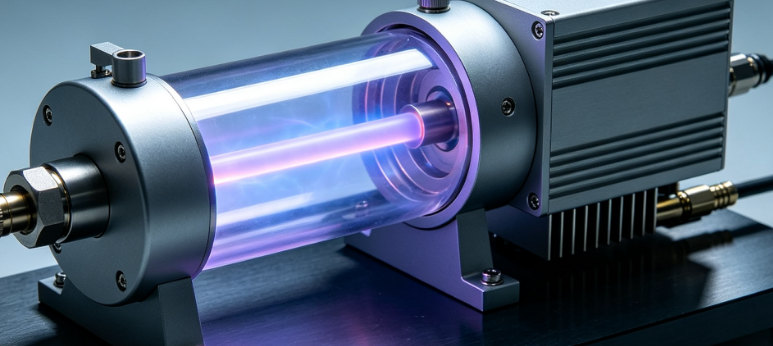
Electrical Characterisation and Power Measurement
The electrical performance of a plasma generator is the foundation of its operation. We employ ultra‑wideband high‑voltage differential probes (up to 100 kV, 200 MHz) and precision current transformers (DC – 100 MHz) to capture the instantaneous voltage and current waveforms at the generator’s output terminals. From these, we compute the real power (integrated product of v(t) and i(t) over multiple cycles), the apparent power, power factor, and the harmonic spectrum (up to the 50th harmonic) using high‑precision FFT analysis. For pulsed or modulated generators, we measure rise/fall times, pulse width jitter, and peak‑to‑peak stability with sub‑nanosecond resolution. Our proprietary Q‑V Lissajous analysis (for DBD generators) yields the discharge energy per half‑cycle, the equivalent capacitance of the dielectric barrier, and the discharge onset voltage—all critical for scaling and matching network design.
We further perform network analysis (S‑parameter measurements) on the generator’s input and output ports, covering frequencies from 10 kHz to 6 GHz, to evaluate the impedance matching and to detect any parasitic resonances that may lead to reflected power or unstable ignition. This is complemented by time‑domain reflectometry (TDR) to locate impedance discontinuities within the internal cabling and connectors. All power measurements are traceable to national metrology institutes (NIST, PTB) via calibrated reference standards, and we provide a comprehensive uncertainty budget in accordance with the GUM framework, ensuring that your efficiency figures are defensible for regulatory submissions or performance claims.
Plasma Parameter Diagnostics: Density, Temperature, and Reactive Species
The chemical and physical effects of the generator are ultimately governed by the plasma parameters. We deploy a suite of non‑intrusive optical diagnostics to characterise the active discharge zone. Optical emission spectroscopy (OES) with a high‑resolution spectrometer (0.02 nm, 200–1100 nm) allows us to determine the excitation temperature (using Boltzmann plots of atomic lines), rotational temperature (from molecular bands, e.g., N₂ or OH), and electron number density (from Stark broadening of Hα or Ar lines). We also employ actinometry to quantify absolute densities of radical species (O, H, N) in the discharge, using trace noble gases as reference.
For quantitative electron density and collision frequency, we utilise microwave interferometry (at 94 GHz) and hairpin resonator probes, both offering high sensitivity (ne down to 10⁹ cm⁻³) with sub‑millisecond temporal resolution. Our Langmuir probe system (single and double probes, with RF compensation) provides complementary measurements of electron density, electron temperature, and plasma potential, with automatic sweeping and data fitting. These data are synchronised with the electrical waveforms to correlate the discharge dynamics with the instantaneous power delivery, revealing any phase‑dependent variations that may affect process uniformity. We also offer laser‑induced fluorescence (LIF) for spatially resolved mapping of specific radical distributions, which is essential for validating simulation models of reactive flow in the generator.
Gas Composition and By‑Product Analysis
For generators used in gas processing or surface treatment, the effluent composition is a critical performance indicator. We couple the generator to a fully instrumented gas analysis train, including Fourier‑transform infrared (FTIR) spectroscopy with a heated multi‑pass cell (10 m path) for quantification of stable species (O₃, NO, NO₂, N₂O, CO₂, and hydrocarbons) down to ppm levels. For trace organic intermediates, we use proton‑transfer‑reaction time‑of‑flight mass spectrometry (PTR‑ToF‑MS), which achieves sub‑ppb detection limits and millisecond response times, allowing real‑time monitoring of transient species. We also perform gas chromatography with thermal conductivity and flame ionisation detectors (GC‑TCD/FID) for permanent gases and volatile organics, calibrated with certified gas mixtures.
Our mass balance closure calculations account for all input and output species, identifying any unaccounted losses that may indicate leakage, wall recombination, or the formation of condensable products. For generators producing corrosive effluents, we use ion chromatography to detect acid gases (HF, HCl, H₂SO₄) and colorimetric tubes for quick field screening. All analytical methods are validated against standard reference materials, ensuring that your reported gas purity or conversion efficiency is both accurate and reproducible.
Thermal Management and Operational Stability
Long‑term operation of a plasma generator can lead to significant temperature rise in the electrodes, dielectric, and housing, which may shift discharge characteristics and accelerate material degradation. Our high‑speed infrared thermography (up to 25 Hz) captures temperature maps of the generator’s critical surfaces with a spatial resolution of 0.2 mm and a thermal sensitivity of ±1 °C. We also embed fibre‑optic temperature sensors and thin‑film thermocouples inside the reactor to monitor internal temperature gradients during continuous runs (up to 1000 hours). These thermal data are correlated with the electrical output and chemical yield to determine the temperature coefficient of performance—a key parameter for systems that must operate in varying ambient conditions.
We subject the generator to accelerated ageing cycles involving repeated power‑on/off ramps, step‑changes in load (simulating process variations), and extended high‑power operation. We monitor the drift in ignition voltage, power efficiency, and species output at regular intervals, and we apply degradation modelling (using Arrhenius or power‑law functions) to predict the remaining useful life. Our post‑test material analyses, including SEM/EDS, X‑ray diffraction (XRD), and weight loss measurements, identify the dominant failure mechanisms—such as electrode sputtering, dielectric charging, or seal embrittlement—enabling you to select more robust materials or adjust maintenance schedules.
Electromagnetic Compatibility and Electrical Safety
Plasma generators are notorious sources of electromagnetic interference (EMI) due to their fast switching and high‑voltage transients. We conduct EMC testing in a shielded chamber, measuring radiated emissions (30 MHz – 6 GHz) and conducted emissions (150 kHz – 30 MHz) according to CISPR 11 and IEC 61000‑6‑3/‑4. We also assess immunity to electrostatic discharge (ESD), surge, and burst transients per IEC 61000‑4‑2/‑4/‑5. Our line impedance stabilisation networks (LISN) and antenna arrays are calibrated and traceable, and we provide a full compliance report for CE marking or FCC certification.
On the safety side, we perform dielectric withstand testing (hipot) up to 10 kV AC/DC, Insulation Resistance measurement (with megohmmeter), ground continuity, and Leakage Current testing in accordance with IEC 61010‑1 or EN 60335‑2‑65. We also evaluate the thermal protective devices (thermostats, fuses) and interlock systems to ensure that the generator shuts down safely under fault conditions. Our safety evaluation includes a risk assessment that identifies potential hazards (arc flash, toxic gas release, fire) and recommends appropriate safeguarding measures, contributing to your overall product safety file.
Customised Test Environments and Application‑Specific Scenarios
We understand that a plasma generator rarely operates in isolation; it is part of a larger system involving gas handling, vacuum pumps, or substrate movement. Our modular test cells allow us to replicate your specific application conditions: we can integrate the generator with a process chamber, include a variable‑frequency drive for substrate motion, or install a feedback control loop that adjusts power based on a sensor signal (e.g., pressure, temperature, optical emission). We offer pressure control from 10⁻³ mbar to 5 atm, gas flow control with multi‑channel mass flow controllers (MFCs), and humidity/temperature conditioning of the feed gas. This enables end‑to‑end performance testing that reflects the actual field environment, reducing the risk of surprises during final system integration.
For clients developing novel plasma sources, we provide parametric sweep studies that systematically vary the frequency, amplitude, pulse width, duty cycle, gas mixture, and flow rate, while automatically logging all electrical, optical, and chemical data. Our advanced design of experiments (DoE) approach uses response surface methodology to identify optimal operating windows and to quantify the sensitivity of key outputs to each input parameter. We also offer comparative benchmarking against industry‑standard generators (provided by the client or available in our reference library), helping you position your product’s performance relative to competitors.
Standards Compliance and Quality Assurance
Our laboratory is accredited under ISO/IEC 17025 for electrical, temperature, and pressure measurements. We follow established standards for plasma generator testing, including IEC 63086‑1 (performance of air cleaners), SEMI E78 (RF power measurement), and ASTM E2971 (ozone output). We also adhere to Nadcap criteria for aerospace and defence related testing. Our quality management system ensures that each test is performed according to a pre‑approved test plan, with deviation reporting and corrective action procedures. All test results are reviewed by a second qualified engineer before release, and we maintain full traceability of every instrument used.
Our Technical Edge and Consultative Approach
What truly distinguishes our plasma generator testing service is the depth of physical interpretation that accompanies every measurement. Our team consists of plasma physicists, electrical engineers, and analytical chemists who work together to construct a causal chain from input power to output effect—for example, explaining how a slight change in the duty cycle affects the electron energy distribution, which in turn alters the radical production and the final coating quality. This holistic view allows us to suggest precise modifications, such as adjusting the matching network, adding a pulse‑modulation scheme, or changing the dielectric material, that target the root cause of any observed deficiency.
We also maintain a proprietary knowledge base derived from hundreds of generator tests across multiple industries, enabling us to quickly identify common failure patterns and to offer benchmark comparisons against anonymised industry peers. Our predictive analytics tools can estimate the long‑term efficiency drift and the probability of premature failure, based on short‑term accelerated tests, saving you months of field‑trial time. Additionally, we provide remote access to live test data via a secure portal, and we offer training workshops for your team on interpreting the diagnostic signals and implementing best practices in generator operation and maintenance.
Whether you are a start‑up developing a new plasma technology, an OEM looking to qualify a new power supply, or an end‑user troubleshooting an existing system, our testing service delivers the clarity and confidence you need to make informed decisions. We invite you to engage our technical experts for a pre‑test consultation, where we will tailor a test matrix that aligns with your specific objectives, constraints, and timeline. With our advanced diagnostic arsenal and unwavering commitment to scientific excellence, we transform the complexity of plasma generation into a manageable, quantifiable, and optimisable asset for your organisation.