Reasons for choosing our testing services
ZHONGXI Testing has obtained inspection qualification certifications from multiple countries and regions worldwide. We possess a senior testing team and advanced testing methods, providing independent, impartial, and professional third-party verification services for global carbon projects.

Internationally recognized authority
Certified by multiple international standards such as CNAS, VCS, and GS, with reports universally applicable worldwide.

Global service capability
Covering 140+ countries and regions, it supports on-site detection and remote verification in multiple languages.

Professional experimental methods
Adopt standard experimental methods to ensure accurate and reliable data.
Performance and Reliability Assessment of High‑Frequency Plasma Arc Ignition Generators: From Spark Dynamics to System Integration
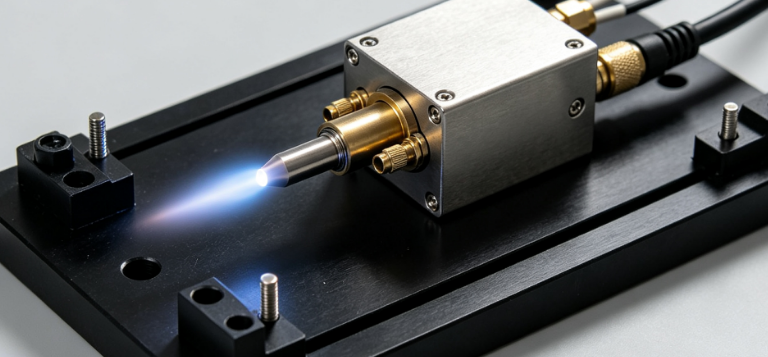
High‑frequency (HF) plasma arc ignition generators—typically operating in the range of several hundred kHz to a few MHz—are essential for initiating and stabilising arcs in plasma torches, welding systems, and pulsed plasma thrusters. Unlike standard plasma power supplies, these generators must deliver ultra‑high‑voltage spikes (up to 30 kV) with precise frequency control to achieve reliable breakdown across a gas gap, while simultaneously limiting current to prevent electrode erosion and electromagnetic interference (EMI). Clients seeking HF arc ignition generator testing often face challenges such as inconsistent ignition success rates, excessive radiated emissions leading to system malfunctions, thermal stress on high‑voltage components, or gradual degradation of the spark gap and high‑frequency transformer. Our laboratory provides a dedicated, multi‑domain characterisation platform that covers the entire ignition cycle—from the initial high‑voltage impulse and resonant ring‑up to the transition to a stable arc and subsequent shut‑off. We combine ultra‑fast electrical sampling, near‑field EMI scanning, thermal imaging, and accelerated life testing to deliver a complete diagnostic picture, enabling clients to optimise ignition reliability, minimise interference, and extend service life.
High‑Voltage and High‑Frequency Electrical Characterisation
The core function of the HF ignition generator is to produce a reproducible high‑voltage transient that can break down the gas gap. We employ custom‑designed capacitive dividers (with 500:1 and 1000:1 ratios, DC – 100 MHz) and wide‑bandwidth Pearson current monitors to capture the output voltage and current waveforms with <1 % overshoot error and <2 ns rise‑time capability. Our real‑time oscilloscopes (sampling up to 20 GS/s) record the entire ignition sequence, including the peak open‑circuit voltage, the damping factor of the resonant circuit, and the frequency stability (jitter) between successive pulses. We quantify the energy per pulse (in mJ) by integrating the product of voltage and current over the spark duration, and we measure the pulse repetition rate accuracy (with a frequency counter traceable to GPS timebase).
For generators employing a phase‑locked loop (PLL) or frequency sweeping, we perform dynamic frequency response analysis by varying the load impedance (simulating different plasma impedance states) and recording the feedback loop’s settling time and overshoot. We also use a network analyser to characterise the input impedance of the ignition transformer and the coupling coefficient between primary and secondary windings, which directly affects the voltage gain and the efficiency of energy transfer. Our electrical assessment concludes with a statistical analysis of ignition delay (over 1000 trigger attempts), providing a reliability metric (e.g., probability of ignition within a specified time window) that is essential for process automation.
Ignition Reliability and Breakdown Characterisation
Reliable ignition under varying gas composition, pressure, and temperature conditions is a key requirement. We mount the generator in a pressurised test chamber (10⁻² mbar to 10 bar) with controlled gas mixtures (air, Ar, He, N₂, or custom blends) and a variable‑gap electrode system (0.5–20 mm). We record the Breakdown Voltage (Paschen curve) as a function of pressure and gap distance, and we measure the statistical scatter of the Breakdown Voltage using a Weibull distribution analysis—critical for predicting the ignition margin. We also evaluate the effect of repetitive pulses on the breakdown threshold, identifying any “conditioning” effects that may either improve or degrade ignition over time.
Our high‑speed camera (frame rates up to 100,000 fps) captures the development of the primary spark and the subsequent transition to a glow/arc discharge, correlating the optical emission with the electrical waveforms. This allows us to detect mis‑fire events (where the spark occurs but fails to sustain) and to diagnose whether the fault lies in the voltage amplitude, the pulse duration, or the electrode geometry. We provide a comprehensive ignition fingerprint that includes the minimum required voltage, the optimum pulse width, and the sensitivity to environmental changes, enabling you to set robust operational margins.
Electromagnetic Interference (EMI) and Spectral Purity
HF ignition generators are notorious for generating broadband EMI that can couple into nearby control circuits, sensors, or communication lines. We perform near‑field scanning using a calibrated set of H‑field and E‑field probes (10 kHz – 6 GHz) to map the emission hotspots on the generator’s PCB and cable harness. This is complemented by far‑field emissions testing in a semi‑anechoic chamber according to CISPR 11 (Group 2, Class A/B), measuring both radiated and conducted emissions. We also analyse the harmonic content of the output voltage (up to the 50th harmonic) to identify spurious resonances that may cause interference at specific frequencies. Our spectrum analyser with a tracking generator allows us to measure the return loss and isolation of the output filter network, recommending modifications such as ferrite beads, common‑mode chokes, or shielded cabling to meet regulatory limits.
Importantly, we evaluate the susceptibility of the generator itself to external RF fields (radiated immunity per IEC 61000‑4‑3) and to conducted disturbances (burst/surge per IEC 61000‑4‑4/‑5), ensuring that the ignition control circuitry does not false‑trigger or shut down under industrial environments. Our full EMC report provides a clear path to CE or FCC certification, saving you costly redesigns late in the development cycle.
Thermal Management and Component Stress Analysis
The high‑voltage transformer, switching transistors (MOSFETs/IGBTs), and resonant capacitors in the ignition generator undergo significant heating, especially during repetitive ignition cycles. We use infrared thermography (50‑Hz frame rate, 0.05 °C sensitivity) to map the temperature distribution of these critical components during continuous operation (up to 5000 ignition pulses per hour). We also embed fibre‑optic temperature sensors inside the transformer winding to monitor the hot‑spot temperature, and we measure the thermal time constants of each component by applying a step‑power input and recording the temperature rise. This data is used to calculate the thermal derating necessary for safe operation and to validate thermal simulation models.
To assess long‑term reliability, we subject the generator to accelerated thermal cycling (‑40 °C to +85 °C ambient, 1000 cycles) while periodically measuring the ignition voltage and pulse energy. We also perform vibration testing (sinusoidal and random, up to 10 g) to verify that solder joints, wire bonds, and connector crimps remain intact. Post‑stress, we carry out X‑ray inspection of the transformer and PCB assemblies to detect micro‑cracks or void formation. Our lifetime prediction model, based on the Arrhenius equation and Miner’s rule for fatigue, provides an estimate of the mean time between failures (MTBF) under your specific duty cycle.
Dielectric Integrity and Insulation Coordination
Given the high voltages involved, the insulation system of the HF ignition generator is a critical safety and performance factor. We perform hipot testing (AC/DC up to 50 kV) between all primary‑secondary, primary‑ground, and secondary‑ground paths, measuring Leakage Current and dielectric breakdown strength in accordance with IEC 60664‑1. We also conduct partial discharge (PD) measurements using a sensitive PD detector (with <1 pC resolution) to detect incipient insulation defects that may not cause immediate failure but could lead to premature ageing. Our Insulation Resistance measurements (at 500 V and 1000 V DC) are performed before and after environmental conditioning (humidity and temperature) to ensure adequate clearance and creepage distances.
For generators that use solid‑state high‑voltage multipliers or piezoelectric transformers, we evaluate the voltage hold‑off capability and the recovery time after a breakdown event. We also measure the capacitance and dissipation factor of the insulating materials under high‑frequency excitation, as dielectric losses increase with frequency and can cause local heating. Our insulation assessment provides a comprehensive margin‑of‑safety analysis that is indispensable for meeting UL, CSA, or IEC safety standards.
Control Interface and Communication Robustness
Modern HF ignition generators often include digital control interfaces (RS‑485, CAN bus, Ethernet) for remote triggering, parameter setting, and status monitoring. We validate the communication integrity by subjecting the control lines to conducted disturbances (fast transient bursts) and by measuring the eye‑diagram of the data signals at maximum baud rate. We also test the response time from the external trigger signal to the output pulse, including any variability due to software processing or hardware latency. Our protocol conformance testing ensures that the generator correctly responds to all defined commands and error codes, and we simulate various fault conditions (e.g., missing trigger, over‑temperature warning) to verify the fail‑safe behaviour.
We offer custom scripted automation that can run thousands of ignition cycles while varying trigger timing, duty cycle, and environmental parameters, automatically logging all diagnostic data. This is particularly useful for clients who need to generate statistical process control (SPC) data for quality assurance.
Customised Test Fixtures and Application Emulation
We recognise that the performance of an HF ignition generator is highly dependent on the actual load (the plasma torch or electrode assembly). Our modular test bench allows us to connect the generator to a realistic dummy load that mimics the impedance of your specific torch (including cable capacitance and stray inductance). We also provide custom electrode fixtures that replicate the geometry of your application, and we can integrate the generator with a gas flow system to simulate the actual operating conditions. This end‑to‑end testing reveals issues that might not appear in a simple resistive load test, such as the influence of cable length on the ring‑up waveform or the effect of arc flicker on the feedback control.
For clients developing prototypes, we offer a rapid iteration service: after our initial characterisation, we can suggest component changes (e.g., different capacitor values, transformer turns ratio) and re‑test within 48 hours, accelerating your design cycle. Our comparative benchmarking service evaluates your generator against competitor models (provided by you or from our reference library) under identical conditions, delivering unbiased performance comparisons.
Standards Compliance and Quality Documentation
Our testing is conducted in accordance with relevant international standards, including IEC 60974‑6 (arc welding equipment – limited duty), IEC 61000‑6‑2/‑4 (EMC immunity/emission), UL 61010‑1, and GB/T 15579 (Chinese arc equipment standard). We are accredited under ISO/IEC 17025 for high‑voltage and EMC testing, and our reports are accepted by major certification bodies. We provide a comprehensive test dossier that includes all raw data, calibration certificates, uncertainty analysis, and a summary of observed anomalies, along with recommended corrective actions.
Our Technical Edge and Added Value
What makes our HF ignition generator testing service unique is the holistic, system‑level perspective we bring. We do not merely measure output voltage and frequency; we construct a causal chain linking component ageing, thermal drift, and load variations to the ignition success rate and EMI profile. Our team of power electronics and plasma experts has decades of combined experience in designing and debugging these systems, allowing us to offer engineering consultancy on circuit topology, component selection, and layout optimisation. We have successfully helped clients reduce ignition failure rates from >5 % to <0.1 % and cut EMI emissions by over 20 dB.
Furthermore, our proprietary data analytics platform performs automatic feature extraction (peak voltage, rise‑time, damping ratio) from every pulse and applies machine‑learning classifiers to predict impending failures before they occur. This predictive capability is especially valuable for high‑volume production environments where downtime is costly. We also offer remote monitoring of the generator during extended endurance tests, with live dashboards accessible from anywhere.
We invite you to engage our technical experts for a pre‑test consultation, where we will define the critical performance indicators for your specific ignition application and design a test matrix that balances depth, time, and cost. With our advanced diagnostic arsenal and deep understanding of high‑frequency plasma ignition, we transform the complexity of arc initiation into a manageable, quantifiable, and optimisable process, ensuring that your generator delivers reliable, interference‑free ignition every time.