Reasons for choosing our testing services
ZHONGXI Testing has obtained inspection qualification certifications from multiple countries and regions worldwide. We possess a senior testing team and advanced testing methods, providing independent, impartial, and professional third-party verification services for global carbon projects.

Internationally recognized authority
Certified by multiple international standards such as CNAS, VCS, and GS, with reports universally applicable worldwide.

Global service capability
Covering 140+ countries and regions, it supports on-site detection and remote verification in multiple languages.

Professional experimental methods
Adopt standard experimental methods to ensure accurate and reliable data.
Comprehensive Diagnostic Evaluation of Plasma Discharge Disks: From Electrode Integrity to Discharge Uniformity
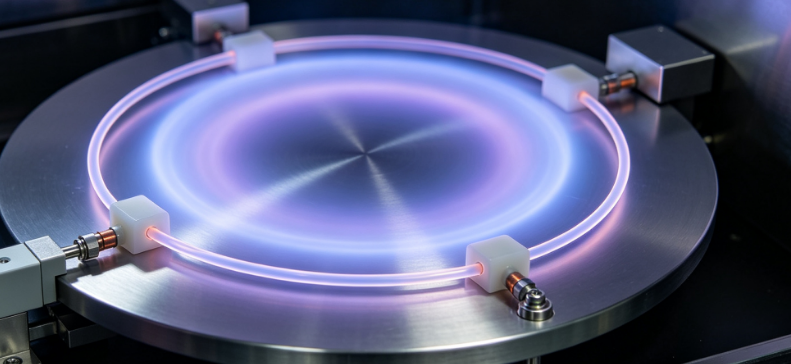
Plasma discharge disks—commonly employed as planar or perforated electrodes in dielectric barrier discharge (DBD) reactors, ozone generators, surface treatment systems, and plasma medicine devices—are fundamental to the generation of homogeneous, stable, and chemically active plasmas. Their geometry, surface condition, and dielectric coating directly govern the electric field distribution, power density, and reactive species yield. Clients seeking plasma discharge disk testing typically face challenges such as non‑uniform glow transition to filamentary micro‑discharges, progressive electrode erosion due to ion sputtering, dielectric charging effects, or thermally induced warping that degrades gap uniformity. Our laboratory provides a highly integrated, multi‑modal characterisation platform that addresses every critical aspect of discharge disk performance—from its pristine electrical impedance and surface morphology to its long‑term behaviour under accelerated ageing and reactive gas environments. We combine precision impedance spectroscopy, time‑resolved optical imaging, nano‑scale surface analysis, and thermo‑mechanical stress evaluation to deliver a comprehensive diagnostic fingerprint. This allows us not only to certify disk quality but also to predict failure mechanisms and suggest targeted design modifications, ensuring that your plasma process remains robust, reproducible, and cost‑effective.
Electrical Characterisation and Discharge Mode Analysis
The discharge disk’s primary role is to sustain a stable plasma with controlled power dissipation. We employ high‑accuracy LCR meters (20 Hz – 2 MHz) and precision impedance analysers to measure the capacitance, dissipation factor, and equivalent series resistance (ESR) of the disk assembly under both cold (non‑ignited) and plasma‑on conditions. These parameters are extracted over a range of frequencies and applied voltages, revealing the dielectric relaxation behaviour and the onset of non‑linearities that precede the transition to filamentary mode. For DBD configurations, we perform Q‑V Lissajous analysis using a high‑voltage probe and a series capacitor, deriving the discharge energy per half‑cycle, the average power, and the effective capacitance of the gas gap. These data are correlated with the Breakdown Voltage measured at various gas pressures and compositions, enabling us to construct a complete Paschen curve for your specific disk geometry.
To evaluate the uniformity of the discharge, we deploy a gated ICCD camera with a macro lens to capture phase‑resolved emission images of the disk surface during each half‑cycle. By image processing, we quantify the spatial homogeneity index (based on the coefficient of variation of pixel intensities) and identify any preferred breakdown sites—often caused by edge effects, surface contamination, or local thickness variations in the dielectric layer. Our correlation analysis between the electrical waveforms and the spatial emission maps reveals the degree of synchronisation of micro‑discharges across the disk, which is essential for applications requiring uniform surface treatment or consistent ozone output.
Surface Morphology, Topography, and Coating Integrity
The physical condition of the discharge disk’s active surface—whether bare metal, coated with a dielectric, or embedded with catalytic materials—directly affects electron emission, charge accumulation, and erosion resistance. Our white‑light interferometry (vertical resolution <1 nm) provides 3‑D surface topography maps over areas up to 200×200 mm², quantifying the average roughness (Ra), peak‑to‑valley height (Rz), and skewness of the surface profile. We also employ scanning electron microscopy (SEM) with energy‑dispersive X‑ray spectroscopy (EDS) to examine the surface microstructure and to detect elemental changes caused by sputtering or oxidation. For dielectric‑coated disks (e.g., Al₂O₃, SiO₂, glass), we use focused ion beam (FIB) milling to prepare cross‑sections for transmission electron microscopy (TEM), allowing us to measure the thickness uniformity and to detect pinholes, delamination, or micro‑cracks that could lead to premature electrical breakdown.
We further assess the wettability and surface energy of the disk via contact angle measurements (using sessile drop method with different liquids) and apply the Owens‑Wendt model to compute the polar and dispersive components. These surface properties are crucial for applications involving liquid‑phase plasma or for preventing the accumulation of conductive deposits. All topographical and chemical data are georeferenced to the electrical performance maps, enabling us to pinpoint whether a loss of uniformity is due to a surface defect or an electrical imbalance in the power supply.
Thermal Profiling and Thermo‑Mechanical Stability
During continuous operation, the discharge disk experiences significant Joule heating and, in some cases, radiative heating from the plasma. Excessive temperature gradients can cause thermal expansion that alters the discharge gap, leading to positive feedback and thermal runaway. Our infrared thermography system (MWIR camera, 25‑Hz frame rate, 0.05 °C sensitivity) captures the temperature distribution across the entire disk surface during operation, with a spatial resolution of 50 µm. We also embed thin‑film resistance temperature detectors (RTDs) on the backside of the disk at multiple radial positions to monitor internal temperature rise with a response time <10 ms. From these data, we compute the thermal diffusivity and the temperature coefficient of the dielectric permittivity, both of which affect the electrical performance at higher power levels.
To test long‑term dimensional stability, we subject the disk to thermal cycling (from room temperature to the maximum operating temperature, typically 150–300 °C, for 500 cycles) while monitoring any change in the gap spacing using a high‑precision laser displacement sensor. We also measure the coefficient of thermal expansion (CTE) of the disk material via dilatometry, and we compare the experimental data with finite‑element simulations to predict the deformation under worst‑case thermal loads. Our thermo‑mechanical fatigue assessment identifies any risk of warping, cracking, or debonding of the dielectric layer, enabling you to set safe operating limits and to select more suitable materials for high‑duty applications.
Material Ageing and Erosion Quantification
Repeated exposure to energetic ions and reactive radicals inevitably degrades the discharge disk material. We conduct accelerated ageing tests by running the disk continuously for up to 2000 hours at various power levels and gas compositions (air, O₂, N₂, Ar, and mixtures). At regular intervals, we remove the disk and perform mass loss measurements (using a microbalance with 0.01 mg resolution), surface roughness re‑characterisation, and X‑ray photoelectron spectroscopy (XPS) depth profiling to detect chemical changes (e.g., oxide layer growth, nitridation, or carbon contamination). We also use glow discharge optical emission spectroscopy (GDOES) to obtain rapid elemental depth profiles of the near‑surface region, identifying any diffusion of electrode material into the dielectric or vice versa.
Our erosion rate model, derived from the measured mass loss per unit charge transferred (μg/C), allows us to predict the remaining useful life of the disk under your specific operating conditions. We also provide post‑test fractography (SEM of fracture surfaces) to distinguish between brittle fracture, fatigue, and corrosion‑assisted failure. This comprehensive degradation analysis helps you plan preventive maintenance schedules and to compare the durability of different disk materials or coatings, ultimately reducing costly unscheduled downtime.
Gas Flow and Pressure Uniformity Across the Disk
In many plasma systems, the discharge disk is integrated with a gas distribution manifold to ensure uniform reactant delivery. We test the flow resistance and pressure drop across the disk (if perforated) using a custom‑built flow bench with precision mass flow controllers and differential pressure transducers (accuracy ±0.05 %). We perform flow visualisation using smoke particles and a high‑speed camera to detect any recirculation zones or preferential flow paths that could cause non‑uniform plasma chemistry. For disks with integrated micro‑channels or porous structures, we use gas permeation measurements to determine the effective permeability and to check for blockages due to particle deposition.
We also evaluate the gas residence time distribution by injecting a tracer gas (e.g., SF₆) and monitoring its concentration downstream using a fast‑response mass spectrometer. This information is vital for kinetic modelling of the plasma chemistry, as the contact time between the discharge and the gas strongly influences conversion and by‑product formation. Our integrated flow‑uniformity data are presented alongside the electrical and thermal results, providing a complete system‑level performance map.
High‑Voltage Dielectric Strength and Partial Discharge Testing
For disks that incorporate a solid dielectric barrier, the integrity of that barrier is paramount. We perform AC and DC dielectric withstand tests (up to 50 kV) at standard and elevated temperatures, measuring Leakage Current and Breakdown Voltage in accordance with IEC 60243‑1. We also conduct partial discharge (PD) measurements using a sensitive PD detector (sensitivity <1 pC) to identify voids, inclusions, or delamination within the dielectric that could initiate electrical treeing. The PD inception and extinction voltages are recorded, and the phase‑resolved PD patterns are analysed to classify the defect type. Our insulation life prediction, based on accelerated electrical ageing (voltage endurance tests), provides a reliability estimate that is crucial for safety‑critical applications.
For disks with metal‑to‑dielectric or multi‑layer interfaces, we perform high‑frequency impedance spectroscopy (1 MHz – 3 GHz) to detect any interfacial polarisation effects that could indicate moisture ingress or ionic migration. We also measure the surface resistivity (using a concentric ring electrode) to assess the risk of surface flashover under humid conditions. This thorough dielectric assessment ensures that your discharge disk will not fail catastrophically during normal operation.
Customised Test Fixtures and Realistic Operating Conditions
We understand that discharge disks are often part of a larger assembly with specific mounting, cooling, and electrical connections. Our modular test chambers are designed to accommodate disks of various diameters (from 10 mm to 600 mm) and thicknesses, with adjustable electrode spacing and temperature‑controlled backside cooling. We can replicate your exact power supply interface (including cable impedance and matching network) to ensure that the measured performance is directly transferable to your system. We also provide gas environment control (from 10⁻³ mbar to 10 atm, with up to 4 gas lines) and humidity conditioning of the feed gas, simulating the full range of operating conditions that your disk may encounter in the field.
For clients developing new disk designs, we offer parametric sweeps of voltage, frequency, gas flow, and temperature, automatically logging all diagnostic data. Our DoE (Design of Experiments) optimisation service identifies the combination of parameters that maximises discharge uniformity and efficiency, while our comparative benchmarking evaluates your disk against reference standards or competitor products under identical conditions.
Standards Adherence and Data Traceability
Our testing protocols conform to relevant international standards, including ASTM D374 (dielectric thickness), ASTM D495 (high‑voltage arc resistance), IEC 60093 (surface resistivity), and SEMI E78 (RF impedance measurement). We are accredited under ISO/IEC 17025 for dimensional, electrical, and temperature calibrations, and all our measurement standards are traceable to NIST. Our final report includes a detailed measurement uncertainty budget for each parameter, ensuring that you can confidently use our data for regulatory submissions, internal specifications, or customer documentation.
Our Technical Edge: Integrated Diagnostics and Predictive Analytics
What truly distinguishes our discharge disk testing service is the synergistic integration of multiple diagnostic modalities and our ability to link them into a coherent physical model. We do not merely present isolated measurements; we construct a causal framework that explains, for example, how a slight increase in surface roughness leads to a higher dielectric loss, which raises the temperature, which in turn reduces the Breakdown Voltage—ultimately accelerating erosion. Our team of plasma physicists, materials scientists, and electrical engineers works with you to translate these findings into actionable design changes, such as adjusting the dielectric thickness, modifying the electrode pattern, or changing the gas purging scheme.
Our proprietary data fusion algorithms combine electrical, optical, thermal, and surface data to generate a health index for your disk, which can be tracked over time to predict the optimal replacement point. We also provide remote access to live test data and on‑site training for your quality control staff, empowering you to perform routine checks with confidence. With our in‑house workshop, we can re‑test modified prototypes within 72 hours, accelerating your R&D cycles significantly.
We invite you to schedule a pre‑assessment consultation, where we will discuss your specific discharge disk application, performance targets, and operational constraints. We will then propose a tailored test matrix that balances depth of analysis with practical time and cost considerations. With our advanced diagnostic arsenal and deep domain expertise, we transform the complexity of plasma discharge disk behaviour into clear, quantifiable, and optimisable parameters—ensuring that your plasma process performs at its best, from the first spark to the millionth pulse.