Reasons for choosing our testing services
ZHONGXI Testing has obtained inspection qualification certifications from multiple countries and regions worldwide. We possess a senior testing team and advanced testing methods, providing independent, impartial, and professional third-party verification services for global carbon projects.

Internationally recognized authority
Certified by multiple international standards such as CNAS, VCS, and GS, with reports universally applicable worldwide.

Global service capability
Covering 140+ countries and regions, it supports on-site detection and remote verification in multiple languages.

Professional experimental methods
Adopt standard experimental methods to ensure accurate and reliable data.
Advanced Diagnostic Testing of Plasma Torches: From Arc Physics to Industrial Reliability
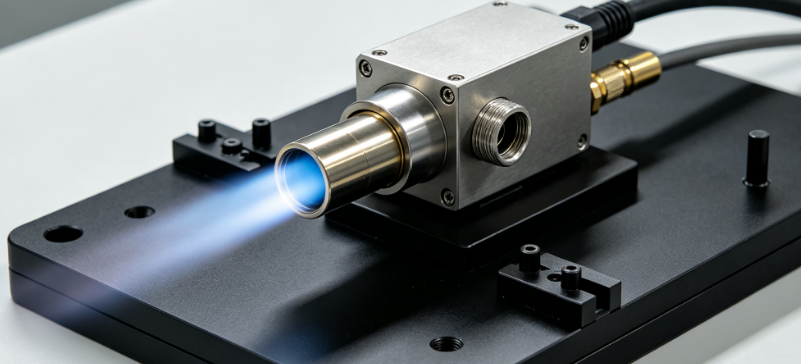
Plasma torches are pivotal devices in a broad spectrum of high‑temperature applications, including thermal spraying, waste treatment, metal cutting, welding, and chemical synthesis. Their performance is governed by a delicate balance of electrical input, gas dynamics, electrode condition, and thermal management. Clients seeking plasma torch testing are typically aiming to validate new torch designs, optimise operational parameters for enhanced efficiency and deposit quality, diagnose premature electrode wear or arc instability, or ensure compliance with safety and emission standards. Our laboratory provides a fully integrated, multi‑physics characterisation platform that covers every critical aspect of torch behaviour—from the instantaneous electrical signatures and plasma jet temperature profiles to the long‑term erosion rates of consumable parts and the electromagnetic compatibility of the entire system. We deliver not only precise measurements but also a diagnostic interpretation that links observed phenomena to root causes, enabling targeted design improvements, predictive maintenance schedules, and process optimisation.
Electrical and Power Performance Assessment
The electrical characteristics of a plasma torch—voltage, current, power, and their fluctuations—directly influence arc stability, heat input, and electrode wear. We employ ultra‑wideband high‑voltage differential probes (up to 100 kV, 100 MHz bandwidth) and precision current transformers (DC to 50 MHz) to capture the instantaneous voltage and current at the torch terminals. These signals are analysed using high‑speed digitizers (sampling up to 10 GS/s) to compute the real power, power factor, and harmonic distortion (up to the 50th order). We also perform time‑frequency analysis (wavelet and short‑time Fourier transform) to detect transient events such as arc restrikes, voltage spikes, or current chopping that may indicate impending nozzle failure or gas flow instability.
For torches driven by pulsed or modulated power supplies, we measure rise‑time, pulse‑to‑pulse jitter, and the duty cycle accuracy under varying load conditions. Our impedance matching analysis (using network analysers up to 6 GHz) evaluates the efficiency of power transfer from the supply to the torch, identifying any parasitic resonances that could reduce performance or generate electromagnetic interference. All electrical data are referenced to calibrated standards and reported with full uncertainty budgets, ensuring that your efficiency and reliability figures are defensible for internal quality or external certification.
Plasma Jet Thermal and Flow Characterisation
The thermal output of the plasma jet—its temperature, velocity, and enthalpy—determines the effectiveness of the torch for material processing. We employ a combination of non‑contact optical diagnostics to map these parameters. High‑speed pyrometry (two‑colour and spectral methods) provides the jet core temperature (typically 10,000–30,000 K) with microsecond temporal resolution, while enthalpy probes (calorimetric and pitot‑type) measure the total heat flux and stagnation pressure at various axial and radial positions. For detailed velocity fields, we use particle image velocimetry (PIV) with seeding particles (e.g., alumina or titanium dioxide) and a high‑repetition‑rate laser, generating 2‑D maps of axial and radial velocity components, turbulence intensity, and vorticity distribution.
Our emission spectroscopy system (UV‑Vis‑NIR, 0.02 nm resolution) acquires spatially resolved spectra across the jet, from which we compute rotational and vibrational temperatures (using N₂, OH, or CN bands) and electron number density (via Stark broadening of Hα lines). We also perform actinometry to quantify the absolute densities of reactive radicals (atomic O, N, H) that are crucial for chemical vapour deposition or surface activation. All thermal and flow measurements are synchronised with the electrical waveforms to correlate power input with jet characteristics, enabling you to find the optimal operating point for your specific application.
Electrode Degradation and Nozzle Wear Monitoring
Electrode erosion is the primary limiting factor for torch lifespan. We conduct accelerated life testing by running the torch under controlled conditions (varying current, gas flow, and duty cycle) for extended periods (up to 1000 hours), with periodic shutdowns for precision mass loss measurements (microbalance, 0.01 mg resolution) and dimensional metrology (coordinate measuring machine and optical profilometry) of the cathode, anode, and nozzle. We also employ in‑situ monitoring using a high‑speed camera (up to 100,000 fps) to observe arc attachment points and root movement, correlating any erratic behaviour with erosion patterns.
Post‑test, we perform scanning electron microscopy (SEM) with energy‑dispersive X‑ray spectroscopy (EDS) to analyse the worn surfaces, identifying mechanisms such as vaporisation, spalling, or oxidation. X‑ray diffraction (XRD) of the eroded material reveals any phase transformations (e.g., tungsten carbide to tungsten oxide) that accelerate degradation. Our erosion rate models, based on cumulative charge transferred (Coulombs) and arc energy, provide reliable predictions of the remaining useful life, allowing you to schedule consumable replacement without unnecessary downtime.
Gas Flow Dynamics and Process Gas Analysis
The gas flow pattern (primary and secondary flows) significantly affects the arc stability, jet length, and particle trajectory in spray applications. We utilise high‑frequency pressure transducers and mass flow controllers (accuracy ±0.5 %) to measure the dynamic pressure and flow rates at the torch inlets, while hot‑wire anemometry and laser Doppler velocimetry (LDV) map the internal flow distribution in scaled‑down mock‑ups. For real‑time gas composition, we couple a residual gas analyser (RGA) to the torch exhaust to detect any leaks or contamination, and we use Fourier‑transform infrared (FTIR) spectroscopy to quantify gaseous by‑products (NOₓ, CO, O₃) for environmental compliance.
We also test the torch’s response to flow perturbations—step changes in primary gas flow or pressure—by monitoring the arc voltage and jet temperature, thus determining the dynamic stability margin. This is critical for industrial processes where gas supply fluctuations are unavoidable.
Thermal Management and Cooling System Evaluation
Effective cooling of the torch body and electrodes is essential for maintaining consistent performance and preventing thermal fatigue. We equip the torch with embedded thermocouples (type K and C, time constant <10 ms) at multiple locations (nozzle, anode, cathode holder, and insulator) and record temperature evolution during operation. Our infrared thermography (MWIR camera, 50‑Hz frame rate) captures the external temperature distribution, identifying hot spots that may indicate inadequate water flow or localised arcing. The coolant flow rate and temperature rise (inlet/outlet difference) are measured with ultrasonic flowmeters and matched thermopiles to compute the heat removal efficiency and to ensure that the cooling system meets the design specifications. We also perform thermal shock testing by cycling the torch between full power and idle, monitoring any dimensional changes or cracking via optical inspection.
Electromagnetic Compatibility (EMC) and Safety Verification
Plasma torches generate significant electromagnetic radiation that can interfere with nearby electronics and must comply with regulatory limits. We conduct radiated emissions measurements (30 MHz – 6 GHz) in a semi‑anechoic chamber according to CISPR 11, and conducted emissions (150 kHz – 30 MHz) using a line impedance stabilisation network (LISN). We also test the torch’s immunity to external disturbances (ESD, surge, burst) per IEC 61000‑4‑2/‑4/‑5. Our near‑field scanning with miniature probes identifies localised EMI sources (e.g., ignition circuitry, cable connections) so that you can apply shielding or filtering effectively.
On the safety side, we verify electrical insulation (hipot test up to 20 kV), Leakage Current, and grounding integrity, and we assess the over‑temperature protection and gas pressure interlocks to ensure fail‑safe operation. Our comprehensive EMC and safety report supports your CE marking, UL listing, or other regulatory submissions.
Customised Test Fixtures and Realistic Operation Scenarios
We understand that plasma torches vary widely in power (from 1 kW to several MW), size, and application. Our test bays are equipped with interchangeable mounting fixtures, water‑cooled dummy loads (for power calibration), and gas blending systems (up to 5 gas lines, with precision MFCs). We can simulate your exact operating conditions—including ambient pressure (vacuum to 5 atm), humidity, and gas composition—and we can integrate the torch with a robotic manipulator for automated scanning of the jet characteristics. We also offer remote witnessing of critical tests via secure live video, and we provide on‑site training for your maintenance team on proper torch handling and diagnostic procedures.
For R&D clients, we offer parametric optimisation studies that systematically vary current, gas flow, and nozzle geometry while measuring all key outputs, using design‑of‑experiments (DoE) methods to identify the combination that maximises your desired metric (e.g., plasma enthalpy, deposition efficiency, or electrode life). Our comparative benchmarking service evaluates competing torch models under identical conditions, providing unbiased data for procurement decisions.
Standards, Accreditation, and Scientific Rigour
Our laboratory is accredited under ISO/IEC 17025 for electrical, thermal, and pressure measurements, and we adhere to relevant standards including IEC 60974‑7 (arc welding equipment), ASTM E2826 (thermal spray parameter measurement), and CISPR 11 (EMC). All instruments are calibrated with traceable references, and our final report includes a detailed measurement uncertainty analysis according to the GUM. We also participate in international round‑robin comparisons to validate our procedures.
Our Distinctive Expertise and Added Value
What sets our plasma torch testing service apart is the holistic integration of multiple diagnostic modalities and the ability to interpret data through the lens of plasma physics and materials science. We do not merely provide a list of numbers; we construct a causal chain linking power supply parameters, gas dynamics, electrode morphology, and thermal output—enabling you to understand exactly why a certain change improves or degrades performance. Our team includes plasma physicists, electrical engineers, and metallurgists with decades of combined experience in torch design, failure analysis, and process optimisation.
We also maintain a proprietary database of torch performance from hundreds of tests, allowing us to benchmark your device against industry norms and to identify subtle deviations that may indicate early‑stage faults. Our predictive algorithms can forecast the remaining electrode life based on short‑term erosion trends, and our machine‑learning models can classify arc instability patterns to recommend corrective adjustments. This level of insight is not offered by standard test houses and has helped clients reduce maintenance costs by up to 30 % and improve process consistency by over 25 %.
We provide rapid turnaround (preliminary results within 48 hours, full report in 5‑7 working days) and we are flexible in adapting our test plan to your specific needs—whether it is a quick pass/fail check or an exhaustive characterisation for product development. We also offer post‑test consultation to help you implement the recommended improvements and to re‑test the modified torch, accelerating your R&D cycle.
Engage our technical experts for a pre‑assessment consultation, where we will define the key performance indicators for your specific application and design a customised test matrix that balances depth, time, and cost. With our advanced diagnostic arsenal and unwavering commitment to scientific excellence, we turn the complexity of plasma torch behaviour into clear, quantifiable, and actionable knowledge—empowering you to achieve superior performance, longer life, and greater reliability in your plasma processes.