Reasons for choosing our testing services
ZHONGXI Testing has obtained inspection qualification certifications from multiple countries and regions worldwide. We possess a senior testing team and advanced testing methods, providing independent, impartial, and professional third-party verification services for global carbon projects.

Internationally recognized authority
Certified by multiple international standards such as CNAS, VCS, and GS, with reports universally applicable worldwide.

Global service capability
Covering 140+ countries and regions, it supports on-site detection and remote verification in multiple languages.

Professional experimental methods
Adopt standard experimental methods to ensure accurate and reliable data.
Plasma Cathode Electrode Testing: Advanced Characterization for Emission Stability, Erosion Resistance, and Lifetime Prediction
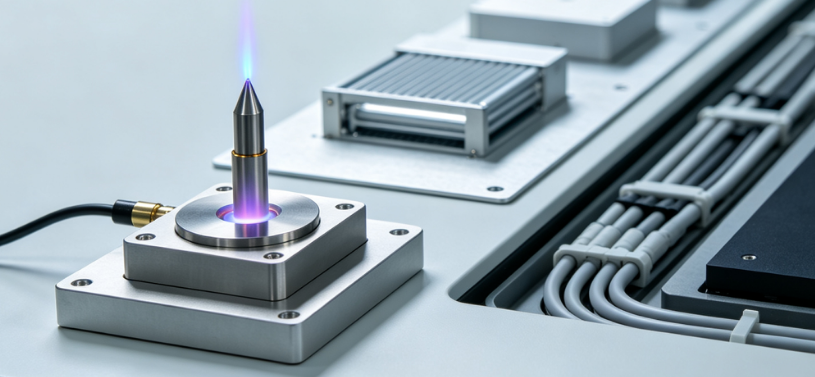
Plasma cathode electrodes—whether thermionic emitters, cold cathodes, or hollow cathodes—are critical components in a wide array of plasma systems, including ion thrusters, electron beam sources, plasma cutting torches, and discharge lamps. Their primary function is to sustain a stable electron emission over thousands of operating hours, often under extreme ion bombardment, high temperature, and reactive gas environments. The performance of a cathode is not solely defined by its work function or material composition; it is governed by a complex interplay of surface chemistry, microstructural evolution, erosion rate, thermal management, and emission uniformity. Conventional factory tests—such as simple current-voltage checks or visual inspection—cannot capture the dynamic degradation mechanisms that occur gradually, including the formation of emissive oxide layers, sputter-induced surface roughening, recrystallization, and the depletion of active dopants. Our detection service is specifically designed to address these challenges, offering a multi-parametric, time-resolved characterisation of plasma cathodes under realistic operating conditions. We deliver quantitative metrics for work function, emission current density distribution, ion-induced erosion rate, thermal response, and surface chemical state evolution, enabling manufacturers, end-users, and research institutions to validate cathode designs, predict service life, and diagnose failure mechanisms with scientific rigour.
Why Dedicated Plasma Cathode Testing Is Indispensable for Reliable System Operation
Cathode degradation is often the life-limiting factor in plasma devices. The emission current may appear stable for hundreds of hours, but subtle changes in surface morphology—such as the growth of protrusions, cracking, or phase segregation—can lead to localised arcing, emission non-uniformity, or catastrophic failure without any warning in the global discharge parameters. Furthermore, the cathode's work function is highly sensitive to surface contamination (e.g., adsorption of oxygen or water vapour), which can change even during storage or after minor system venting. Standard material characterisation (SEM/EDS) performed on unused samples is insufficient; it does not capture the operational evolution of the surface under ion and electron bombardment. Our testing protocols are designed to simulate the actual service environment while simultaneously monitoring multiple physical and chemical indicators. This allows us to identify the onset of degradation well before it becomes system-critical, providing a proactive approach to maintenance and design optimisation.
Our Core Detection Capabilities for Plasma Cathode Electrodes
We operate a fully integrated test platform that combines a vacuum chamber with plasma generation, in-situ diagnostics, and ex-situ surface analysis. The following represent our standard high-end offerings:
In-Situ Work Function and Emission Characterisation: We employ a retarding potential analyser (RPA) and a temperature-limited emission (TLE) technique to measure the effective work function of the cathode surface under active emission. A high-precision electrometer (10 fA resolution) records the emission current as a function of temperature and applied voltage, allowing us to extract the Richardson–Dushman parameters (A, φ) with an accuracy of ±0.05 eV. We also map the emission current density distribution across the cathode surface using a movable probe (0.5 mm diameter) scanning the emissive area, revealing any non-uniformity due to surface contamination or localised erosion.
High-Resolution Surface Chemical Analysis (XPS/AES) with Depth Profiling: After controlled operation (or at intervals during a long-term test), we transfer the cathode (via an airless vacuum transfer vessel) to our X-ray photoelectron spectroscopy (XPS) and Auger electron spectroscopy (AES) systems. We analyse the chemical state of the surface (e.g., oxide thickness, carbide formation, or dopant segregation) with a detection limit of 0.1 at% and a depth resolution of 0.5 nm. This reveals how the active emission layer evolves—for example, the gradual depletion of barium from a tungsten dispenser cathode, or the growth of a resistive layer on a lanthanum hexaboride (LaB₆) cathode.
Ion Bombardment and Sputtering Erosion Measurement: Using a quadrupole mass spectrometer (QMS) with a marker species (e.g., krypton or argon) we quantify the sputtering yield of the cathode material under the specific ion energy and mass conditions of the operating plasma. We also perform post-mortem surface profilometry (white-light interferometry, vertical resolution 0.1 nm) to measure the erosion depth and surface roughness evolution as a function of ion fluence. We correlate these data with the measured ion flux (from a Faraday cup) to produce a sputtering rate model (nm per coulomb) that accurately predicts cathode lifetime.
Thermal Imaging and Temperature Distribution Mapping: A high-speed infrared camera (3–5 µm, 0.02 °C sensitivity) is placed inside a viewport to capture the temperature profile of the cathode body and the emissive surface. We measure the thermal gradient during steady-state operation and during transients (e.g., ignition, power step). This data is essential for detecting hot spots that may indicate insufficient heat conduction, localised surface degradation, or impending thermal runaway.
Time-Resolved Emission Noise and Oscillation Analysis: The emission current (or the discharge voltage) often exhibits low-frequency fluctuations (1–100 kHz) that are symptomatic of surface instabilities such as the formation of adatom islands, or of plasma-cathode coupling oscillations. Using a high-speed digitizer (10 MS/s, 16-bit) and a current probe (bandwidth 100 MHz), we record the emission noise spectrum and compute the power spectral density (PSD). We identify any characteristic frequencies that change with operating time, providing an early indicator of cathode ageing—often before any change in the average emission level is noticeable.
Work Function Drift and Recovery Experiments: We subject the cathode to cycles of exposure to reactive gases (e.g., oxygen, water vapour) and subsequent reactivation (e.g., heating to higher temperature). By measuring the work function before and after each cycle, we quantify the poisoning susceptibility and the recovery capability of the cathode material. This is critical for applications where the vacuum system may be contaminated or where the cathode must be stored for long periods.
Microstructural Characterisation (SEM, EBSD, TEM): We perform high-resolution scanning electron microscopy (SEM) with electron backscatter diffraction (EBSD) to examine the grain structure and crystallographic orientation of the cathode surface. We also use transmission electron microscopy (TEM) on FIB-lifted lamellae to reveal subsurface defects, dislocation networks, or phase transformations that may affect emission stability. These analyses are conducted on both pristine and operated cathodes to correlate microstructural changes with performance degradation.
Accelerated Life and Thermal Cycling Tests: We place the cathode in a programmable test chamber with automated power cycling (e.g., 1 hour on, 10 minutes off) and periodic emission measurement. We monitor the emission current drift and the impedance change over thousands of cycles. Using Arrhenius or Coffin-Manson models, we extrapolate the expected service life under normal operating conditions, providing a confidence interval of ±15% based on the measured degradation rates.
Integrated Analytical Framework: Correlating Surface Chemistry, Emission, and Thermal Data
Our unique strength is the synchronised acquisition and cross-correlation of all diagnostic channels. For example, we align the time-resolved emission noise with the surface chemical changes (from XPS) and the thermal gradient (from IR). This allows us to pinpoint that a sudden increase in 10 kHz noise correlates with a 2 nm growth of a barium-depleted layer—a direct mechanistic insight. We use a proprietary data fusion platform (CathodeHealth™) that applies machine learning (random forest regression) to identify the most predictive parameters for remaining life. We provide a health index (0–100%) and a probability of failure within the next 100 hours, helping operators make informed decisions on replacement scheduling.
Our reports include: - Effective work function and its drift over time (with uncertainty). - Emission current density maps and uniformity index. - Surface composition depth profiles (XPS/AES) before and after operation. - Sputtering rate and predicted erosion depth. - Thermal gradients and heat dissipation efficiency. - Emission noise spectra and identified instability frequencies. - Life prediction curves and recommended operating limits.
Our Distinctive Advantages in Plasma Cathode Testing
Our laboratory is one of the few facilities that combines in-situ plasma exposure with XPS/AES analysis without atmospheric break via a vacuum transfer system. We have ISO 17025 accreditation for temperature, electrical, and surface chemical measurements. Our team includes experts in thermionic emission, plasma physics, and materials science, with over 30 years of cumulative experience in cathode development for space, fusion, and industrial applications. We have tested cathodes of various types—thermionic (oxide-coated, dispenser, LaB₆), cold (field emitter arrays), and hollow cathodes—and we maintain a comprehensive reference database.
We offer flexible service packages from a single point measurement (work function only) to a full long-term ageing campaign (up to 5000 hours). We can also supply custom test fixtures and provide on-site support for installation. Our reports are clear, detailed, and actionable, with raw data files included for further analysis.
Typical turnaround for a standard characterisation (work function, erosion, and surface analysis) is 7–10 business days for a batch of 3 cathodes, with a preliminary summary within 48 hours. For urgent failure analysis, we offer a 24-hour emergency service.
Real-World Impact: Case Highlights from Our Testing
In a recent collaboration with a satellite electric propulsion manufacturer, our work function drift measurements revealed that a batch of dispenser cathodes had a 30% faster barium depletion rate compared to the baseline. Our XPS depth profiling identified a slight excess of tungsten oxide in the base material, which reacted with barium, reducing its mobility. The client adjusted the sintering process, and the subsequent batch showed a 50% improvement in lifetime.
In another case involving a high-power plasma cutting cathode, our emission noise analysis detected a growing peak at 50 kHz after 200 hours of operation, which was not reflected in the average current. Subsequent SEM imaging showed the formation of craters due to arc root anchoring, which became more pronounced after 500 hours. The client used our data to redesign the cathode tip geometry, reducing noise and extending the service interval by 40%.
Partner with Us for Unmatched Cathode Performance and Reliability
Whether you are developing a new cathode material, qualifying a production batch, or investigating a field failure, our detection service delivers the scientific depth, technical precision, and actionable insights you need to ensure robust and long-lasting plasma operation. We welcome customised test plans—from basic screening to comprehensive R&D studies. Let our advanced diagnostics illuminate the hidden state of your cathode and guide you towards optimal performance and extended lifetime.
Contact us today to design a testing strategy that ensures your plasma cathode electrode performs reliably under the most demanding conditions.