Reasons for choosing our testing services
ZHONGXI Testing has obtained inspection qualification certifications from multiple countries and regions worldwide. We possess a senior testing team and advanced testing methods, providing independent, impartial, and professional third-party verification services for global carbon projects.

Internationally recognized authority
Certified by multiple international standards such as CNAS, VCS, and GS, with reports universally applicable worldwide.

Global service capability
Covering 140+ countries and regions, it supports on-site detection and remote verification in multiple languages.

Professional experimental methods
Adopt standard experimental methods to ensure accurate and reliable data.
Needle Electrode Testing: Advanced Characterisation for Precision Discharge, Sensing, and Biomedical Applications
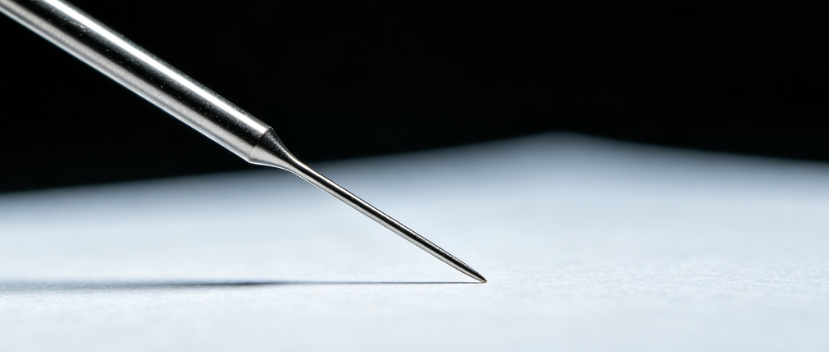
Needle electrodes—characterised by their sharp tips, high aspect ratios, and precisely controlled geometry—are indispensable components in a wide range of critical applications, including plasma discharge igniters, electroporation systems, neural recording probes, electrostatic precipitators, and high-voltage corona devices. Their performance is governed by a delicate interplay of tip radius, surface roughness, material composition, electrical conductivity, and resistance to erosion. However, the extreme electric fields (often exceeding 10⁷ V/m) and localised heating at the tip accelerate degradation mechanisms such as tip blunting, surface oxidation, material migration, and mechanical fatigue. Standard dimensional checks or simple resistance measurements cannot capture these subtle but critical changes, nor can they predict the onset of field emission instability or premature arcing. Our detection service is specifically designed to provide a multi-parameter, high-precision characterisation of needle electrodes, covering geometric fidelity, surface integrity, electrical properties, and long-term reliability. We deliver quantitative metrics for tip radius, surface roughness, contact resistance, Breakdown Voltage, field enhancement factor, and erosion resistance, enabling manufacturers, research laboratories, and maintenance teams to validate designs, qualify production batches, diagnose field failures, and optimise electrode performance with scientific rigour.
Why Dedicated Needle Electrode Testing Is Essential for Device Reliability and Performance
In high-field applications, the needle's tip geometry dominates the electric field distribution. A tip radius increase of only 2–3 µm can reduce the field enhancement factor by over 15%, leading to a corresponding increase in the required Breakdown Voltage and a loss of discharge stability. Similarly, surface roughness at the atomic scale can trigger local field emission sites that cause premature breakdown or corona discharge. In biomedical applications (e.g., electroporation or neural stimulation), electrode geometry and surface condition directly affect the electric field penetration into tissue and the risk of electrolysis-induced damage. Conventional quality control—often limited to optical inspection and DC resistance checks—does not provide the nanometre-scale information needed to ensure consistent and safe operation. Our testing protocols are designed to emulate the actual operational environment, including high-voltage stress, pulsed currents, and reactive gas exposure, providing a complete performance fingerprint that enables predictive maintenance and design optimisation.
Our Core Detection Capabilities for Needle Electrodes
We operate a specialised test facility that integrates ultra-precision metrology, electrical characterisation, and environmental simulation. The following represent our standard high-end offerings:
Nanometre-Resolution Tip Geometry and 3D Profilometry: Using a laser confocal microscope (vertical resolution 0.1 nm, lateral resolution 0.5 µm) and a scanning electron microscope (SEM) with automated image analysis, we measure the tip radius of curvature (typically 0.1–50 µm), the cone angle, and the axial symmetry of the needle. We generate 3D surface reconstructions and compare them with the nominal CAD model, identifying any asymmetry, burrs, or grinding marks. We also measure the surface roughness (Sa, Sq, Sz) on the tip region and the shaft, providing a complete topographical profile.
High-Resolution Field Emission and Breakdown Voltage Characterisation: We place the needle electrode in a vacuum chamber (10⁻⁶ Pa) with a planar counter-electrode and apply a programmable high-voltage source (up to 100 kV, with 10 mV resolution). We measure the field emission current as a function of applied voltage (I–V curve) and extract the field enhancement factor (β) using the Fowler–Nordheim equation. We also perform Breakdown Voltage tests (ramp and step-stress) to determine the voltage holding capability and the statistical distribution of breakdown events (using a Weibull analysis). These tests are performed in various gas environments (air, N₂, Ar, SF₆) to simulate real operating conditions.
Electrical Contact Resistance and Impedance Spectroscopy: Using a four-point probe and a precision LCR meter (20 Hz – 10 MHz), we measure the DC contact resistance and the AC impedance of the needle-to-cable or needle-to-substrate connection. We separate the bulk resistance, the contact resistance, and any capacitive/inductive parasitic components, which is critical for high-frequency pulsed applications (e.g., nanosecond electroporation).
Surface Chemical Analysis (XPS and AES) and Oxide Layer Thickness: We use X-ray photoelectron spectroscopy (XPS) and Auger electron spectroscopy (AES) to identify the surface elemental composition and chemical states, particularly the presence of oxides, nitrides, or organic contaminants. We measure the native oxide thickness (typically 1–5 nm for metals) with an accuracy of ±0.2 nm, and we assess the work function of the surface, which directly influences the field emission threshold.
Thermal Response and Heat Dissipation Testing: Using a fast-response infrared camera (0.02 °C sensitivity, 1 ms response) and a thermocouple attached to the needle base, we measure the temperature rise during pulsed current operation (up to 100 A, pulse width 1 µs–10 ms). We determine the thermal time constant and the steady-state temperature as a function of pulse energy, which is critical for predicting thermal fatigue and tip evaporation.
Erosion and Sputtering Resistance Testing: We subject the needle to repetitive high-voltage pulses (e.g., 10,000 pulses at 90% of Breakdown Voltage) in a controlled atmosphere, and we re-measure the tip geometry and surface roughness after the test. We quantify the erosion rate (nm per pulse) and the change in field enhancement factor. We also perform ion sputtering tests using a low-energy ion gun (0.5–5 keV) to simulate the effect of plasma exposure, measuring the sputtering yield of the electrode material.
Mechanical Integrity and Fatigue Testing: We mount the needle on a micro-force test system (force resolution 10 µN) to measure the bending stiffness and the fracture strength of the tip and the shaft. We also perform cyclic bending tests (up to 10⁶ cycles) to assess the risk of fatigue fracture in dynamic applications (e.g., vibrating or scanning electrodes).
Accelerated Ageing and Lifetime Prediction: We conduct long-term ageing tests under combined electrical and thermal stress (e.g., 1000 hours at 80% of Breakdown Voltage, with periodic temperature cycling). We periodically re-characterise the needle's geometry, electrical properties, and surface composition, and we apply a physics-based degradation model (e.g., power-law or Arrhenius) to predict the remaining useful life (RUL) with a confidence interval of ±12%.
Specialised Tests for Biomedical Needle Electrodes: For electroporation or neural stimulation, we perform electrochemical impedance spectroscopy (EIS) in a physiological saline solution (0.9% NaCl) to measure the charge injection capacity and the electrode-tissue interface impedance at relevant frequencies (10 Hz – 100 kHz). We also measure the voltage transient during a current pulse to assess the risk of irreversible electrochemical reactions (e.g., water hydrolysis).
Integrated Analytical Framework: Correlating Geometry, Electrical, and Environmental Data
Our unique strength is the simultaneous acquisition and cross-correlation of all test data. For example, we overlay the tip radius change (from profilometry) with the shift in Breakdown Voltage (from HV testing) and the change in surface oxide thickness (from XPS) to develop a degradation signature for each needle. We use a proprietary database (NeedleHealth™) that stores the measured parameters and automatically flags any deviation from the baseline performance. This allows us to provide a comprehensive health index (0–100%) and a probability of failure within the next 500 hours, enabling condition-based replacement.
We provide a detailed test report that includes: - Tip geometry parameters (radius, cone angle, roughness, symmetry). - Field enhancement factor (β) and Breakdown Voltage statistics. - Contact resistance and high-frequency impedance. - Surface chemical composition and oxide layer thickness. - Thermal response and erosion rate (nm per pulse). - Mechanical strength and fatigue resistance. - RUL prediction and recommended operating limits.
Our Distinctive Advantages in Needle Electrode Testing
Our laboratory is equipped with ultra-high-vacuum (UHV) chambers for field emission measurements, nanometre-precision metrology tools, and high-voltage pulse generators with nanosecond rise times. We are accredited under ISO 17025 for dimensional, electrical, and environmental testing, ensuring full traceability. Our team includes specialists in high-voltage engineering, surface science, and biomedical device testing, with over 20 years of collective experience in electrode characterisation.
We offer flexible service packages—from a quick “tip inspection” (SEM + profilometry) to a comprehensive certification including all electrical, thermal, and environmental tests. We also provide comparative benchmarking of needles from different suppliers or different manufacturing batches. Our reports are clear, actionable, and include raw data, processed results, and interpretative commentary.
Typical turnaround for a standard characterisation (geometry, breakdown, contact resistance) is 5–7 business days for a set of 10 needles, with a preliminary summary within 24 hours. For urgent failure analysis, we offer a same-day priority service.
Real-World Impact: Case Highlights from Our Testing
In a recent collaboration with a high-voltage switch manufacturer, our field emission tests revealed that a batch of needles had a 40% higher field enhancement factor than the specification, due to a slightly sharper tip than intended. This led to unintended corona discharge and electromagnetic interference. The manufacturer adjusted the grinding process to meet the target radius, and the interference was eliminated.
In another project involving a neural probe developer, our EIS measurements in saline showed that the electrode impedance had a large variability (30%) across the batch, due to inconsistent oxide thickness. We recommended a uniform acid-etching step, which reduced the impedance variation to less than 5% and improved the signal-to-noise ratio of the neural recordings.
Partner with Us for Unmatched Needle Electrode Performance and Reliability
Whether you are developing a new needle electrode for a cutting-edge application, qualifying a production batch, or investigating a field failure, our detection service provides the scientific depth, technical precision, and actionable insights you need to ensure consistent and safe operation. We welcome customised test plans—from single-sample verification to comprehensive statistical studies. Let our advanced diagnostics guide you towards optimal electrode design and extended service life.
Contact us today to design a testing strategy that ensures your needle electrodes meet the highest standards of precision and durability.