Reasons for choosing our testing services
ZHONGXI Testing has obtained inspection qualification certifications from multiple countries and regions worldwide. We possess a senior testing team and advanced testing methods, providing independent, impartial, and professional third-party verification services for global carbon projects.

Internationally recognized authority
Certified by multiple international standards such as CNAS, VCS, and GS, with reports universally applicable worldwide.

Global service capability
Covering 140+ countries and regions, it supports on-site detection and remote verification in multiple languages.

Professional experimental methods
Adopt standard experimental methods to ensure accurate and reliable data.
Plasma Burner Testing: Advanced Characterisation for Flame Stability, Emissions, and Energy Efficiency Optimisation
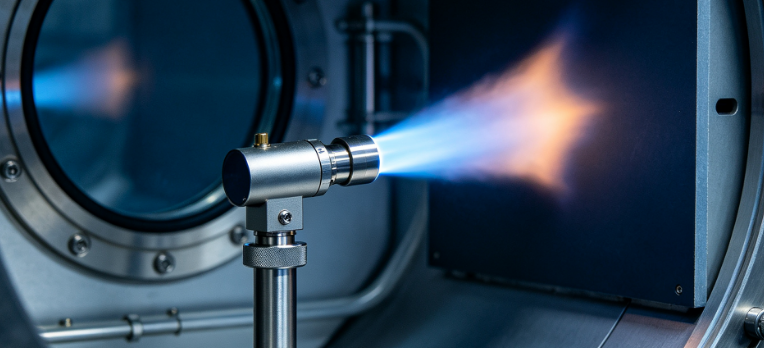
Plasma-assisted combustion—using non-thermal or thermal plasma discharges to enhance ignition, stabilise flames, and extend the lean-burn limit—has emerged as a transformative technology for industrial burners, gas turbines, and boilers. However, the complex interaction between the plasma discharge and the turbulent reacting flow imposes stringent demands on the burner’s design and performance. Key parameters such as flame anchoring, heat release rate, pollutant formation (NOx, CO, soot), plasma power coupling, and electrode erosion are highly sensitive to changes in fuel composition, airflow, and electrical excitation conditions. Standard combustion tests (e.g., exhaust gas analysis or thermocouple measurements) cannot capture the high-frequency, localised effects of the plasma, nor can they separate the plasma’s physical effects (thermal, kinetic, and transport) from the purely chemical ones. Our detection service is specifically designed to provide a comprehensive, multi-physics characterisation of plasma burners under realistic operating conditions, delivering quantitative data on flame structure, temperature and radical distributions, plasma-induced flow perturbations, emissions reduction, and long-term electrode durability. We deploy advanced optical diagnostics, high-speed imaging, and synchronised electrical–thermal–chemical measurements to enable burner manufacturers, power plant operators, and research institutions to validate designs, optimise control strategies, predict maintenance needs, and demonstrate compliance with stringent emission regulations with scientific confidence.
Why Specialised Plasma Burner Testing Is Critical for Performance, Emissions, and Safety
Plasma burners operate in a highly non-linear regime where the discharge interacts with the flame front, modifying the local flame speed and stability. A slight drift in the plasma power or frequency can shift the flame position, alter the heat release pattern, and lead to thermo-acoustic instabilities or even blow-off. Moreover, the electrode exposure to high-temperature reactive gases accelerates oxidation and erosion, changing the plasma coupling efficiency over time. Conventional thermocouple-based temperature mapping and conventional gas analysers are too slow to capture the transient, turbulent structures (typically on millisecond scales) and cannot distinguish between thermal and non-thermal effects of the plasma. Our testing protocols are designed to simultaneously acquire high-speed optical emission, laser-induced fluorescence, electrical waveforms, and fast gas sampling, providing a complete dynamic picture that reveals the underlying mechanisms of plasma–flame interaction. This enables operators to set optimal electrical parameters for minimum emissions and maximum efficiency, while also providing early warning of electrode degradation.
Our Core Detection Capabilities for Plasma Burners
We operate a dedicated plasma burner test cell equipped with optical access, high-speed diagnostics, and gas analysis systems, capable of handling fuels from natural gas to hydrogen and syngas. The following represent our standard high-end offerings:
High-Speed Flame Imaging and Chemiluminescence Mapping: Using an intensified high-speed camera (up to 100,000 fps) with narrow-band filters (e.g., for OH*, CH*, C₂*), we capture the time-resolved chemiluminescence of the flame, revealing the reaction zone location, flame front curvature, and occurrence of local extinction. We perform proper orthogonal decomposition (POD) to identify the dominant flame oscillation modes and their correlation with the electrical excitation frequency. This is critical for diagnosing thermo-acoustic instabilities and their mitigation.
Laser-Induced Fluorescence (LIF) and Rayleigh Scattering for Temperature and Species: We employ a tunable dye laser system (200–900 nm, 10 Hz, 10 ns pulse) and an ICCD camera to perform planar laser-induced fluorescence (PLIF) of OH, CH, and NO radicals, providing 2D distribution maps of reaction intermediates and nitric oxide. For temperature, we use Rayleigh scattering (with a high-energy 532 nm laser) to obtain instantaneous temperature fields with a spatial resolution of 100 µm and an accuracy of ±3%. These measurements reveal the effect of plasma on heat release and the formation of thermal NOx.
Simultaneous Plasma Electrical Characterisation and Flame Response: We measure the voltage, current, and real power delivered to the plasma discharge (using high-voltage probes and Rogowski coils, bandwidth > 100 MHz) synchronised with the flame imaging and LIF data. This allows us to compute the energy coupling efficiency and to correlate electrical perturbations (e.g., pulse modulation) with flame dynamics. We also perform impedance spectroscopy of the discharge over a range of gas compositions and flow rates to determine the optimal matching conditions.
Exhaust Gas Analysis – Fast and Continuous Emissions Monitoring: We use a fast-response FTIR spectrometer (1–10 Hz) to measure the concentrations of CO, CO₂, NO, NO₂, N₂O, SO₂, and unburned hydrocarbons in the exhaust. For particulate matter, we employ a scanning mobility particle sizer (SMPS) coupled with a condensation particle counter (CPC) to measure the particle number size distribution (10–1000 nm) and the total particulate mass. We also use a chemiluminescence NOx analyser for high-accuracy NO/NOx measurements (range 0–5000 ppm, ±1% of reading).
Electrode Erosion and Temperature Monitoring: We install fibre-optic pyrometers (response time 1 ms, temperature range 600–3000 °C) and thermocouples at multiple points on the electrodes and the burner body. We measure the electrode tip temperature as a function of plasma power and gas flow, and we track the surface morphology evolution using a borescope camera (with a high-temperature lens) during the run. Post-test, we use SEM/EDS and profilometry to quantify the erosion rate (mg/hour) and the change in electrode geometry, providing data for lifetime prediction.
Fuel Flexibility and Firing Rate Mapping: We can vary the fuel composition (CH₄, H₂, CO, blends) and the thermal input (from 10 kW to 1 MW) while performing the above diagnostics. We construct stability maps showing the ignition and blow-off limits as a function of plasma power and fuel-air equivalence ratio, identifying the optimal operating window for each fuel.
Thermo-Acoustic Pressure Pulsation Measurement: Using a water-cooled pressure transducer (frequency response 0–100 kHz), we measure the dynamic pressure fluctuations in the combustion chamber. We perform fast Fourier transform (FFT) analysis to detect any dominant acoustic modes and to assess the damping effect of the plasma discharge on thermo-acoustic instabilities.
Long-Term Ageing and Durability Tests: We subject the plasma burner to continuous operation at rated power (e.g., 1000 hours) while periodically repeating the full diagnostics suite (emissions, flame imaging, electrode wear). We use the degradation trends to predict the remaining useful life (RUL) of the electrodes and insulation, based on a Weibull or power-law model, with a confidence interval of ±12%.
Integrated Analytical Framework: Correlating Plasma, Flame, and Emission Data
Our unique strength is the synchronised, multi-channel data acquisition that aligns the electrical waveform, the flame chemiluminescence, the LIF image, and the gas analysis on a common time base. Using our proprietary software (PlasmaFlame™), we perform cross-correlation analysis to determine the time delay between the electrical excitation and the flame response, which is a direct measure of the kinetic enhancement. We also combine the measured radical distributions with the emissions data to build a chemical kinetic mechanism for the plasma-assisted combustion, which can be used to optimise the plasma settings for minimum NOx and CO.
Our report includes: - Flame stability diagrams (blow-off and ignition limits) as a function of plasma power. - Temperature and radical concentration maps (from LIF/Rayleigh) at key operating points. - Emission reduction factors (NOx, CO, PM) relative to non-plasma baseline. - Plasma power absorption efficiency and its variation with fuel and load. - Electrode erosion rates and predicted lifetime curves. - Thermo-acoustic modal analysis and damping effect. - Optimised operating parameters for minimum emissions and maximum efficiency.
Our Distinctive Advantages in Plasma Burner Testing
Our laboratory is equipped with a high-pressure combustion test facility (up to 30 bar) with full optical access, a multi-kW plasma power supply (DC, AC, and pulsed, up to 100 kHz), and a synchronised diagnostic suite (LIF, Rayleigh, high-speed imaging, fast gas analysis). We are accredited under ISO 17025 for emissions and temperature measurements, and we have extensive experience with a range of burner geometries (swirl, jet, porous media) and fuels. Our team comprises combustion engineers, plasma physicists, and optical diagnostics specialists with over 25 years of collective experience.
We offer flexible service packages—from a rapid screening (emissions and flame stability) to a comprehensive research campaign (including LIF and long-term ageing). We also provide comparative benchmarking of different plasma excitation strategies (e.g., nanosecond pulsed vs. AC) for a given burner design. Our reports are clear, actionable, and include raw data, processed results, and uncertainty analyses.
Typical turnaround for a standard characterisation (emissions, flame imaging, and electrode wear) is 7–10 business days, with a preliminary summary within 48 hours. For full LIF and long-term tests, please allow 15–20 business days, with interim reports.
Real-World Impact: Case Highlights from Our Testing
In a recent collaboration with a gas turbine OEM, our simultaneous PLIF and emissions measurements revealed that a particular plasma modulation frequency (5 kHz) produced a 35% NOx reduction while maintaining the same heat release, due to the enhanced mixing of radicals and fuel. The client implemented the modulation scheme, achieving compliance with upcoming emission regulations without costly hardware changes.
In another project with a hydrogen burner manufacturer, our durability testing showed that the tungsten electrode eroded at a rate of 1.2 µm/hour under the standard operating condition, which would limit the burner life to 8000 hours. By adjusting the gas flow pattern (with our flow field diagnostics), the erosion rate was halved, extending the expected life to 16,000 hours.
Partner with Us for Unmatched Plasma Burner Performance and Reliability
Whether you are developing a new plasma combustion concept, optimising an existing burner, or performing acceptance tests for a power plant, our detection service provides the scientific depth, technical precision, and actionable insights you need to achieve clean, efficient, and durable operation. We welcome customised test plans—from single-point verification to comprehensive development campaigns. Let our advanced diagnostics unlock the full potential of plasma-assisted combustion.
Contact us today to design a testing strategy that ensures your plasma burner delivers optimal performance under all operating conditions.