Reasons for choosing our testing services
ZHONGXI Testing has obtained inspection qualification certifications from multiple countries and regions worldwide. We possess a senior testing team and advanced testing methods, providing independent, impartial, and professional third-party verification services for global carbon projects.

Internationally recognized authority
Certified by multiple international standards such as CNAS, VCS, and GS, with reports universally applicable worldwide.

Global service capability
Covering 140+ countries and regions, it supports on-site detection and remote verification in multiple languages.

Professional experimental methods
Adopt standard experimental methods to ensure accurate and reliable data.
Plasma Heater Performance and Reliability Testing: Advanced Diagnostic Solutions for High-Temperature Thermal Plasma Systems
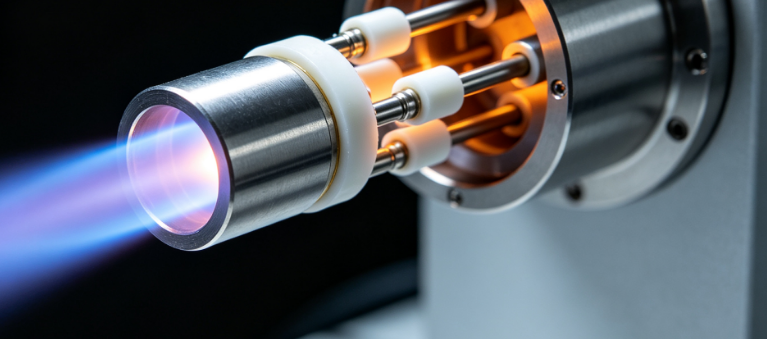
Plasma heaters—encompassing DC arc torches, RF inductively coupled plasma (ICP) torches, and microwave plasma generators—are essential for industrial processes requiring ultra-high temperatures, such as waste treatment, plasma spraying, metallurgical refining, and chemical synthesis. The performance of these systems is governed by a complex interplay of gas dynamics, arc stability, heat transfer, electrode erosion, and thermal efficiency, all of which are acutely sensitive to operating parameters. Conventional monitoring based on input power and cooling water temperatures provides only a global, time-averaged view, missing the critical spatial and temporal variations in plasma enthalpy, temperature distribution, and gas velocity that directly affect process quality and energy consumption. Our detection service is specifically designed to offer a comprehensive, multi-modal characterisation of plasma heaters under real operating conditions, delivering quantitative metrics for plasma enthalpy, thermal efficiency, temperature and velocity profiles, electrode wear, and gas residence time. We deploy an integrated suite of intrusive and non‑intrusive diagnostics—including enthalpy probes, high-speed pyrometry, laser-based velocimetry, and optical emission spectroscopy—to enable manufacturers, plant operators, and R&D teams to optimise torch design, enhance process stability, predict maintenance intervals, and improve overall energy efficiency with scientific precision.
Why Dedicated Plasma Heater Testing Is Essential for Process Optimisation and Asset Longevity
Plasma heaters operate in extreme environments where the arc temperature can exceed 10,000 K and the gas velocity can reach supersonic speeds. Even minor changes in gas flow patterns, electrode geometry, or power coupling can cause substantial shifts in the heat flux distribution and reaction zone location, leading to non‑uniform product quality, hot spots, or premature component failure. Moreover, the wear of electrodes and nozzle components is highly non‑linear; a 10% reduction in electrode diameter can increase arc wander and reduce thermal efficiency by as much as 8–12%, yet this is often undetectable by simple visual inspection. Standard thermocouple or pitot tube measurements are too slow and intrusive to capture the turbulent, transient structures of the plasma jet. Our testing protocols are designed to overcome these limitations, providing high‑speed, spatially resolved, and non‑perturbing diagnostics that reveal the true state of the plasma and its interaction with the hardware. This enables condition‑based maintenance, validation of CFD models, and fine‑tuning of operating parameters for optimum performance.
Our Core Detection Capabilities for Plasma Heaters
We operate a specialised test cell equipped with optical access, high‑speed diagnostics, and precision flow control, capable of handling thermal powers from 10 kW to 5 MW. The following represent our standard high‑end offerings:
Enthalpy Probe and Calorimetric Power Measurement: We use a water‑cooled stagnation probe with a built‑in thermocouple and a flowmeter to sample the plasma jet. The probe measures the total enthalpy (sensible + chemical) of the gas, and combined with the mass flow rate, we calculate the thermal power delivered to the flow. By traversing the probe radially and axially, we obtain enthalpy profiles that reveal the degree of mixing and the effective heating efficiency (thermal power / input electrical power) with an accuracy of ±3%. This direct measurement is the gold standard for evaluating the heater's energy performance.
High‑Speed Two‑Color Pyrometry for Gas Temperature Mapping: We employ a fast‑response two‑colour pyrometer (1 ms response, 800–3000 nm) to measure the true gas temperature (assuming grey‑body emission) with an uncertainty of ±50 K in the range 2000–6000 K. The system is calibrated against a blackbody reference and is insensitive to emissivity variations. We perform spatial temperature scans across the jet by mounting the pyrometer on a 2D translation stage, generating detailed temperature maps that highlight any asymmetric heating or cold spots.
Laser Doppler Anemometry (LDA) and Particle Image Velocimetry (PIV) for Velocity Profiling: Using a dual‑beam LDA system with a 5 W argon‑ion laser and a phase‑Doppler anemometer, we measure the axial and radial velocity components of the gas and entrained particles (if seeding is used). For planar velocity fields, we use a PIV system with a double‑pulsed Nd:YAG laser (532 nm, 200 mJ/pulse) and a high‑speed CMOS camera (4 MP, 10,000 fps). We obtain 2D velocity maps of the plasma jet, from which we compute the turbulence intensity, circulation, and jet spreading angle. These data are critical for understanding mixing and entrainment, which affect heat transfer and chemical conversion.
Optical Emission Spectroscopy (OES) for Excitation Temperature and Species Tracking: Our spectrometer (focal length 1 m, 2400 grooves/mm, ICCD detector) collects the plasma emission through a collimated fibre probe. We record spectra from 200–1100 nm with a resolution of 0.015 nm. Using the Boltzmann plot method on multiple argon or nitrogen lines, we derive the excitation temperature (Texc) with an accuracy of ±2%. We also monitor the relative intensities of metal lines (e.g., Cu, W, Fe) to track electrode erosion in real time. The OES data is synchronised with the enthalpy and velocity measurements to correlate plasma chemistry with thermal performance.
Electrode Wear and Nozzle Profile Monitoring: We perform in‑situ borescope imaging of the electrode tip and the nozzle exit during operation, using a water‑cooled endoscope with a high‑temperature lens. After a test run, we remove the electrodes and use white‑light interferometry (vertical resolution 0.1 nm) and laser profilometry to measure the change in electrode length, tip radius, and nozzle orifice diameter. We compute the wear rate (mm/hour or mg/hour) and correlate it with the electrical and thermal data to establish a wear model for each operating condition.
High‑Frequency Voltage and Current Waveform Analysis: We capture the arc voltage and current waveforms using a high‑voltage probe (1000:1, 100 MHz) and a Rogowski coil (0.1 Hz–120 MHz), connected to a 14‑bit, 5 GS/s digitizer. We compute the instantaneous power, arc impedance, and the arc stability index (e.g., the coefficient of variation of the voltage over a 1‑second window). This analysis reveals arc flicker, restrike events, and the onset of instabilities that precede electrode deterioration or gas flow disturbances.
Gas Flow and Residence Time Distribution (RTD) Measurement: We inject a tracer gas (helium or SF₆) into the plasma gas stream and measure its concentration in the exhaust using a fast‑response mass spectrometer. By analysing the concentration decay curve, we derive the mean residence time and the RTD function of the gas in the heating zone, which is critical for chemical conversion efficiency in reactors.
Thermal Efficiency and Loss Breakdown: Using the measured electrical input (from calibrated wattmeters) and the enthalpy rise of the gas and cooling water (from flow and temperature measurements), we perform a complete energy balance. We quantify the electrical‑to‑thermal conversion efficiency, the heat loss to the cooling jacket, and the radiation loss (estimated from the IR thermography). This breakdown enables clients to identify the most significant loss pathways and to design improvements in insulation or gas‑flow management.
Accelerated Life and Cyclic Testing: We subject the plasma heater to programmed power cycles (e.g., 10% to 100% power with defined ramp rates) while periodically repeating the full diagnostics. We track the degradation of thermal efficiency, the increase in electrode wear, and the shift in the optimum operating point over time. Using a power‑law or Arrhenius model, we predict the remaining useful life (RUL) of the consumables with a confidence interval of ±12%, enabling proactive replacement scheduling.
Integrated Analytical Framework: Correlating Thermal, Fluid, and Electrical Data
Our unique strength is the synchronised, multi‑channel acquisition that aligns the enthalpy probe, the pyrometry, the LDA/PIV, and the OES data on a common time base. We use our proprietary software (PlasmaHeat™) to compute the radial profiles of temperature, velocity, and enthalpy at each axial location, and to derive the local Nusselt number and heat transfer coefficient from the measured temperature gradients. The software also performs a principal component analysis (PCA) to identify the key parameters that most strongly affect the thermal efficiency (e.g., swirl number, arc current, gas composition). This provides clients with a data‑driven optimisation map that shows the optimal operating window for their specific process.
Our final report includes: - Enthalpy and temperature profiles (axial and radial) at multiple operating points. - Velocity fields (from PIV) and turbulence statistics. - Electrode wear rates and predicted consumable life. - Thermal efficiency and detailed loss breakdown. - Residence time distribution and its relation to gas mixing. - Arc stability indices and waveform analysis. - Optimised operating parameters for maximum efficiency and minimal wear.
Our Distinctive Advantages in Plasma Heater Testing
Our laboratory is uniquely equipped with both intrusive and non‑intrusive diagnostics on a single test platform, allowing cross‑validation of measurements. We are accredited under ISO 17025 for temperature, flow, and power measurements. Our team includes plasma physicists, thermal engineers, and instrumentation specialists with over 25 years of cumulative experience in testing plasma torches from 10 kW to 5 MW, including transferred‑arc, non‑transferred‑arc, and RF designs. We have an extensive database of performance benchmarks for various torch geometries and gas chemistries.
We offer flexible service packages—from a rapid efficiency check (one day) to a full characterisation campaign (1–2 weeks) including parameter sweeps and endurance testing. We can also deploy our portable diagnostics to client sites for on‑line performance assessment. Our reports are clear, actionable, and include raw data, processed results, and uncertainty budgets. We also provide consulting services for torch design improvements based on the test findings.
Typical turnaround for a comprehensive characterisation (enthalpy, temperature, velocity, wear) is 7–10 business days, with a preliminary summary within 48 hours. For urgent troubleshooting, we offer a 24‑hour priority service.
Real‑World Impact: Case Highlights from Our Testing
In a recent collaboration with a waste‑to‑energy plant, our enthalpy mapping revealed that the plasma torch had a pronounced radial asymmetry in the outlet temperature profile (a 15% variation across the jet) caused by an off‑centre gas injection. By repositioning the swirl ring, the asymmetry was reduced to 3%, improving the overall conversion efficiency of the syngas from 78% to 86%.
For a manufacturer of plasma‑sprayed coatings, our electrode wear monitoring showed that the erosion rate of the cathode was 30% higher at a slightly elevated arc current (2% above the recommended value). The client adjusted the current controller to maintain the design value, extending the electrode life by 40% and reducing downtime for consumable replacement.
Partner with Us for Unmatched Plasma Heater Performance and Reliability
Whether you are developing a new torch design, optimising an existing heater, or troubleshooting performance drift, our detection service delivers the scientific depth, technical precision, and actionable insights you need to achieve consistent, efficient, and durable plasma operation. We welcome customised test plans—from single‑point verification to comprehensive R&D studies involving multiple gas mixtures and power levels. Let our advanced diagnostics help you unlock the full potential of your plasma heating technology.
Contact us today to design a testing strategy that ensures your plasma heater delivers maximum performance and longevity.