Reasons for choosing our testing services
ZHONGXI Testing has obtained inspection qualification certifications from multiple countries and regions worldwide. We possess a senior testing team and advanced testing methods, providing independent, impartial, and professional third-party verification services for global carbon projects.

Internationally recognized authority
Certified by multiple international standards such as CNAS, VCS, and GS, with reports universally applicable worldwide.

Global service capability
Covering 140+ countries and regions, it supports on-site detection and remote verification in multiple languages.

Professional experimental methods
Adopt standard experimental methods to ensure accurate and reliable data.
Dielectric Dissipation Factor Testing: Advanced Diagnostic Methods for Insulation Condition Assessment
Dielectric Dissipation Factor (tan δ) testing, also known as power factor or loss angle measurement, is a cornerstone diagnostic technique for evaluating the integrity of high-voltage insulation systems. Clients seeking this test are typically engaged in the commissioning, maintenance, or failure analysis of critical electrical assets such as power transformers, cables, bushings, circuit breakers, and rotating machinery. The fundamental objective is to quantify the energy loss within dielectric materials under alternating electric fields, which directly correlates with insulation aging, moisture ingress, contamination, and partial discharge activity. Unlike simple Insulation Resistance measurements, dissipation factor testing provides a sensitive, non-destructive indicator of the bulk dielectric quality and the presence of distributed defects that would otherwise remain undetected until catastrophic failure. This article presents a rigorous examination of the physical principles, measurement techniques, and advanced service capabilities that define state-of-the-art dielectric loss assessment, positioning our laboratory as a leader in this specialized domain.
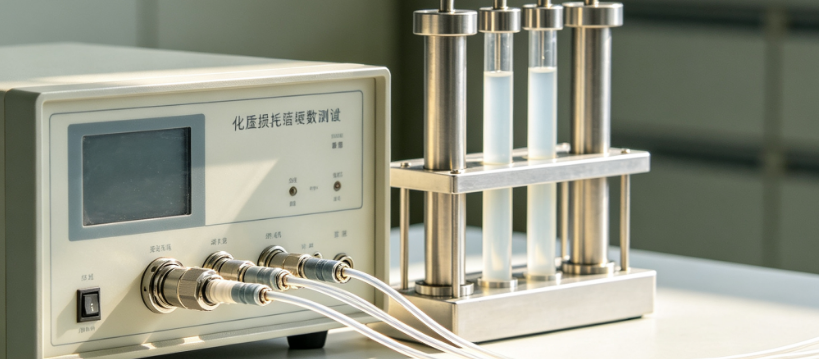
Physical Principles: The Significance of Tan δ in Dielectric Materials
The dissipation factor is defined as the tangent of the loss angle (δ) in a capacitor or insulation system, where δ is the phase difference between the applied AC voltage and the resultant current that deviates from the ideal 90° leading relationship for a perfect dielectric. Mathematically, tan δ = (IR / IC) = (G / ωC), representing the ratio of conductive (loss) current to capacitive (charging) current. This parameter is intrinsically linked to the dielectric relaxation processes, interfacial polarization, and conduction mechanisms that occur within polymeric, oil-impregnated, and composite insulation structures. A low tan δ value (typically below 0.5% for new, dry insulation) indicates minimal energy dissipation and high dielectric efficiency, whereas elevated values (above 1.0%) suggest progressive degradation due to moisture absorption, thermal aging, or chemical decomposition. The frequency and temperature dependence of tan δ provides additional diagnostic information; for instance, a characteristic peak in the tan δ–frequency spectrum reveals the presence of space charge or dipole relaxation phenomena that correlate with specific aging mechanisms. Our measurement protocols therefore incorporate multi-frequency scanning (20 Hz to 1 MHz) and temperature-controlled profiling from −40°C to +200°C, enabling us to construct a comprehensive dielectric fingerprint that distinguishes between reversible moisture effects and irreversible material damage.
Regulatory Standards and Acceptance Criteria
International standards prescribe detailed procedures for dissipation factor testing, with specific limits and methodologies depending on the equipment type and application. IEC 60076-1 for power transformers mandates that the dissipation factor of the main insulation system (measured at 50 Hz or 60 Hz and reference temperature of 20°C) shall not exceed 0.5% for new transformers, with field acceptance criteria often set at 0.8% after accounting for temperature correction. For power cables, IEC 60502-2 and IEEE 400 recommend tan δ measurements at various voltage levels (0.5 U0 to 2 U0) to detect nonlinearities indicative of partial discharge or void formation. In the case of rotating machinery, IEEE 286 specifies dissipation factor tip-up tests—measuring the increase in tan δ from low to high voltage—as a sensitive indicator of insulation delamination and corona aging. Our laboratory maintains full compliance with these standards and also offers custom testing per ASTM D150 for solid dielectrics and IEC 60247 for insulating liquids. We provide explicit pass/fail judgments with reference to the relevant clauses, supported by uncertainty budgets that meet the rigorous demands of ISO/IEC 17025 accreditation.
Advanced Measurement Methodologies: Precision Bridge and Digital Techniques
Modern dissipation factor testing has evolved from conventional Schering bridges to highly automated, digital measurement systems that offer superior accuracy, speed, and diagnostic depth. Our primary test platform is an ultra-precision automatic dielectric analyzer based on a current-comparator bridge architecture, achieving a basic accuracy of ±0.01% for tan δ measurements and a resolution of 1 × 10⁻⁵. This system employs a dual-channel synchronous sampling technique with 24-bit ADCs, capturing both the applied voltage and the current vector, then performing Fourier analysis to extract the fundamental frequency component while rejecting harmonics and noise. For field measurements, we deploy portable test sets that utilize the same principle but are ruggedized for on-site conditions, capable of delivering test voltages up to 12 kV and currents up to 50 A, with automatic temperature and humidity compensation algorithms built into the firmware. A critical differentiator is our ability to perform voltage-dependent dissipation factor profiling (also known as tip-up measurement), where we incrementally raise the test voltage from 0.2 U0 to 2.0 U0 while recording tan δ at each step. The slope and hysteresis of this curve provide unequivocal evidence of ionisation inception and the presence of gaseous voids, which are often the precursors to partial discharge and eventual dielectric breakdown. Our software automatically computes the Δtan δ (tip-up value) and compares it against established empirical thresholds, flagging any nonlinear behavior with statistical confidence intervals.
Comprehensive Test Configurations for Diverse Assets
The practical execution of dissipation factor testing requires tailored setups for each asset category, accounting for the geometry, grounding, and access constraints of the equipment. For power transformers, we perform measurements in three primary modes: UST (Unguarded Standard Test) for the overall insulation between windings and ground, GST (Grounded Standard Test) for bushings and tap configurations, and UST-A (Unguarded Test with Auxiliary winding) to isolate inter-winding capacitances. Our multiplexed switching system allows sequential measurement of all winding combinations (HV–LV, HV–GND, LV–GND) without reconnecting leads, reducing testing time and minimizing human error. For high-voltage cables, we perform tan δ measurements on entire cable circuits using a very-low-frequency (VLF) source at 0.1 Hz to 0.01 Hz, which extends the effective test range and avoids the excessive charging current that would occur at power frequency. Our VLF system is capable of testing cables up to 35 kV with tan δ accuracy of ±0.05%, and we further conduct dielectric spectroscopy over a frequency range of 0.001 Hz to 1 kHz, generating a master curve that models the cable's dielectric response and predicts remaining life based on proprietary aging algorithms. For rotating machines, we implement a guarded three-electrode system to measure the dissipation factor of individual stator bars and overall winding insulation, with special attention to the influence of end-winding contamination and slot discharge.
Our Technical Capabilities: Precision, Range, and Diagnostic Depth
Our laboratory represents a center of excellence for dielectric testing, equipped with multiple independent measurement systems that cover the full spectrum of voltage and frequency requirements. The flagship instrument is a fully automated 200 kV AC dielectric test system with a tan δ measurement bridge that achieves a stability of ±0.005% over 24 hours and a temperature coefficient of less than 0.001%/°C. For low-frequency spectroscopy, we operate a broadband dielectric spectrometer from 10 µHz to 10 MHz, enabling the study of slow polarization processes in solid insulators that correlate with moisture migration and electrochemical treeing. Our high-voltage capacitance bridge is calibrated against reference capacitors traceable to PTB with an uncertainty of ±2 ppm, ensuring that the measured tan δ values are metrologically robust. Beyond the core measurement, we incorporate real-time data analytics that automatically correct for lead capacitance, stray capacitance, and environmental factors, using a neural network-based compensation model trained on thousands of prior measurements. This model estimates the dissipation factor at the standard reference temperature (20°C) even when the test is performed at extreme ambient conditions, providing clients with a direct comparison to factory or historic data. Furthermore, we offer partial discharge correlation by synchronizing the tan δ measurement with a broadband PD detector, allowing us to attribute specific loss components to discharge events versus bulk dielectric losses—a level of diagnostic integration that few testing facilities can match.
Distinguishing Advantages of Our Dielectric Dissipation Factor Service
Our service differentiates itself through four core competencies that address the highest demands of asset management and reliability engineering. First, we maintain world-class metrological traceability with documented uncertainty budgets compliant to ISO/IEC 17025:2017, ensuring that every reported tan δ value is defensible in international trade disputes, warranty claims, or legal proceedings. Second, our custom-tailored test plans incorporate not only standard methods but also advanced diagnostic sequences—such as isothermal relaxation current and polarisation/depolarisation current (PDC) analysis—which provide complementary insights into the same insulation system. By integrating multiple dielectric techniques, we deliver a holistic condition index that goes far beyond a single tan δ number, offering actionable intelligence for maintenance scheduling and life extension. Third, our engineering team possesses decades of collective experience in interpreting dissipation factor data for complex, multi-layered insulation structures, and we provide detailed forensic analysis when values deviate from expectations—identifying whether the cause is oil degradation, paper aging, moisture, contamination, or thermal stress. Fourth, we offer on-site testing at any location worldwide, using portable systems that replicate laboratory-grade performance, with rapid mobilization and minimal downtime for client operations. Our field engineers are trained to handle hazardous environments, live-line testing via specialized couplers, and high-altitude corrections, ensuring that the same level of precision is achieved regardless of site conditions.
Industry-Specific Applications and Critical Considerations
Dissipation factor testing is indispensable across a wide range of industries, each presenting unique challenges that our expertise addresses. In power generation and transmission, we assess transformer bushing insulation where tan δ changes of 0.1% can indicate incipient failure—our measurements are sensitive enough to detect the effect of a single additional layer of moisture-impregnated paper. For renewable energy systems, including wind turbine generators and solar inverter transformers, we perform periodic tan δ testing to monitor the effects of cyclic loading and temperature fluctuations, which accelerate dielectric aging. In the railway sector, we test traction transformer insulation and cable terminations, often at 25 kV or 2×25 kV auto-transformer systems, with special attention to the influence of stray ground currents. In industrial manufacturing, we test motor windings, capacitor banks, and high-voltage switchgear, providing quality assurance for new equipment and condition assessment for in-service units. Our reports include trend analysis when previous test data are available, highlighting the rate of degradation and providing a statistical prediction of remaining useful life (RUL) based on IEEE and CIGRE models. We also offer emergency testing for unplanned outages, with 24/7 on-call engineering support and expedited reporting within 24 hours.
Case Example: Uncovering Advanced Degradation in a 220 kV Transformer
A recent engagement illustrates the diagnostic power of our advanced tan δ methodology. A utility client observed a marginal increase in the dissipation factor of a 220 kV power transformer’s high-voltage winding—from 0.38% to 0.45% over three years—which fell within the acceptable operational limit of 0.8%. However, our voltage tip-up measurement revealed a pronounced nonlinearity: tan δ increased to 0.72% at 1.5 U₀ (230 kV), with a Δtan δ of 0.27%—well above the typical 0.05% for healthy insulation. Simultaneously, our frequency sweep from 10 Hz to 1 kHz showed an anomalous relaxation peak at 80 Hz, indicative of interfacial polarization at the oil-paper interface. Based on these combined signatures, we diagnosed advanced oil degradation with high moisture content and localized paper deterioration, despite the standard tan δ at nominal voltage being within limits. Subsequent oil sampling confirmed a water content of 35 ppm (above the 20 ppm alert level) and a furan concentration indicating DP reduction. The client de-energized the transformer for drying and oil regeneration, preventing a potential catastrophic failure that would have cost millions in replacement and outage penalties. This case demonstrates that routine single-frequency tan δ testing is insufficient for modern asset management; our multi-dimensional approach provides the granularity needed for truly informed decisions.
Our Engagement Process and Client Support
We initiate every project with a comprehensive technical consultation to define the scope of testing, applicable standards, and specific client concerns (e.g., history of failures, operational stresses, or regulatory requirements). We then develop a customized test procedure that specifies measurement points, voltage levels, frequency ranges, and environmental logging parameters. For on-site projects, we provide all necessary equipment, safety barriers, and high-voltage cables, with our engineers assuming full responsibility for setup, execution, and demobilization. During testing, we maintain real-time communication with client representatives, providing immediate verbal notification of any critical findings. The final report, typically delivered within 10 business days, includes comprehensive data tables, graphical representations of tan δ vs. voltage and frequency, statistical analysis, and a clear summary of recommendations ranked by priority. We also offer remote data archiving and secure web access to historical results, enabling clients to track asset condition over the entire lifecycle. For clients with large fleets, we provide customized condition-based monitoring programs with scheduled periodic testing and automated alerts when tan δ exceeds pre-defined thresholds, integrating seamlessly with their existing asset management systems.
Our commitment to technical excellence, metrological rigor, and actionable insights makes us the preferred partner for Dielectric Dissipation Factor testing across power utilities, industrial plants, and OEMs. To discuss your specific testing needs or to request a detailed technical proposal, we invite you to contact our specialist team. We offer complimentary feasibility assessments for complex or non-standard measurements, ensuring that the testing strategy aligns with your operational objectives and budget constraints. Trust our expertise to deliver not just a test result, but a comprehensive understanding of your insulation health, empowering proactive maintenance and enhanced reliability.