Reasons for choosing our testing services
ZHONGXI Testing has obtained inspection qualification certifications from multiple countries and regions worldwide. We possess a senior testing team and advanced testing methods, providing independent, impartial, and professional third-party verification services for global carbon projects.

Internationally recognized authority
Certified by multiple international standards such as CNAS, VCS, and GS, with reports universally applicable worldwide.

Global service capability
Covering 140+ countries and regions, it supports on-site detection and remote verification in multiple languages.

Professional experimental methods
Adopt standard experimental methods to ensure accurate and reliable data.
Advanced Analytical Testing of Dimethoxymethane: Comprehensive Purity, Impurity Profiling, and Stability Assessment
Dimethoxymethane (C₃H₈O₂, CAS 109‑87‑5), also known as methylal, is a versatile solvent, intermediate, and fuel additive used in the production of perfumes, pharmaceuticals, resins, and specialty chemicals, as well as a component in diesel and gasoline blends. Its high volatility and reactivity with water and acids demand rigorous quality control, as even trace levels of methanol, formaldehyde, formic acid, water, and other organic impurities can significantly affect reaction yields, product stability, and end‑use performance. Moreover, the formation of peroxides during storage necessitates periodic monitoring to ensure safe handling. Our laboratory provides a fully integrated, multi‑technique analytical platform specifically designed for the accurate characterisation of dimethoxymethane, combining high‑resolution gas chromatography (GC), mass spectrometry (MS), Karl Fischer titration, and dedicated impurity methods. We deliver quantitative, diagnostic, and predictive data that supports raw material release, process optimisation, quality assurance, and regulatory compliance for the chemical, pharmaceutical, and fuel industries.
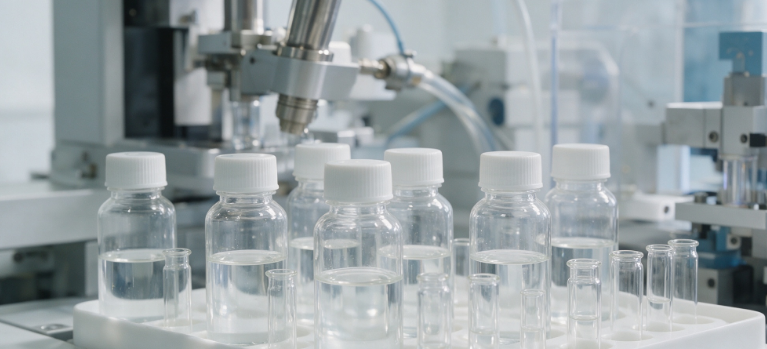
Why Comprehensive Testing of Dimethoxymethane Is Essential for Process Reliability and Product Safety
Manufacturers and end‑users seeking dimethoxymethane testing often encounter challenges such as unexpected acid‑catalysed decomposition, poor solvency due to impurity build‑up, or batch‑to‑batch variability in reactivity. These issues frequently arise from residual methanol from synthesis, formaldehyde dimerisation products, moisture leading to hydrolysis, or trace acidic by‑products. Moreover, the formation of explosive peroxides under atmospheric oxygen requires vigilant monitoring. Our service provides a systematic characterisation that quantifies assay (GC‑FID), major impurities (methanol, formaldehyde, water, formic acid, methyl formate), peroxide value, and colour, along with physical properties (density, refractive index). By identifying the root causes of quality deviations—such as incomplete distillation, inadequate drying, or prolonged storage—we empower clients to optimise production conditions, implement effective drying/purification steps, and establish safe storage protocols.
Our Analytical Capabilities: From Purity Assay to Trace Impurity Identification and Stability Monitoring
Our testing framework is organised into five interconnected modules, each addressing a critical aspect of dimethoxymethane quality:
Purity and impurity profiling by chromatography—We employ high‑resolution gas chromatography (HRGC) with flame ionisation detection (FID) and headspace or liquid injection, using validated columns (e.g., DB‑624, HP‑INNOWax, CP‑Wax) to achieve baseline separation of dimethoxymethane from its key impurities: methanol, formaldehyde (as derivative), methyl formate, dimethoxymethane oligomers, and water. GC‑MS (EI and CI) is used for peak identification and confirmation of unknown impurities at ppm levels. For polar or non‑volatile residues, we use high‑performance liquid chromatography (HPLC) with RI or MS detection. Headspace‑GC is particularly effective for volatile impurities, including low‑boiling aldehydes.
Trace water and acidity determination—We measure water content by coulometric Karl Fischer titration (KF) according to ASTM E203, with a quantification limit of 5 ppm, using specialised reagents compatible with acetals. Acidity (as formic acid) is determined by potentiometric titration in non‑aqueous media, achieving an accuracy of ±0.001 %. These parameters are critical for assessing hydrolytic stability and corrosion potential.
Peroxide and antioxidant analysis—We determine peroxide value (PV) by iodometric titration (ASTM D2340) or by fluorimetric method for ultra‑low detection. For stabilised grades, we quantify polymerisation inhibitors (e.g., BHT, hydroquinone) by HPLC‑UV with certified standards, ensuring compliance with safety specifications.
Physical and colour assessment—We evaluate colour (APHA/Pt‑Co) by spectrophotometry (ASTM D1209), density by digital densitometer (ASTM D4052), and refractive index (ASTM D1218) to verify conformance to product specifications. These simple yet essential metrics often reflect underlying impurity issues.
Stability and peroxide formation kinetics—We subject samples to accelerated ageing under controlled temperature and headspace conditions (air, oxygen, or inert gas), monitoring peroxide value, acidity, and purity over time. This enables us to determine safe storage periods and to recommend inhibitor replenishment schedules or packaging modifications (e.g., nitrogen blanketing).
Regulatory Compliance and Method Validation
All test methods are fully aligned with ASTM, ISO, and ICH guidelines, with specific reference to ASTM D2777 (dimethoxymethane), D1613 (acidity), D1209 (colour), D4052 (density), E203 (water), and D2340 (peroxides). Our laboratory is ISO/IEC 17025:2017 accredited for a broad scope of organic chemical testing. We provide certified test reports with complete measurement uncertainty, traceability to NIST/CRM standards, and detailed method validation summaries (linearity, LOD/LOQ, accuracy, precision, specificity, and robustness). For custom impurity suites or stabiliser combinations, we develop and validate tailored analytical methods to meet your specific needs.
Our Distinctive Advantages in Dimethoxymethane Testing
Comprehensive impurity coverage and advanced separation: We routinely screen for more than ten potential impurities, including methanol, methyl formate, formaldehyde (as oxime derivative), formic acid, and various acetals, using a combination of GC‑FID, GC‑MS, and HPLC. Our multidimensional GC (heart‑cutting) resolves co‑eluting impurities that would be missed by standard single‑column methods, ensuring the highest confidence in purity assessment.
Integrated stability and peroxide safety assessment: We go beyond routine batch release by offering predictive stability modelling based on peroxide formation kinetics, enabling you to set evidence‑based retest periods and storage conditions. This service is particularly valuable for long‑term inventory management and international shipping.
State‑of‑the‑art water and acidity analysis: Our low‑level KF and non‑aqueous potentiometric titration methods are optimised for acetal solvents, delivering accurate results even in the presence of volatile matrix components.
Expert interpretation and rapid turnaround: Our standard testing package (assay + major impurities + water + acidity + peroxide + colour) is delivered within 5‑7 working days, with expedited 24‑48 hour service for urgent release. Our senior chemists provide clear, actionable interpretations—for example, correlating elevated acidity with moisture ingress, or advising on inhibitor replenishment based on peroxide formation trends.
End‑to‑End Service Workflow
We begin with a complimentary technical consultation to define your specification requirements, impurity thresholds, and storage conditions. We design a tailored test plan, including sampling and shipping guidelines (e.g., amber glassware, inert atmosphere for oxygen‑sensitive samples). Upon sample receipt, we perform receipt inspection and homogeneity verification. All tests are executed with strict QA/QC—reference standards, blanks, and duplicate runs. Data are reviewed by a second senior analyst, then compiled into a comprehensive report with chromatograms, titration curves, tabulated results, and a clear conformity statement against your specifications. A post‑report meeting is available to discuss findings and recommend corrective actions if needed.
Partner with Us for Reliable Quality Control of Dimethoxymethane
Dimethoxymethane is a versatile and sensitive solvent whose quality directly influences downstream processes and product performance. Our testing service provides the technical depth, regulatory readiness, and operational speed to ensure your material consistently meets purity, stability, and safety standards. We have supported leading chemical manufacturers, pharmaceutical companies, and specialty solvent producers in optimising their dimethoxymethane quality programmes.
We invite you to contact our technical experts to discuss your specific testing needs—whether for routine lot release, incoming inspection, or stability monitoring. With our advanced chromatographic capabilities, accredited quality systems, and deep chemical expertise, we provide the clarity and confidence you need to drive your processes forward. Request a detailed proposal or schedule a technical consultation today and take the next step towards superior quality assurance for dimethoxymethane.